Bead Bracelets Are Back in Men’s Summer Style: Why Wood Beads, Stone Beads, and Low-Saturation Wrist Strings Are Re-entering Cleanfit and Campus Looks
If you line up the latest Chinese-internet youth-menswear signals carefully, one subtle but very real change becomes obvious. People are still talking about white tees, striped shirts, knit polos, light-wash jeans, nylon bags, baseball caps, silver rings, and German trainers. But when they try to solve the question of why an outfit already looks fine yet still feels unfinished, the answer is not always another clothing layer. More often, it has moved to the wrist. And inside this new round of hand-area accessories, the direction worth isolating is not oversized metal chains or aggressive stacking. It is bead bracelets, wood-bead strings, stone-bead wrist details, silver-accent bead mixes, and low-saturation bracelets.
The Chinese-platform language around this category has become much more consistent. On Xiaohongshu, Douyin, and Weibo you can now see recurring phrases like “men’s bead bracelet,” “wood-bead styling,” “cleanfit bracelet,” “what to wear when the wrist feels empty,” “low-key men’s accessories,” “silver beads mixed with wood beads,” “what bracelet works in summer without looking greasy,” “what bracelet to wear with a white tee,” “bracelet gift ideas for a boyfriend,” and “campus-boy accessories.” On Bilibili and Q&A-style pages, the questions get even more direct: how can men wear bead bracelets without looking awkward, are bead bracelets really coming back, why are Korean-style male looks using more beaded wrist details again, how should a bracelet work with a watch, and when does a black-stone bracelet start feeling too gift-shop masculine. On the commerce side, Taobao and Tmall titles repeatedly push the same cluster of words: “natural stone,” “wood beads,” “low saturation,” “silver accents,” “Japanese style,” “Korean style,” “minimal,” “couple style,” “commuting,” “gift,” “adjustable wrist,” “stacking,” “light retro,” and “cleanfit.” Put together, these signals say something clear: what the Chinese internet wants right now is not a loud statement bracelet, but a daily wrist detail that makes outfits feel more complete without pushing them into greasy styling or mystical-gift territory.
That is why this article is worth doing now. The useful question is no longer whether men are “allowed” to wear bead bracelets. The real questions are better: why have bead bracelets become useful again in 2026 youth menswear, what kind of bracelet can live inside cleanfit, campus-boy, lighter Korean casual, and softboy dressing, what kind of product images should be rejected immediately, and why do some bracelets look like real-life wrist detail while others look like livestream-gift accessories?

1. Why bead bracelets are moving back into youth menswear
If you gather the recent public Chinese-internet signals around this category, at least six very practical reasons explain the return.
- First, youth menswear is moving from “the clothes are correct” to “the details also need to be resolved.” More Chinese-platform conversations now ask why a white tee, jeans, and cap can still feel unfinished. The wrist is one of the easiest overlooked places to fix that.
- Second, men’s accessory language has become more varied. Watches and silver chains are no longer the only acceptable answers. Rings, ear cuffs, slim chains, canvas bags, and caps have already reopened the category, so bead bracelets can now re-enter naturally.
- Third, bead bracelets are softer than most metal bracelets and therefore easier to carry into summer. White tees, tanks, striped shirts, linen shirts, and knit polos already feel light. Wood beads, stone beads, and matte bead finishes connect to that lighter mood more naturally.
- Fourth, the Chinese-internet preference for low-intensity youthfulness and light retro everyday texture gives bead bracelets a new legitimacy. They do not have to mean folk styling or protective-charms styling. They can simply add warmth and material contrast to the hand area.
- Fifth, the product supply is already mature. From Taobao to recommendation links on content platforms, the naming around wood beads, stone beads, silver accents, Japanese style, Korean style, adjustable fit, low saturation, commuting, and gifting is already stable.
- Sixth, bead bracelets are especially visible in summer clothing situations. Short sleeves, rolled sleeves, tanks, and open shirts all expose the wrist. Once that area stays empty, many looks feel too direct. A restrained bracelet often works better than just adding another ring.
So this return is not about men suddenly becoming interested in mystical stones. It is about Chinese-internet youth menswear reaching a more detailed stage: people want a hand-detail solution that feels real, wearable, repeatable, and not too effortful. What bead bracelets now sell is not “story.” They sell the feeling that a simple outfit was deliberately finished.
Chinese-internet signal patterns behind this topic
2. The four bead-bracelet directions actually worth looking at
Like many accessories, the useful way to shop bead bracelets is not to memorize stone names first. It is to understand which visual language makes sense for your wardrobe. Under the Chinese-ecommerce phrase “men’s bead bracelet,” several completely different worlds are mixed together: gift-style prayer beads, glossy livestream black-stone bracelets, tourist-market ethnic styles, and low-saturation everyday Korean-leaning bead bracelets. For BoyStyle readers, the four directions most worth looking at are below.
1. Mixed wood beads and matte stone beads: best for white tees, striped shirts, light-wash denim, and campus daily wear
If I had to recommend only one direction with the lowest failure rate for most readers, it would be mixed wood beads and matte stone beads. The advantage is simple: there is material variation, but no flash; some life texture, but no mystical baggage; a little retro softness, but no old-fashioned heaviness. It works especially well with the most stable Chinese-internet youth-menswear combinations right now: white tees, tanks, light striped shirts, light-wash jeans, nylon bags, canvas shoes, German trainers, and washed caps.
To judge this kind of bracelet quickly, check four things:
- The bead size should stay controlled. For most men, 6mm to 8mm is the safest zone. Too large and the bracelet slides from daily accessory into gift-object territory.
- The surface should not be too shiny. The most usable wood and stone beads feel matte, quiet, and low-reflection instead of looking like livestream lighting props.
- The color should not be overfull. Smoke gray, wood brown, oat, muted black, gray green, and faded blue are easier than saturated reds and blues.
- The stringing and finishing need to feel clean. A good bracelet should feel like a wardrobe detail, not an arts-and-crafts object.
If you already like topics such as campus-boy style, blue striped shirts, and washed baseball caps, this is the most natural entry point for the wrist.
2. Silver-accent bead bracelets: best for cleanfit, lighter Korean casual, and readers who already wear rings
The second direction worth focusing on is the silver-accent bead bracelet. This does not mean turning the entire bracelet into shiny metal. It means inserting a small number of silver beads, silver separators, or a minimal silver clasp into wood beads, stone beads, or matte beads. That balance matters because it keeps the softness of a beaded bracelet while allowing it to connect with silver rings, slim chains, and silver-framed glasses.
This direction is especially useful because it matches the Chinese-internet understanding of cleanfit very well. Cleanfit does not mean removing all texture, and it does not mean using hard metallic aggression. It usually means using just enough cool-toned metal to make basics look cleaner. A low-saturation bracelet with a few silver accents sits much better with a white tee, knit polo, light gray trousers, and trainers than a thick all-metal chain.
When shopping this type, the core question is whether the product is selling “accent” or “overmixing.” A quick filter looks like this:
- Check the silver ratio. A little is enough. Too much silver turns the bracelet into cheap mixed street jewelry.
- Check whether the bead color can hold the silver. Gray, black, wood brown, and oat tones are safest.
- Check overall thickness. In cleanfit contexts, slimmer bracelets that work with watches and sleeve lines are usually better than statement-size wrist strings.
- Check whether the on-hand images relate to clothing. The better sellers place the bracelet next to shirts, tees, knits, and bags rather than only giving isolated product closeups.

3. Light wood and oat-gray bead bracelets: best for softboy looks, linen shirts, and gentler summer dressing
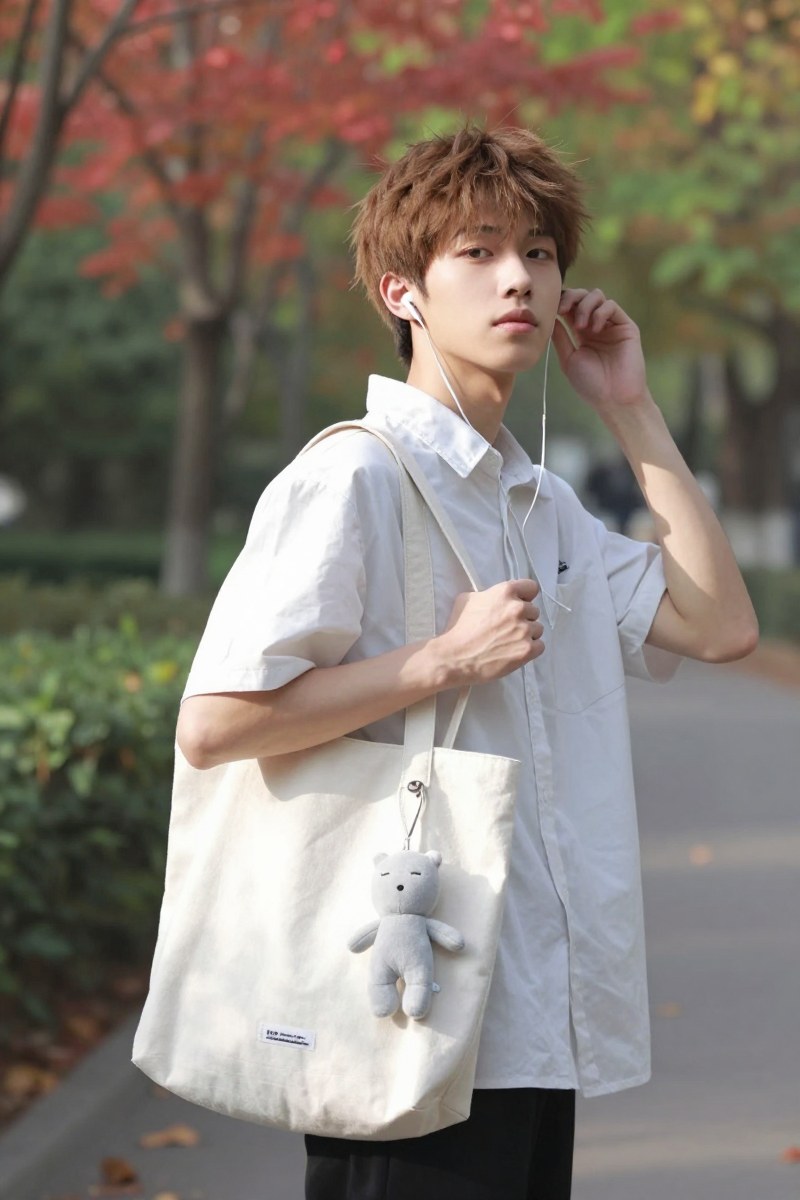
The third direction worth tracking is light wood, oat, and pale gray bead bracelets. These bracelets are lighter and softer, so they move more easily into softboy, light Japanese casual, and lighter Korean summer styling. They work especially well with linen shirts, open-collar short sleeves, pale knitwear, white tanks, canvas bags, and light denim.
The value here is that these bracelets understand summer whitespace. Many men already wear lighter clothes in hot weather. If the accessory gets too heavy, the outfit starts to feel overloaded. A pale bracelet offers detail without pressure. It is not the sharpest accessory choice, but it is often the most convincing one for creating a lived-in, unforced summer look.
When judging this type, focus on three things:
- Does the color feel natural? Good oat, pale gray, and light wood tones should not look yellowed or like cheap plastic.
- Does it work with skin tone? If it is too pale, too pink, or too creamy, it becomes unstable. Slightly cooler or slightly deeper than skin tone is usually easier.
- Is there at least a little structural contrast? A darker finishing bead or a tiny metal detail often helps keep the bracelet from becoming too soft.
If you already follow content like open-collar short sleeves, summer base-layer tees, and light commuter cleanfit, this direction usually upgrades more smoothly than louder bracelet styles.
4. Small dark-gray bead bracelets: best for readers who want the wrist filled without drawing too much attention
The fourth direction is small dark-gray and smoky-black bead bracelets. Their biggest advantage is frequency. They are easy to wear often, easy to match, and less dependent on scenario. For many BoyStyle readers, this may be even better than a silver chain as a first bracelet. It avoids the dated black-leather-braided gift look and also avoids the overly glossy black-stone vibe that often feels too livestream-driven.
What this direction really sells is not mystery. It sells the efficiency of quietly resolving the wrist area. It is especially good for readers whose main line is already cleanfit, campus casual, lighter Korean styling, or light commuting and who do not want to pile on obvious symbols. If the only goal is to make an outfit feel slightly more complete, this category is often the most useful.
But it also has one of the highest failure rates, because many sellers interpret “subtle” as “boring,” or turn dark gray into shiny plastic. So check carefully:
- Do not look only at color. Look at reflection. The better dark-gray bracelets do not reflect like polished marbles.
- Check scale. If it gets too thick, it quickly turns into a masculine gift-store bracelet instead of a modern accessory.
- Think about watch relationship. If you wear a watch, the bracelet should coexist with strap thickness rather than competing with it.
- Check the finishing system. Adjustable cord, clasp, or elastic construction all affect how refined the bracelet feels up close.
3. Six bead-bracelet directions worth adding to the shopping list now
Shopping directions and search routes
4. Ten ways bead bracelets most often go wrong
1. The beads are too large
Once the scale gets too big, the bracelet stops reading as a daily accessory and starts reading as a gift object or spiritual bracelet.
2. The color is too full
Highly saturated reds, blues, purples, and greens often feel like travel souvenirs. Low-saturation, matte, gray-toned options are easier for everyday wear.
3. The surface is too glossy
Bright polished beads under livestream lighting often look cheap. The better versions feel like material, not decoration balls.
4. The copy is too mystical
If all the selling language is about fortune, protection, and spiritual meaning while barely showing on-hand styling, it is probably a gift product rather than a fashion accessory.
5. The finishing is rough
Bracelets are looked at closely. Loose cord ends, messy knots, and poor closures can destroy the whole impression fast.
6. There is no clothing context
If the product only shows white-background closeups and never shows how it works with tees, shirts, or knits, it is much harder to judge its real wardrobe value.
7. “Natural stone” is used as a shortcut
Natural does not automatically mean wearable. Many natural stones are far harder to style than low-saturation artificial bead options.
8. There is too much silver hardware
Silver accents help. Too much silver turns the bracelet into cheap mixed street jewelry.
9. It tries too hard to feel “masculine”
Many products solve this by making the bracelet too thick and too dark, which usually makes it less modern and less relaxed.
10. The model styling is too far off-theme
If a seller only shows heavy streetwear, heavy rock styling, or heavy mystical styling, it becomes difficult to judge whether the bracelet can return to cleanfit and campus daily wear.
5. Which kind of bead bracelet fits which type of wardrobe
- Campus-boy route: prioritize wood beads, gray stone beads, faded colors, and 6-8mm scale. They work naturally with white tees, striped shirts, jeans, and canvas bags.
- Cleanfit route: prioritize small dark-gray bead bracelets or silver-accent versions. Avoid too many colors and oversized beads. They work better with knit polos, cleaner trousers, and trainers.
- Softboy route: lighter wood, pale gray, and oat-toned bracelets work well with linen shirts, open collars, canvas shoes, and tote bags.
- Light-commuter route: prioritize slimmer, darker, quieter bracelets with restrained metal details. They should work with watches and shirt cuffs rather than overwhelm them.
If you are already reading topics like silver rings, silver chains, silver-wire glasses, and washed baseball caps, bead bracelets are a very natural next shopping route. They are not isolated accessories. They are part of the same low-noise, low-saturation, actually-wearable youth-menswear line.
6. BoyStyle’s judgment: this trend will stay because it solves how simple outfits stop looking empty
I do not think this bead-bracelet return is just a short-term wave. It looks more like a natural result of Chinese-internet youth menswear becoming more mature. Clothing is getting simpler, so the real finishing work moves toward the face, shoulder line, shoes, bags, and wrist. Bead bracelets matter again not because they are dramatic, but because they solve a real-life problem: they fill the wrist area, support short-sleeve and rolled-sleeve dressing, and make simple summer outfits look more considered.
For BoyStyle, that is exactly why the category is worth covering. It fits our core territory—youth menswear, softboy dressing, campus-boy language, cleanfit, Korean/Japanese casual influence, and high-frequency practical products—while also carrying real shopping value. The right bead size, the right finish, the right color restraint, the right amount of silver, and the question of whether the seller understands daily life instead of gift aesthetics: those are all real buying decisions. If you only want to add one accessory category this spring and summer that can appear often and noticeably improve your overall state, this is very close to the top of the list.
Read next: why silver rings enter youth menswear more easily than louder hand accessories, why silver chains have moved back into cleanfit upper-body styling, why campus-boy dressing became a stable youth-menswear language again, and why knit polos are becoming a smarter cleanfit top buy.
Chinese-internet source pattern used here: this article is grounded in recent naming and discussion patterns around men’s bead bracelets, wood-bead styling, low-key men’s accessories, white-tee bracelet matching, boyfriend gift bracelets, and summer wrist details across Chinese platforms; in Taobao/Tmall product-title patterns such as “natural stone / wood beads / silver accents / Japanese style / Korean style / minimal / low saturation / commuting / gift / adjustable / stacking”; and in Bilibili / Q&A question structures like “how men wear bead bracelets without looking awkward,” “are bead bracelets coming back,” and “how a watch should work with a bracelet.” Example public discovery routes include Xiaohongshu: men’s bead bracelet, Taobao: men’s bead bracelet, and Taobao: men’s wood-bead bracelet.