Cool-touch tees are not a scam, but they are not magic either: why they are taking over the late-spring and early-summer basics layer in 2026
Across recent Chinese-internet menswear content, one shift has become very obvious: people are no longer only asking whether a white tee is still worth buying. More and more of the conversation has moved toward a more specific question: do cool-touch tees, ice-skin tees, and cooling short-sleeve basics actually matter, and which versions are real upgrades instead of livestream buzzwords? This is not just a small fabric-tech debate. It is a practical dressing problem. By the time late March turns into April and early May, a lot of men hit the same awkward zone: an ordinary white tee can feel too stuffy in transit, classrooms, malls, and warm afternoons, while shirts and outer layers start feeling too heavy. So the demand for a base layer that feels cooler but still looks like a normal piece of clothing becomes much more urgent.
That is why words like “cool-touch,” “cooling,” “ice-feel,” and “ice-skin” are heating up across Chinese content platforms, product titles, and shopping language at the same time. Xiaohongshu and Weibo-style discussion leans more toward body feel, freshness, and whether the top still looks clean on the body. Bilibili-style content leans more toward roundups, no-mistake buying, and how to avoid bad picks. Taobao and Tmall push even more directly with language around cooling cotton, cool-touch pique, anti-stuffy commuting, summer inner layers, and clean campus basics. For BoyStyle, that overlap matters: it shows that the cool-touch tee has moved beyond being an easy joke item and turned into a real basics category worth judging seriously.
But this is also where the biggest misunderstanding begins. A lot of people hear “cool-touch tee” and immediately split into two extremes: either everything is fake marketing, or one tee will somehow solve summer completely. Neither is right. A cool-touch tee worth buying is not a shiny, slippery, cheap synthetic shell disguised as a fashion basic. It should be a slightly smarter, slightly calmer, more stable base layer for real late-spring and early-summer life — one that feels better in heat, looks cleaner through the day, and handles commuting, classrooms, shopping, and indoor-outdoor temperature shifts with less friction. Its value is not miracle cooling. Its value is reducing discomfort and visual collapse.
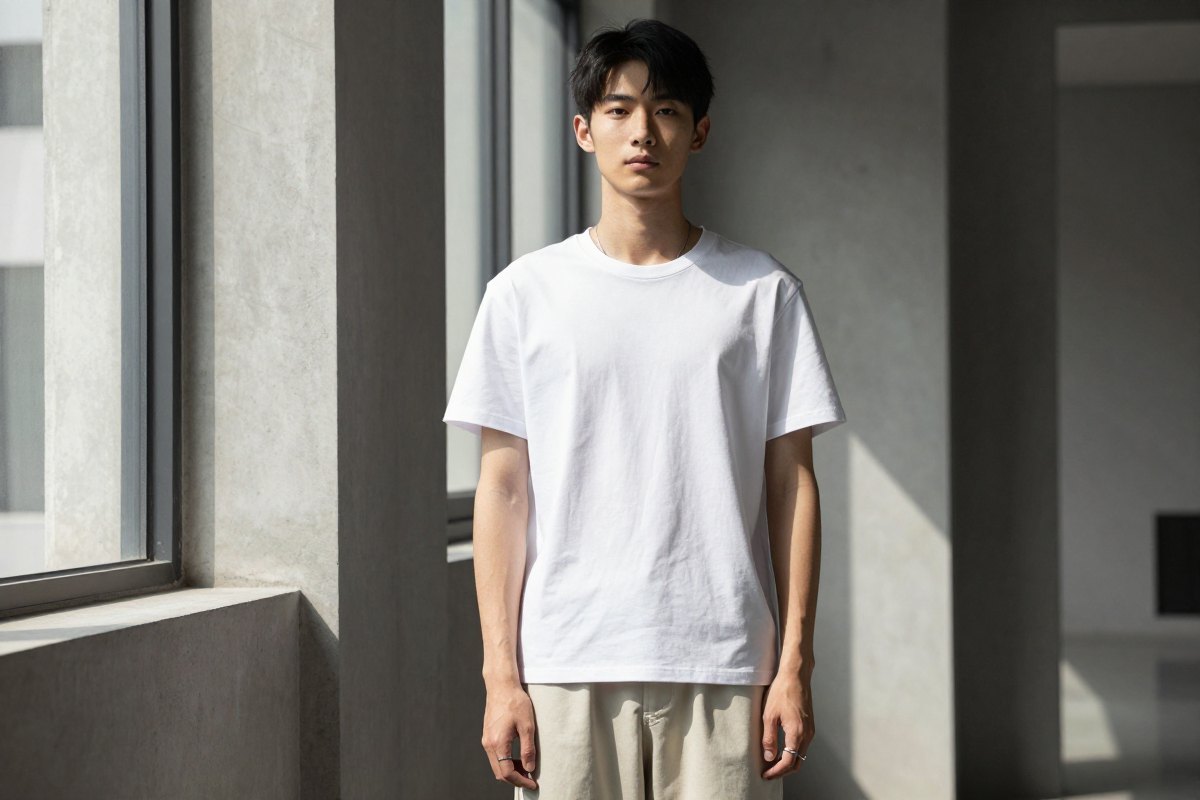
1. Why cool-touch tees are back at the center right now
First, look at the Chinese-internet content signals. Recent discussion around college-boy dressing, cleanfit, light commuting, and summer menswear is clearly narrowing toward one shared goal: people still want clean dressing, but now they want clean dressing with more physical comfort, more efficiency, and more all-day stability. In the past, a plain white tee was often treated as the default answer. Now the question is more detailed: does it trap heat on the subway, collapse under a backpack, cling in air-conditioned rooms, or lose shape too fast outdoors? Cool-touch tees are being rediscovered because they fit that more realistic set of demands.
Then look at shopping language. Chinese e-commerce is increasingly describing summer men’s short sleeves through words like cooling, quick-dry, anti-stuffy, commute-ready, inner-layer, cleanfit, campus daily, light but not sheer. That change matters because it means people are not treating cool-touch tees as novelty items. They are treating them as a lower-risk upper-body solution for late spring and early summer.
There is also a broader style shift behind this. Over the past two years, Chinese youth menswear has moved toward more believable real-life styling. College-boy, soft clean, light Korean casual, and light commuter dressing no longer want to exist only for photos. They want to make sense in actual daily life. Cool-touch tees fit that shift very well. They do not need loud design or complicated styling logic. They simply make it easier to look calm, lighter, and more put together from morning to evening.
Chinese-internet signals behind this topic
2. What cool-touch tees actually solve
For most men, the practical value of a cool-touch tee is not that it suddenly feels futuristic. It solves a few very ordinary but very annoying problems. The first is heat and stuffiness. In many cities, late spring creates unstable conditions: warm outdoors, inconsistent air-conditioning indoors, and lots of movement in between. A heavier white tee can feel too closed. A very thin tee can feel weak. A good cool-touch tee sits more comfortably in the middle.
The second problem is collapse. A lot of normal basic tees fail not because the color is wrong, but because the upper body loses structure too quickly. If the shoulder softens, the chest clings, and the hem drops lifelessly, the whole outfit starts looking tired. A cool-touch tee worth buying does not need to be thick, but it does need a light sense of stability. Even if it uses performance-oriented fabric logic, it cannot look like bargain sportswear.
The third problem is scene switching. If you move from subway to classroom to mall to evening walk, and a tee immediately looks sweaty, shiny, and stuck to the body, it fails in real life. A cool-touch tee’s biggest strength is that it keeps your upper body state more controlled across those transitions. It reduces visual mess without forcing you into obvious performancewear.
3. Why it fits current college-boy and cleanfit dressing better than an ordinary white tee
White tees are not going away, but in the current Chinese-internet mood, cool-touch tees clearly answer a layer of need that ordinary white tees do not always cover. What people want now is not just “basic.” They want basic with a little more efficiency. College-boy style wants ease, calm, and a believable school-day feel. Cleanfit wants order, clarity, and low visual noise. Light commuter dressing wants polish without effort. Cool-touch tees sit right where those needs overlap.
They work especially well with the kinds of bottoms that dominate this moment: light-wash jeans, charcoal straight trousers, light drapey slacks, nylon shorts, and off-white straight-leg pants. Those trousers already push toward cleaner, lighter dressing. If the upper body is still relying on a tee that goes limp too quickly, the whole outfit weakens. A cool-touch tee is useful not because it steals attention, but because it helps the full look stay fresh for longer.
There is also a wardrobe-level advantage. A cool-touch tee is easier to integrate than many more designed spring-summer tops. It does not require a whole new aesthetic system. It does not demand louder accessories or more complicated layering. If you already own normal trousers, clean shoes, and a daily bag, it can enter your actual rotation immediately. That makes it a basics upgrade, not just another trend object.

4. The four directions most worth buying first
1. Low-saturation solid cool-touch tees
If you already lean toward cleanfit, minimal dressing, or light commuting, low-saturation solids are usually the strongest place to start. White, off-white, fog grey, pale blue, cold grey, and light khaki all work well. Their strength is not that they stand out. Their strength is that they lower styling resistance and keep noise low. The main checks are obvious: avoid shine, avoid floppy collars, avoid overly long hems, and avoid shoulder lines that collapse too easily.
2. Cool-touch pique or subtle-texture tees
Some men do not like totally flat basic tees because they can feel too close to underwear or inner-layer energy. This is where cool-touch pique or subtle-texture surfaces become useful. They add a little more visual finish without forcing the shirt into obvious sportswear or aging it into awkward polo territory. For campus life and light commuter dressing, this is a very stable middle lane.
3. Light but non-sheer cooling white tees
If your goal is completely practical — a high-frequency short sleeve you can wear across dorms, classrooms, transit, malls, and normal daily movement — then “light but not sheer” matters more than any technology slogan. Once a cooling white tee can avoid chest cling, skin show-through, and cheap shine, its actual usage rate becomes very high. It may not be the most dramatic item, but it is often the one that gets worn the most.
4. Quick-dry-leaning cool-touch tees
If you walk a lot, carry a backpack, sweat quickly, or live in a more humid climate, a quick-dry-leaning cool-touch tee can be more useful than a version that only sells “ice-feel.” The key is not whether it sounds athletic. The key is whether it manages moisture and heat while still looking like a normal everyday tee rather than a training top.
The four strongest buying entries
5. Nine checks before buying one
1. Does the fabric shine?
One of the biggest failures in this category is not whether it feels cool, but whether it reflects too much light. Once the fabric starts looking glossy, the shirt can quickly slide into cheap synthetic sportswear territory.
2. Is the collar stable?
Cool-touch fabrics already tend to run softer. If the collar also collapses, the whole tee loses energy fast. In college-boy and cleanfit dressing, collar state strongly affects whether the upper body still looks intentional.
3. Does it cling?
No matter how cool the fabric sounds, if it clings to the chest and back as soon as you sweat, it will look bad. A worthwhile cool-touch tee should hold a little space away from the body.
4. Is the “lightweight” quality built on sheerness?
Many product pages sell thinness as a virtue. But if the price is skin show-through, visible undershirts, or obvious transparency at the shoulders, it stops functioning as a reliable basics layer.
5. Are the product images only static studio shots?
Pure standing shots on a white background hide too much. You want natural light, side views, backpack shots, movement shots, and chest-and-shoulder detail.
6. Is the fit behaving like a real basics layer?
Too tight is bad, but exaggerated oversized shapes are also risky. Cool-touch tees are already visually light. If the body gets too large, it starts looking like a thin shell instead of a clean base layer.
7. Does the title rely on hype while the details stay vague?
If the listing screams about miracle cooling technology, but stays fuzzy on fabric, fit, construction, and full-body photos, it usually deserves caution.
8. Can it connect to your existing wardrobe?
Good basics should work outside the campaign image. A worthwhile cool-touch tee should connect easily to your jeans, straight trousers, shorts, canvas shoes, understated sneakers, and everyday bags.
9. Is it a smarter basic tee, or sportswear pretending to be one?
This is the final question. The first kind is worth keeping in rotation. The second kind may only impress you for five minutes after opening the package.
6. Five low-risk ways to wear it
- Cooling white tee + light-wash jeans + clean sneakers: the clearest late-spring college-boy formula — fresh, young, and low risk.
- Cool grey tee + charcoal straight trousers + nylon crossbody: ideal for cleanfit and mobile city routines, clean without feeling empty.
- Cool-touch pique tee + off-white trousers + canvas shoes: better for cafés, libraries, and daytime light commuting, with a more complete visual finish.
- Quick-dry-oriented tee + nylon shorts + low-drama athletic sneakers: useful for people who walk more and sweat more, as long as the whole look does not drift too close to training wear.
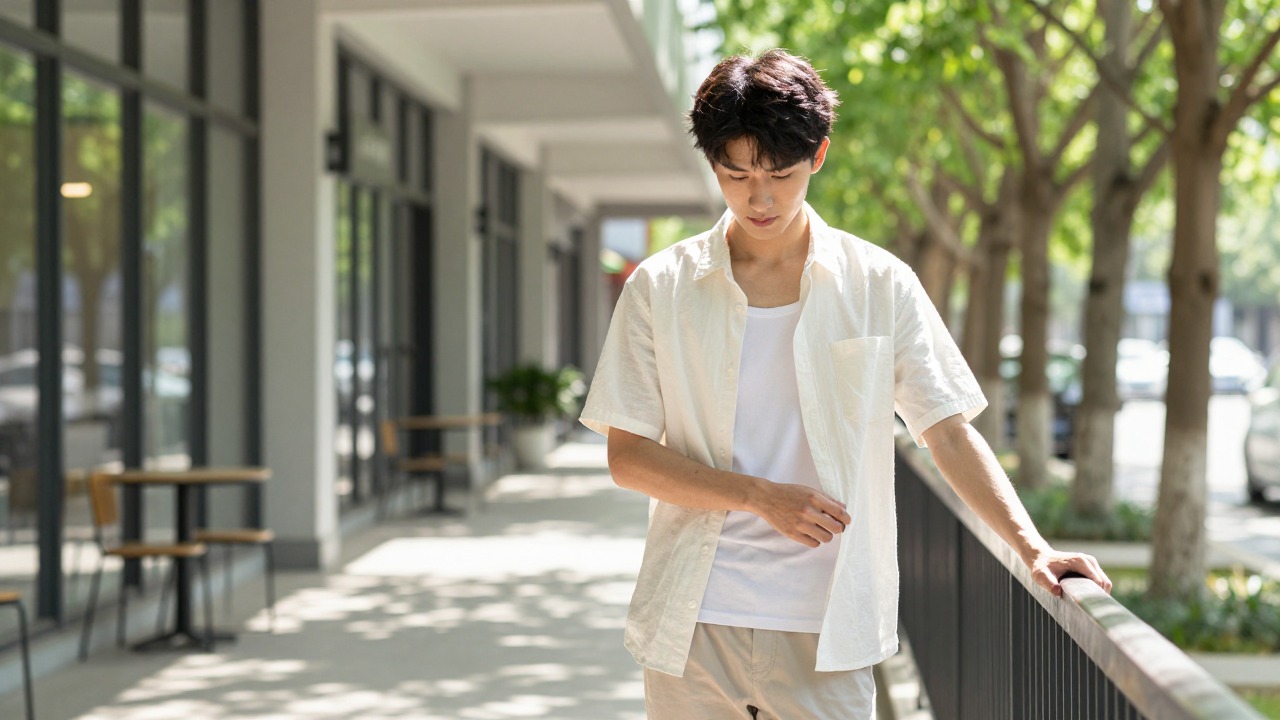
- Cool-touch tee + open short-sleeve shirt worn open + straight trousers: especially good for evening wear or air-conditioned indoor-outdoor switching in late spring.
The logic across all of these looks is simple: a cool-touch tee should not behave like a statement piece. It should function as a lower-body-heat, lower-visual-noise, lower-chaos foundation under the rest of the outfit.
7. The Taobao and Chinese shopping searches most worth checking first
Shopping / search entry points
These search entries matter because they help you understand what the market is actually trying to sell under this category. The products worth continuing with usually share a few traits: restrained styling, believable model photography, low fabric shine, a collar that still holds shape, and full-body or side-view evidence. If the page leans entirely on miracle-cooling slogans and over-smoothed close-up textures, it is usually safer to step back.
8. BoyStyle’s read on this cool-touch tee wave
The most important thing about this 2026 Chinese-internet wave is not that cool-touch tees have become a new hot keyword. It is that they have found a very specific wardrobe position again: they are not here to replace every white tee, and they are not here to pretend to be performancewear futurism. They are here to push the ordinary basics layer half a step forward for late spring and early summer.
If you only want to add one high-frequency top that reduces stuffiness, collapse, and daily upper-body friction, then yes — a cool-touch tee deserves a place near the front of the list. But only if it is the right kind: low shine, normal proportions, light but not sheer, and still visually grounded in everyday menswear rather than fake athletic styling. Its value is not mythic cooling. Its value is that it keeps you more stable in the real scenes that matter across Chinese youth-style life: classes, commuting, backpacks, malls, air-conditioned interiors, and ordinary evening movement.
Continue with: Why white tees still matter as the first basics layer, Why open-collar short-sleeve shirts are back at the center of summer menswear, Why textured short-sleeve shirts are taking over summer 2026 tops, and A summer cleanfit shop radar.
Reference pattern: recent Chinese-platform discussion around cool-touch tees, ice-skin tees, men’s summer base layers, cleanfit short sleeves, commute-ready short sleeves, and practical late-spring buying logic; Taobao and Tmall search paths such as “cool-touch tee men basic,” “ice-skin tee men cleanfit,” “cooling white tee men non-sheer,” and “quick-dry short sleeve men commute basic”; Bilibili-, Xiaohongshu-, and Weibo-style discussion around summer menswear no-mistake buying, freshness, and upper-body comfort judgment.