Summer 2026 belt shop radar: why braided belts, slim leather belts, and low-profile metal buckles are taking over the waistline finish of cleanfit and campus-boy menswear
If you look closely at the latest round of Chinese-internet menswear content, the accessory conversation is still full of caps, bags, necklaces, glasses, and shoes—but one quieter category is clearly moving back into view: belts. Not oversized logo belts, not industrial streetwear straps, and not the kind of aggressive hardware that tries to dominate an outfit. The rising version is much closer to everyday youth menswear: braided belts, slim leather belts, narrow leather straps, matte metal buckles, low-contrast pin buckles, dark-brown and charcoal-black basics, and simple belt shapes that do not look out of place with either tailored shorts or straight trousers.
This is worth turning into a full shop radar because it is no longer just about whether someone “needs a belt.” It has become a very recognizable Chinese-platform buying signal. Xiaohongshu-style searches and titles keep circling phrases like “men’s belt recommendations,” “what belt goes with tailored shorts,” “braided belt cleanfit,” “slim leather belt for summer,” “campus-boy belt styling,” “waistline for straight trousers,” and “what belt works with a white tee.” Taobao-style product naming keeps repeating “braided,” “genuine-leather slim belt,” “narrow version,” “matte buckle,” “Korean simple style,” “commuter basic,” and “vintage brown.” Bilibili and short-form styling content do not always talk about belts directly, but when people explain why one outfit suddenly looks more complete, why shorts stop looking childish, or why a shirt-and-trouser combination feels cleaner, the waistline detail appears more and more often. In other words, the belt is moving from an overlooked small part to a decisive piece of summer youth-menswear completion.
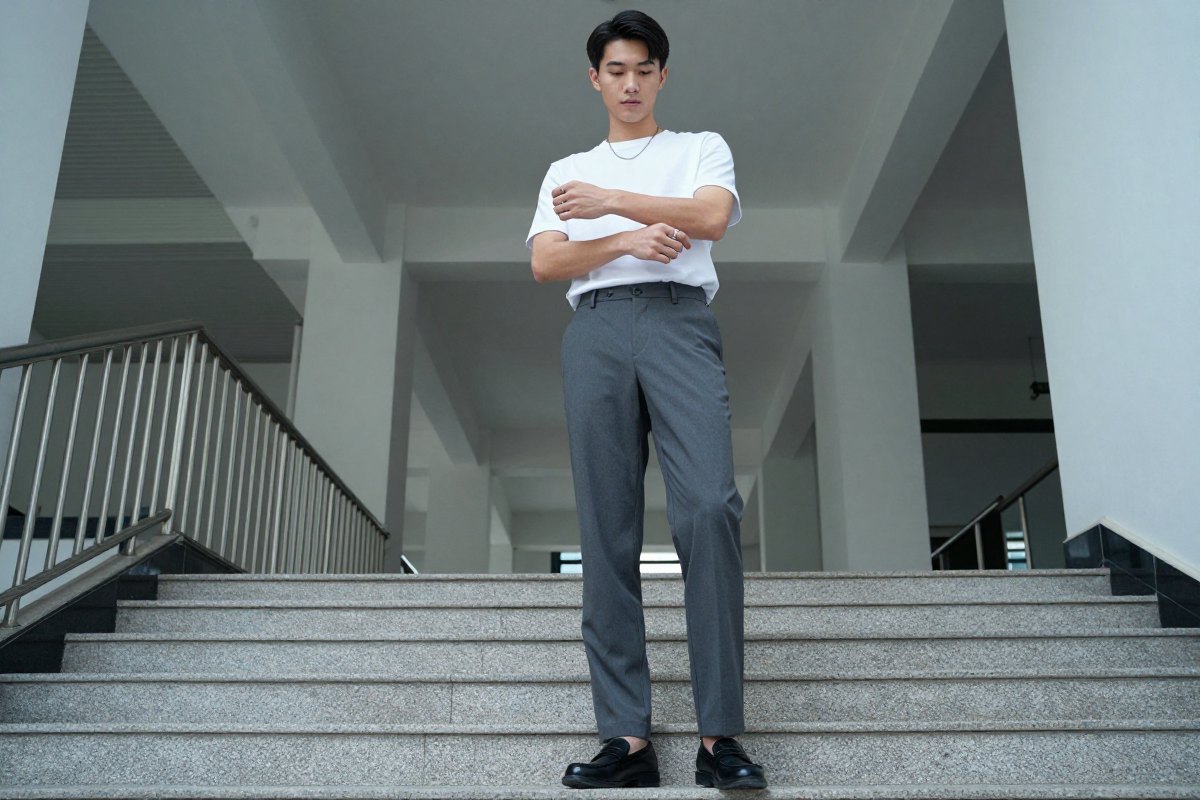
That also makes it especially suitable for BoyStyle. In cleanfit, campus-boy, softboy, Korean and Japanese light-casual dressing, the real difference often comes not from buying another expensive top but from handling the middle section properly. Many readers already own a good knit polo, open-collar shirt, short-sleeve shirt, or white tee, and they may already have decent straight trousers or drapey shorts too. The outfit still feels one step away from complete. Often the issue is not the clothing itself but the waistline: too much empty space at the waistband, awkward shirt-tucking balance, a buckle that is too loud, a harsh color break, or simply a middle section that was never really organized. A belt fixes exactly that zone.
1. Why belts have moved back into a high-value summer buying position
Once current Chinese-platform signals are grouped together, there are at least four clear reasons behind this return.
- First, summer menswear content is putting more emphasis on a clean waistline. Whether the topic is straight trousers, drapey shorts, denim, or light commuter pants, cleanfit and youth-style discussions keep returning to the question of how the middle section is handled.
- Second, Chinese-platform styling is reinterpreting accessories as completion tools rather than attention-grabbing objects. That is why caps, silver chains, glasses, and belts are all rising together. They are selling order, not chaos.
- Third, belts are more visible once summer shorts and lighter bottoms take over. In winter, outerwear hides the center. In summer, waistband logic, hardware, and shirt-to-trouser transitions are much easier to see.
- Fourth, commerce naming already shows where demand is concentrating. Braided, slim leather, narrow version, matte, low-contrast, commuter, basic, and vintage brown are practical buying words, not theatrical trend slogans.
So the core of this belt shift is not just “men are wearing belts again.” It is more precise than that: Chinese-platform youth menswear has rediscovered that the waistline is not a technical afterthought but one of the structural nodes of the whole outfit.
Chinese-internet signal patterns behind this topic
2. The four kinds of belt shops worth browsing first
As with many menswear categories, the most useful way to shop belts is not to memorize store names first. It is to understand which type of store actually suits your wardrobe. Different stores are not really selling the same “belt.” Some sell a low-profile cleanfit finish. Some sell softer campus-friendly braided routes. Some sell slim leather belts for summer shorts and commuter styling. Others sell quiet vintage-brown leather systems that work better in softer youth wardrobes.
1. Braided-belt shops: best for shorts, easy summer tops, and campus-boy / cleanfit daily dressing
If I had to recommend one safest direction for most readers this season, it would be the braided belt. It works because it can move naturally between campus-boy dressing, cleanfit, light commuting, and Korean-inspired casual styling. It does not feel as rigid as a traditional formal belt, and it does not feel as heavy as industrial streetwear straps. It also sits very naturally with summer shorts, light slacks, cotton straight trousers, linen-blend pants, and denim.
The best braided-belt stores usually show several common signals:
- the braid density stays even rather than loose and sloppy;
- the colors stay calm;
- the buckle stays simple and low-polish;
- the belt body has enough thickness to hold structure without becoming visually heavy.
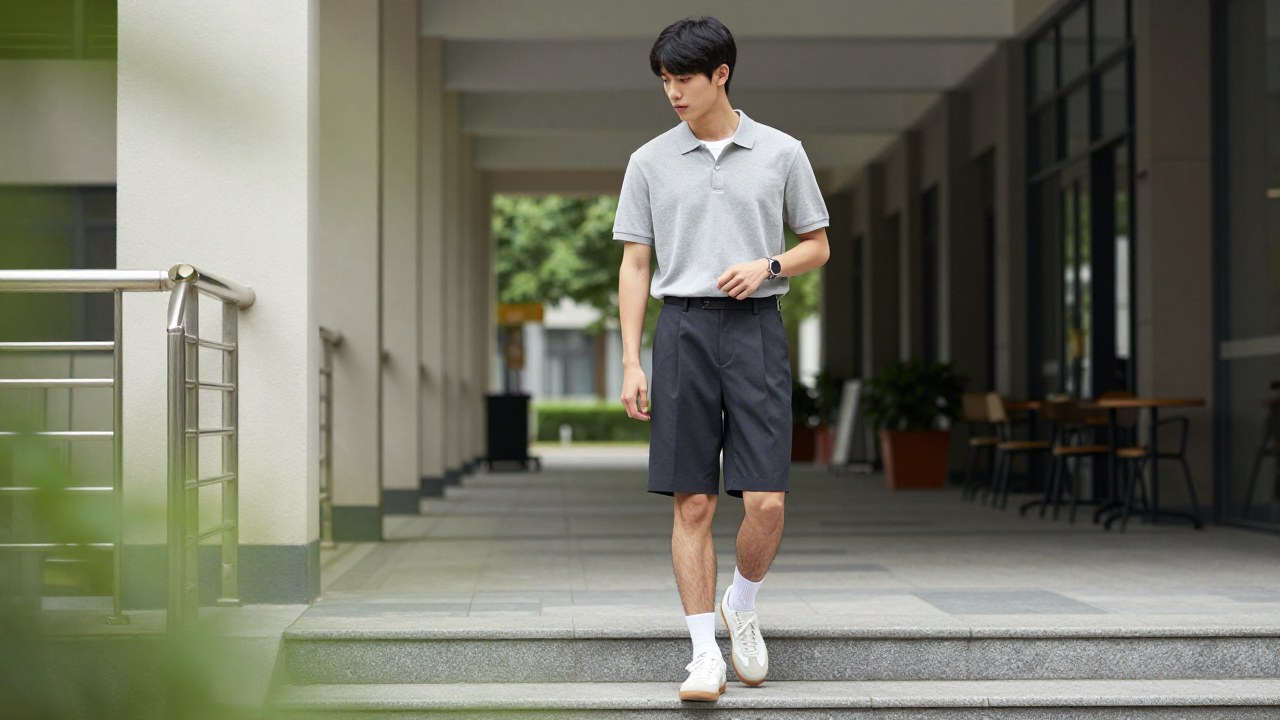
The real value of braided belts is not that they look “trendy.” It is that they help finish summer outfits that otherwise risk looking unfinished. White tees with straight shorts, knit polos with tailored shorts, and open-collar shirts with linen trousers can all feel one step short of intentional until the waistline is quietly resolved. That is exactly where a braided belt becomes useful.
2. Slim leather belt shops: best for knit polos, shirts, tailored shorts, and light commuter cleanfit
Another very strong lane is the slim leather belt. As soon as Chinese-platform discussion moves toward “commuter but not old,” “how to wear tailored shorts without looking overly mature,” or “how to make a knit polo outfit feel more complete,” slim belts often show up. The logic is simple: summer youth menswear needs line, not weight. Traditional wide leather belts and bright business-style buckles can drag the whole outfit toward older formalwear. A slimmer, lighter, quieter belt fits cleanfit and younger commuter dressing far better.
The key questions here are not only whether the belt is called genuine leather, but whether the details are handled properly:
- the width should stay narrow without becoming decorative;
- the buckle should not be too reflective;
- the leather surface should not look plastic or high-gloss.
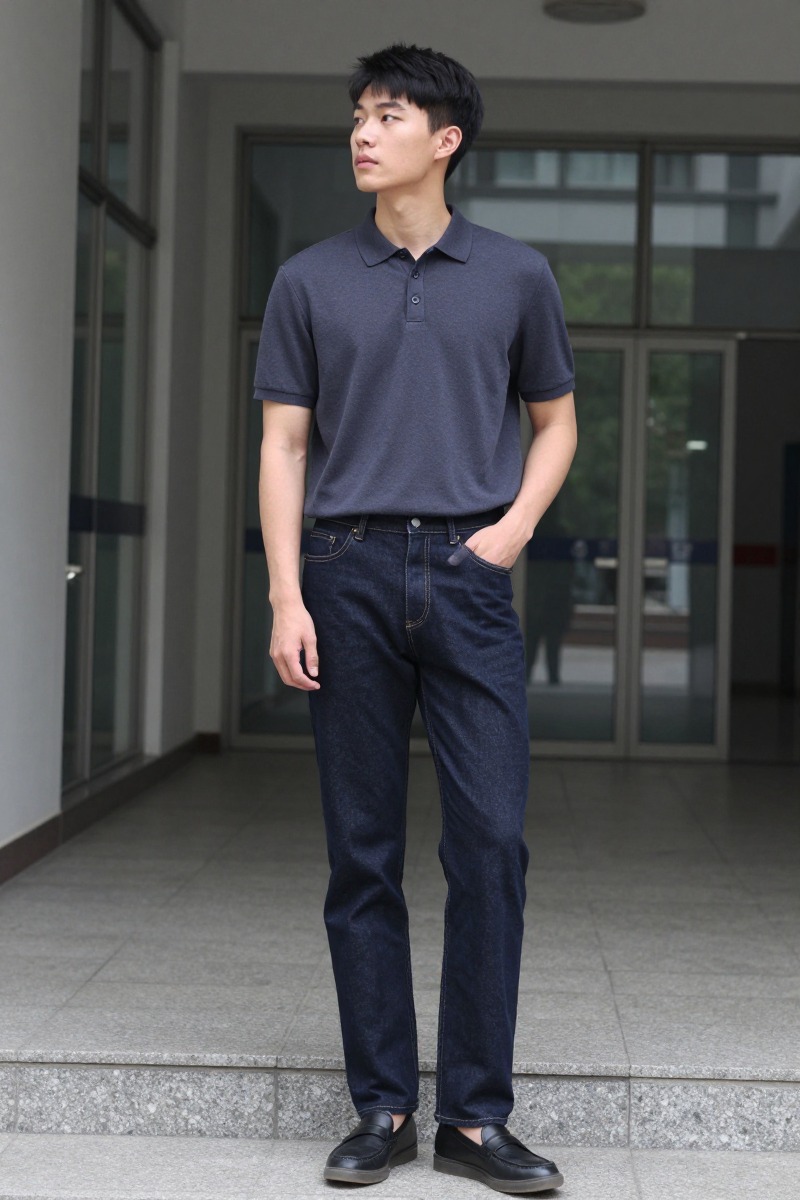
The two most practical colors are still black and dark brown. Black works especially well with grey trousers, black trousers, and commuter-oriented lower halves. Dark brown works beautifully with khaki, off-white, linen tones, denim blue, and slightly softer campus dressing. For readers trying to make shirts, knit polos, short-sleeve shirts, and drapey shorts look more resolved, slim belts are one of the easiest low-cost upgrades.
3. Low-contrast vintage-brown belt shops: best for Japanese casual softness, softboy dressing, and gentler campus wardrobes
Not every belt needs to move toward pure black minimal commuting. Chinese-platform youth menswear also keeps a stable lane built around deep brown, tobacco brown, old-wood brown, and low-saturation coffee tones. These work especially well with striped shirts, pale-blue shirts, off-white trousers, light khaki trousers, denim, knit cardigans, and tote-bag styling.
The value of this category is that it does not sell “grown-man leather goods energy.” It sells a softer linking piece inside a younger wardrobe. A good vintage-brown belt does not make the outfit oily or costume-like. It simply creates a warmer bridge between white, blue, khaki, oatmeal, and denim.
There are three common mistakes to avoid:
- do not choose thick old-fashioned belts;
- do not choose overly red brown tones;
- do not choose belts with too much carving or hardware decoration.
If your wardrobe already contains many lighter tops, denim, and academic pieces, a deep-brown slim belt will often connect the look more naturally than black.
4. Light commuter accessory-mix stores: best for readers who want belts to work with bags, watches, glasses, and other middle-section details
Another type worth following is the store that does not only sell belts, but also bags, cardholders, straps, small leather goods, eyewear chains, and other restrained accessories. These light commuter mixed-accessory stores are valuable because they usually understand that belts are not isolated objects. They need to work with trouser color, shoe tone, bag hardware, metal finish, and sometimes even glasses or necklaces.
The most useful signals here are:
- whether the belt is shown inside full outfits rather than as a flat product;
- whether the metal language across products stays unified;
- whether the store shows the belt with multiple trouser categories.
These stores are not always the cheapest or most famous, but if a reader is already starting to ask why some people always look more complete, they often provide more lasting value than shops that only sell isolated product units.
3. The five belt directions most worth putting into the cart
Product directions and shopping routes
4. The eight judgment points that prevent bad belt purchases
1. The buckle is too shiny
Many belts fail not because of the strap but because the buckle acts like a little mirror. That pulls too much attention into the center of the body and breaks the quiet mood of cleanfit dressing.
2. The belt is too wide
Many of today’s youth-menswear trousers and shorts look better with narrower belts. Very wide belts can make the middle section look older and heavier.
3. The surface looks plastic
Whether black or brown, if the leather looks overly glossy and synthetic, summer styling will expose it very quickly. Better belts usually stay more matte and controlled.
4. The braid is too loose
Braided belts are not better just because they look relaxed. Loose braid structure often reads cheap and creates visual mess around the waistband.
5. The brown is too red
Many so-called vintage-brown belts fail because the tone is too orange or too red. Deeper brown, tobacco brown, and old-wood brown usually connect more naturally to white tees, pale-blue shirts, and denim.
6. The buckle contains too much information
In current youth menswear, the belt works best as a waistline organizer, not as an announcement. Giant logos, heavy engraving, and decorative hardware are rarely necessary.
7. The product page only shows flat lays
Belts are too dependent on outfit context to judge from flat photography alone. Always prefer product pages that show the belt with shorts, trousers, shirts, and tees.
8. The shop only knows how to sell belts, not waistlines
The best stores are not just lining up products. They explain why one belt works with one trouser type, one top shape, and one mood. They are selling middle-section structure, not just stock.
5. How each styling route should choose belts
- Campus-boy route: white tees, striped shirts, hoodies, denim, and campus shorts work especially well with braided belts or deep-brown slim belts.
- Cleanfit route: knit polos, short-sleeve shirts, light outerwear, grey/black trousers, and tailored shorts usually work best with black matte slim belts or low-profile square buckles.
- Softboy route: cardigans, tote bags, pale trousers, denim, and softer shirts usually benefit from deep-brown, tobacco-brown, or quieter light braided belts—never too thick or too rigid.
- Light commuter route: oxford shirts, knit tops, drapey trousers, loafers, or cleaner sneakers work well with narrow belts that keep polish and youthfulness in the same frame.
These routes look different on the surface, but the shared logic is simple: the belt is not there to become the protagonist. It is there to stabilize the middle section, correct proportion, and let the top and trouser finally shake hands.
6. The shop signals most worth following
If you work backward from Chinese-platform commerce and style content, the most useful belt shops usually share several traits:
- they show belts on-body, not only as flat products;
- they place belts inside full outfits rather than only buckle close-ups;
- they keep returning to foundational colors instead of chasing odd bright shades every season;
- they often sell bags, small leather goods, or other restrained accessories too;
- their product naming emphasizes braided structure, narrow versions, matte finishes, simplicity, commuting, and low contrast rather than loud trend slogans.
These are not always the biggest or most famous stores, but they are more likely to offer belts that can stay in a real wardrobe. For BoyStyle readers, the real long-term value is not the hottest belt of the month. It is a belt you can use this summer, keep using next spring, and keep pairing with the wardrobe you already have.
7. BoyStyle’s conclusion on this belt-buying signal
The Chinese-internet discussion around men’s belts in summer 2026 looks like a belt-recommendation topic on the surface, but underneath it is answering a more mature youth-menswear question: once the top and bottom are already decent, what can quietly lock the middle section, mood, and completion into place with the least effort? That is why braided belts, slim leather belts, and low-contrast buckles are moving back into the center. They matter not because they are dramatic, but because they have returned to the most useful place inside real youth dressing.
If you only want to add one accessory this summer that feels hard to waste but immediately visible in a good way, I would seriously place belts near the top of the list. Not just any belt, but the kind with a clean strap, controlled width, low-profile buckle, color compatibility with trousers and shoes, and the ability to make the shirt hem and waistband relationship feel natural. It will not hit as loudly as heavier accessories, but it may be the first thing that makes an outfit feel genuinely complete.
Read next: Why tailored shorts help pull cleanfit back into daily life, Why knit polos are becoming a smarter summer top buy, Why washed baseball caps have returned to the center of cleanfit, and Why utility bermuda shorts are taking over spring-summer campus-boy dressing
Chinese-internet source-pattern basis: this article mainly draws on publicly visible Chinese-platform search and product-naming patterns around men’s belts, including recurring phrases such as “men’s belt recommendations,” “braided belt cleanfit,” “slim belts for men,” and “what belt goes with tailored shorts,” together with short-video and Bilibili-style discussion patterns around waistline balance, middle-section proportion, summer-short completion, commuter styling, and cleanfit accessories, plus commerce naming clusters built around braided construction, slim leather straps, narrow versions, matte buckles, vintage brown, simplicity, and commuter versatility.