Why Braided Belts Are Moving Back Into the Center of Campus-Boy and Cleanfit Menswear
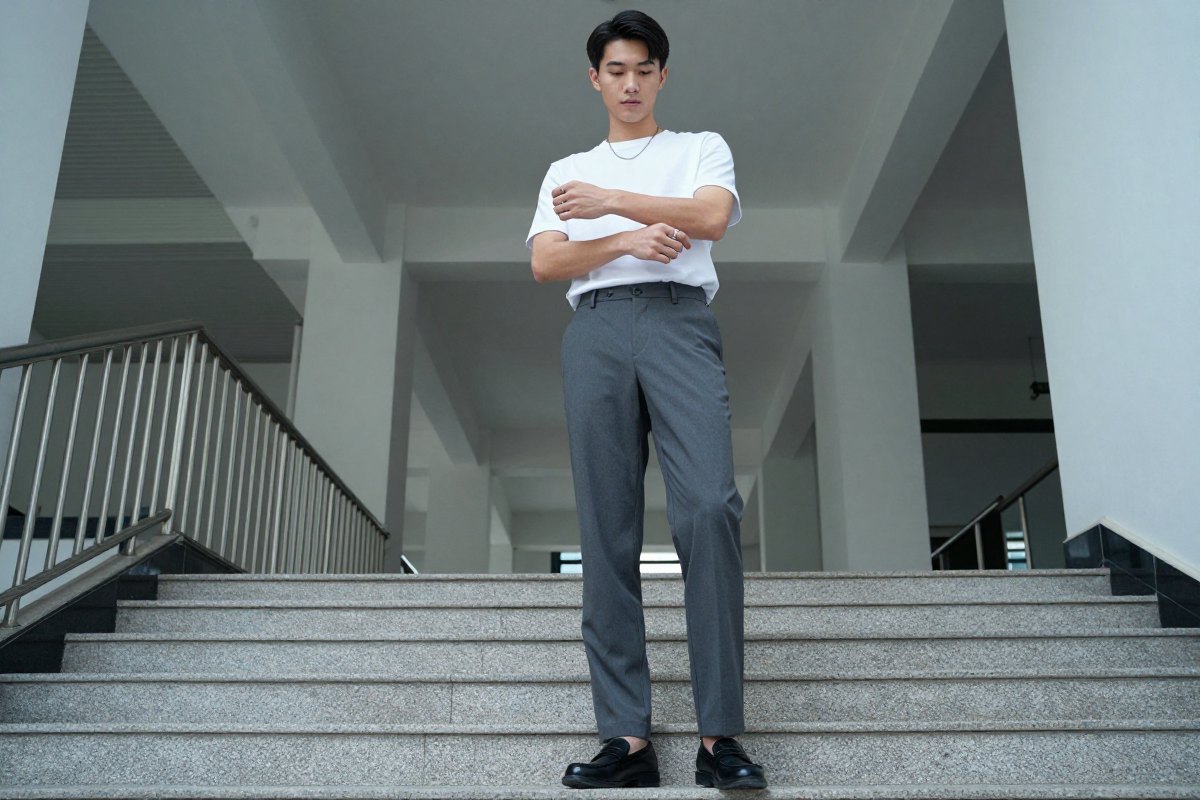
If you look closely at the latest wave of youth menswear on the Chinese internet, one thing becomes surprisingly clear. People are still talking about white tees, knit polos, short-sleeve shirts, bermuda shorts, straight trousers, lightweight layers, and all the usual cleanfit basics. But the detail that increasingly decides whether an outfit feels merely “fine” or actually looks resolved often sits in a place that used to be ignored: the waistline. And among all the tools used to fix that area, the one most worth taking seriously again is not the giant-logo leather belt or the heavy industrial strap. It is the braided belt.
This is not random. The most common Chinese-platform questions around belts are no longer simply “should a guy wear a belt?” They have become much more precise: what belt works with tailored shorts, how do you make a white tee and straight trousers feel cleaner through the middle, why do some campus-boy outfits feel finished while others just look like clothes put on in a hurry, and when should you choose a slim leather belt instead of a braided belt. All of those questions point to the same larger shift: young menswear judgment is moving away from buying more pieces and toward handling proportion and midsection structure better.
That is exactly why braided belts matter again in 2026. They are light enough not to crush the clean mood of spring and summer dressing. They add enough visible texture to stop a white tee, open-collar shirt, knit polo, or pair of shorts from feeling unfinished. And they are restrained enough not to age the outfit the way a thick business belt or a flashy metal buckle often does. Put simply, they are one of the rare accessories that carry both style value and proportion value while still fitting into real daily life.
1. Why this is happening now
Start with the broader mood of Chinese youth menswear. The most stable and widely copied looks right now are no longer built on loud design or excessive layering. They are built on things that feel more believable: clean shapes, wearable summer ease, outfits that look good on campus or in light commuting settings, and styling that reads well in photos without feeling fake in real life. That is why keywords like campus-boy, cleanfit, Korean casual, library mood, and light commute keep appearing next to white tees, short-sleeve shirts, tailored shorts, straight trousers, training shoes, canvas bags, and washed caps.
The problem is that once tops and bottoms become cleaner and more restrained, the most fragile part of the outfit is often the middle. How much of the shirt is tucked, whether the waistband has any anchor, whether shorts feel too empty, whether straight trousers look intentional or just worn — all of that happens at the waistline. In colder seasons this could be hidden under outerwear. In spring and summer, especially once short sleeves and shorts dominate, it becomes fully visible. If you do not handle it, the entire look can start to loosen and fall apart.
The braided belt becomes powerful precisely here. It is lighter than a traditional business belt, easier to pair with cotton shorts, linen-blend trousers, straight-leg tailoring, and light denim, and more effective at giving the waist a clear stopping point than wearing no belt at all. At the same time, it avoids the hard, aggressive visual interruption created by heavy buckles. In current young menswear, that ability to be present without becoming the center is extremely valuable.
Chinese-internet signals behind the return
2. What the braided belt actually fixes
Many people still understand belts in purely functional terms: you wear one if the trousers are loose, and skip it if they are not. But in the current youth-menswear context, a belt does much more than hold trousers up. What it really controls is whether the area between the shirt hem and the waistband feels blank, awkward, and unfinished, or organized, layered, and resolved.
A braided belt is especially good at this because it creates what feels like a soft structure. It is not invisible. It has a line. But the line is not hard, businesslike, or authoritarian. It feels closer to everyday life. In a white tee with straight trousers, a knit polo with tailored shorts, a short-sleeve shirt with linen trousers, or even a tank with denim, it does not suddenly push the outfit toward mature office dressing. It just gives the middle of the body a cleaner stop.
That is also why it fits campus-boy and cleanfit dressing so well. Campus-boy styling usually wants to feel natural, youthful, and believable rather than overly styled. Cleanfit wants order, proportion, and calm. A braided belt serves both at once: it gathers the outfit, but does not look like it is trying to perform.
3. The four braided-belt directions worth buying first
1. Dark brown or charcoal-black braided belts: the safest first belt
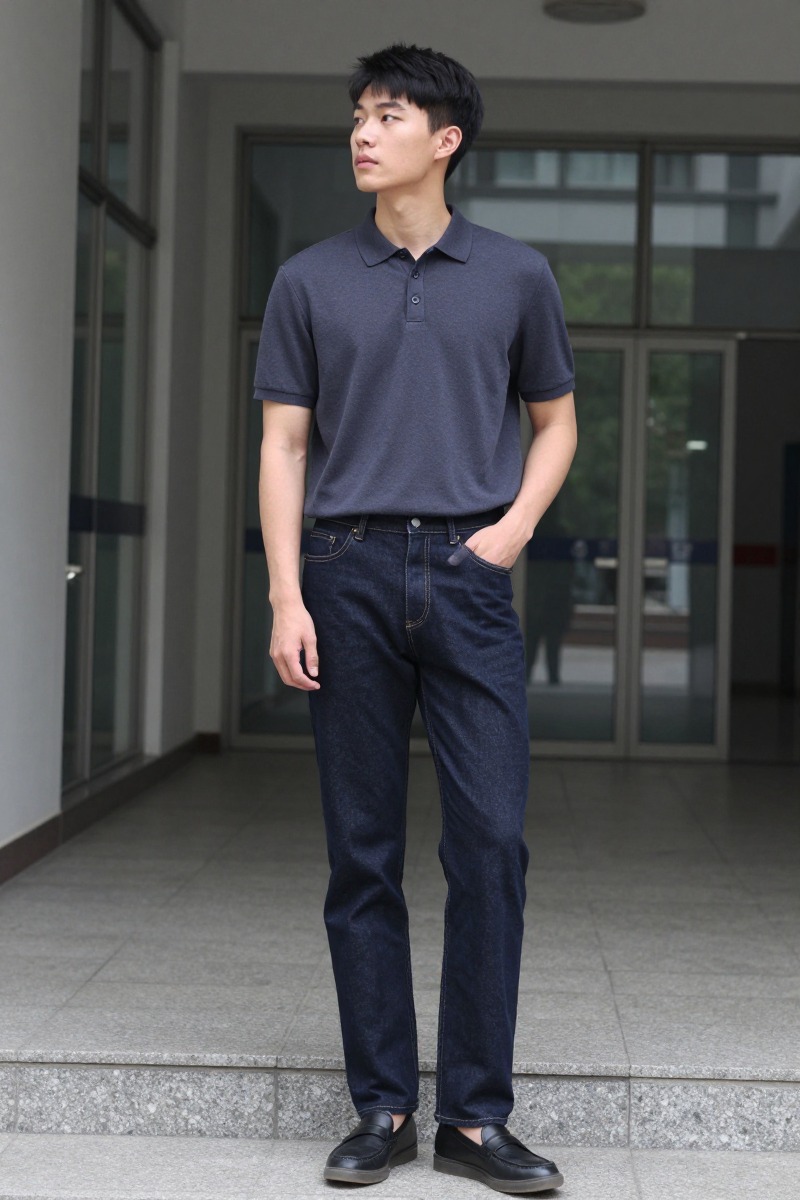
If I had to recommend one direction that almost nobody would regret, it would be deep brown or charcoal-black. These shades work with the most common Chinese youth-menswear bottoms right now: black or grey straight trousers, darker denim, khaki shorts, off-white linen trousers, and light commute pants. They do not feel as severe as polished formal black belts, but they are easier to integrate than very pale braided belts.
These work with white tees, grey tees, knit polos, camp-collar shirts, and lightweight cardigans with very little effort. For campus-boy dressing they stop the middle from feeling empty. For cleanfit they create a quiet pause that helps the upper and lower half finally connect.
2. Dusty brown or tobacco-brown braided belts: best for softer campus and softboy wardrobes
If your wardrobe already includes pale blue shirts, cream trousers, washed denim, off-white knitwear, cardigans, and canvas totes, then beyond dark brown the smartest addition is usually a softer dusty brown or tobacco tone. These shades connect much more naturally with pale clothing and do not pull visual weight downward as aggressively as black can.
The key is not just “brown,” though. It has to be controlled brown. If it turns too red, too orange, or too warm, the whole outfit can become oily and dated. The best versions look closer to old wood, dried tobacco paper, or muted worn leather. They are not costume-vintage. They are just a softer bridge inside a pale summer wardrobe.
3. Slim braided belts: best for knit polos, tailored shorts, and light commuting trousers
Many braided belts fail not because of the weave, but because of the width. For the kinds of youth trousers dominating Chinese menswear right now — especially tailored shorts, lighter straight trousers, commute pants, and slimmer cleanfit silhouettes — a belt that is too wide makes the waist heavy and the wearer older. A slimmer, lighter belt that still has enough body to keep structure is usually the better answer.
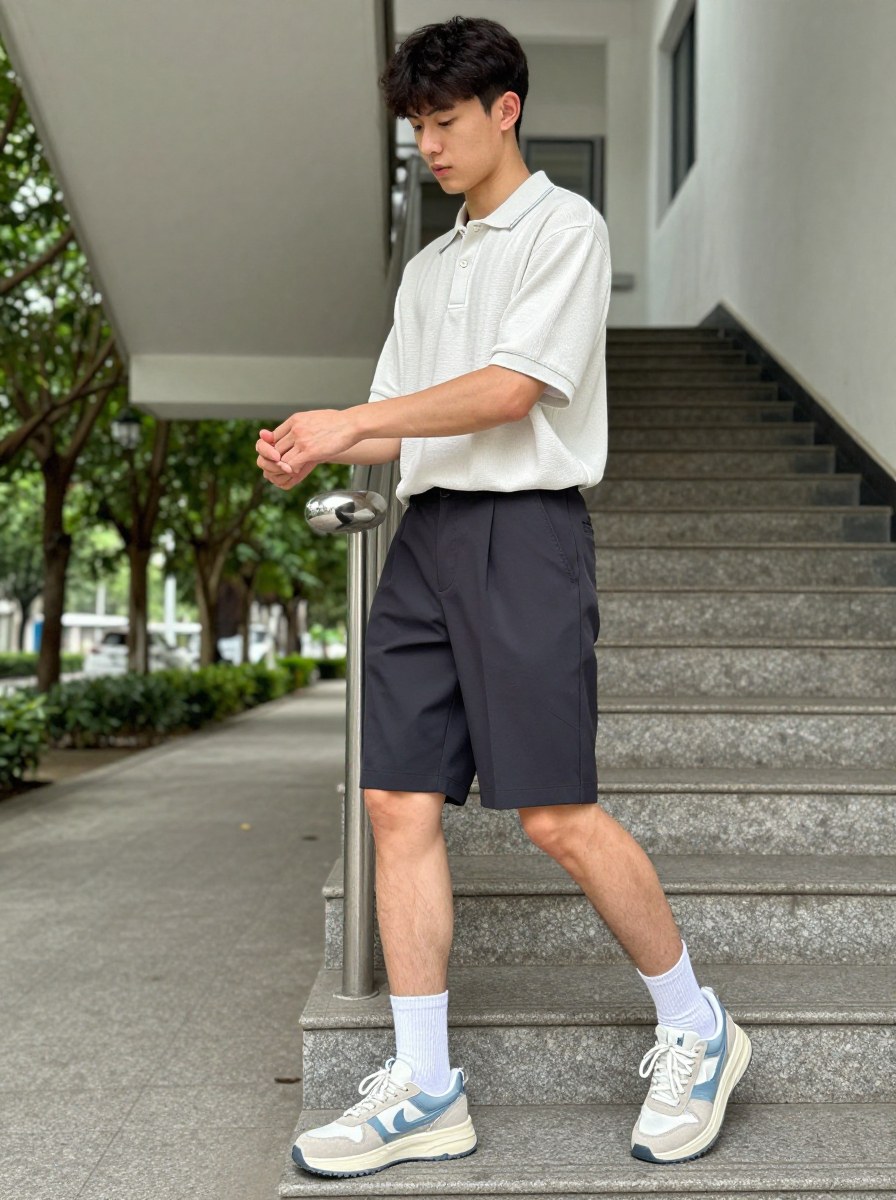
This type is especially strong with knit polos. Knit tops already carry softness and surface texture. If the belt becomes too thick and too chunky, the whole outfit loses summer clarity. A slimmer braided belt helps the softness of knitwear and the neatness of trousers cooperate instead of fighting each other.
4. Braided belts with low-reflection buckles: the detail that often decides quality
In many cases, what makes a braided belt feel good or bad is not even the braid itself. It is the buckle. Large, mirror-bright, highly polished buckles drag the belt back toward cheap e-commerce styling almost instantly. Lower-reflection, matte, smaller, quieter buckles make the whole piece feel designed rather than assembled from leftovers.
So if you only have time to judge one thing quickly in product images, judge the buckle first. Yes, the weave density matters. But the buckle often reveals the entire mood earlier: too shiny, too bulky, too gift-shop businesslike, too eager to become a focal point. The best current braided belts for young menswear are almost always the ones whose buckles step back.
4. The eight product-image checks that matter most
Check these before buying
5. The five outfit formulas where braided belts work best
- Braided belt + white tee + straight trousers: one of the strongest campus-boy and cleanfit transition formulas right now. The belt does not need to be loud. It just needs to stop the middle from feeling empty.
- Braided belt + knit polo + tailored shorts: ideal for readers who want summer shorts to feel more complete without suddenly looking ten years older. Slim braided belts with matte buckles work especially well here.
- Braided belt + open-collar shirt + linen trousers: perfect for library mood, light commute, and Korean casual summer styling. The belt turns looseness into structure.
- Braided belt + cardigan + denim: especially good for softboy or campus-led styling. The belt creates a lightweight middle link between soft upper layers and heavier denim.
- Braided belt + tank or athletic-feeling top + denim or shorts: increasingly visible on Chinese platforms as body-aware youth styling becomes more common. The belt keeps the lower half from looking like an afterthought.
All of these formulas share one rule: the braided belt is not the star, but if it is missing, the midsection often feels unresolved; if it appears correctly, the outfit suddenly looks as if it has been quietly calibrated.
6. Who should add one now
- Readers whose wardrobe already includes white tees, camp-collar shirts, knit polos, straight trousers, and shorts, but whose outfits still feel slightly unfinished;
- Readers who want campus-boy, cleanfit, Korean casual, or light-commute dressing without leaning on loud jewelry or giant branding;
- Readers who own plenty of shorts but still feel that summer shorts often make them look too young or too loose;
- Readers who used to think of belts only as functional hardware and are now realizing that the middle of the body changes the entire outfit.
For these readers, a braided belt is a very smart purchase. It does not require rebuilding the wardrobe the way a new top category might. It does not demand the budget of shoes or bags. But it can improve clothes you already own almost immediately. In that sense, it is not “one more thing.” It is a tool that finally links already-decent pieces into a coherent whole.
7. The store signals worth following
If you keep searching through Chinese e-commerce and style platforms, the best stores to follow are usually not the ones pushing old language like “explosive trend,” “ultra-handsome bad-boy style,” or “luxury-feel killer item.” The more useful stores are the ones willing to return the belt to real outfits. They show white tees, shorts, straight trousers, tailored shorts, and open shirts in believable combinations instead of endless black-background buckle glamour.
More specifically, the stores worth watching often share a few traits:
- they place belts into full-body styling rather than isolating them as standalone objects;
- their naming leans toward “minimal,” “braided,” “commute,” “basic,” and “low-reflection buckle” rather than exaggerated identity language;
- they often also sell canvas bags, small leather goods, watch straps, or other quiet accessories, which suggests they understand a full youth-menswear accessory system;
- they style the belts with pale trousers, shorts, knitwear, and light shirts rather than only with older business trousers.
If you have already read BoyStyle’s summer belt shop radar, this accessories feature pushes that conversation one step further. It is not only about where to shop. It explains why the braided belt itself is becoming a worthwhile young-menswear accessory again. It belongs to the same broader line as knit polos, tailored shorts, and washed baseball caps: once clothes become cleaner, details begin to decide finish.
8. BoyStyle’s conclusion
The braided belt is moving back into the center of youth menswear in 2026 not because it is suddenly a new accessory, but because it solves one of the most real contemporary styling problems: once the clothes are already basic and clean enough, how do you stop the middle of the outfit from feeling blank, loose, or unresolved? It is lighter than a traditional thick leather belt, more complete than wearing no belt, more believable than louder statement accessories, and more likely to survive in daily life than many “fashionable” small items.
If I could recommend one relatively low-cost accessory that would improve overall proportion almost immediately this spring and summer, a braided belt would be very high on the list. Not just any braided belt, but one with even weave density, restrained color, moderate width, a low-reflection buckle, and long-term compatibility with white tees, open-collar shirts, knit polos, shorts, and straight trousers. It may not make anyone gasp over what you are wearing. But it may be the first thing that makes them feel your outfit is finally complete.
Chinese-trend reference pattern: this article is grounded in public Chinese-platform content and product-language paths around questions such as “men’s braided belt recommendation,” “what belt works with tailored shorts,” “white tee straight trousers waistline,” “slim belts for men in summer,” “cleanfit belt,” and “campus-boy outfit belt,” together with e-commerce language such as “braided,” “minimal,” “commute,” “slim,” “matte buckle,” “vintage brown,” and “low reflection.” It also builds on BoyStyle’s existing belt shop radar, knit polo, shorts, straight-trouser, and cap coverage to turn those signals into a full accessories editorial.