Why Silver Cuff Bracelets Are Moving Back Into Campus-Boy and Cleanfit Menswear: A 2026 Chinese-Internet Wristwear Read
If you look carefully at the latest Chinese-internet accessory signals around youth menswear, one change stands out. People are still talking about necklaces, rings, silver-wire glasses, caps, canvas bags, and ear cuffs. But one item that is quietly returning to relevance is something many people used to misread as either too performative or too grown-up: the silver cuff bracelet.
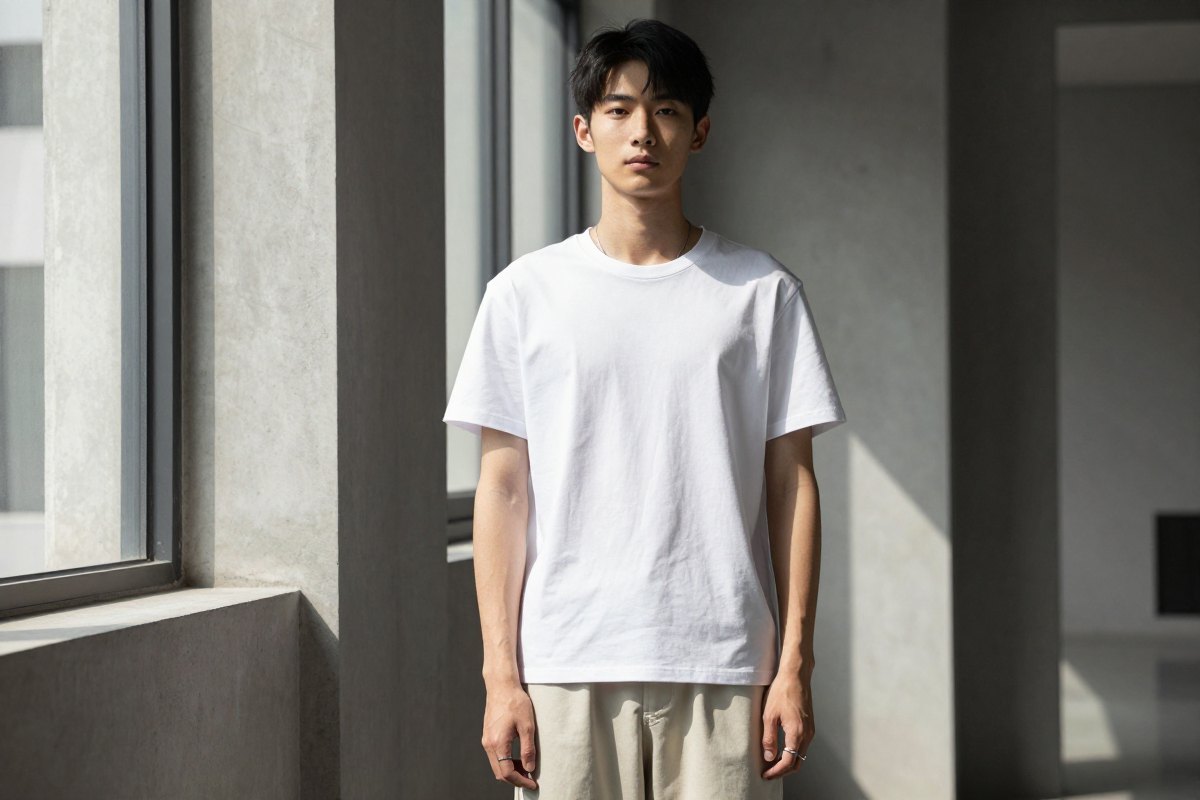
This is not random. Chinese-platform menswear discussion is becoming less vague. It is no longer only about whether an outfit has accessories, but about where the outfit still feels empty, which detail improves completion most efficiently, and why the same white tee, knit polo, camp-collar shirt, tank, or straight trousers can look styled on one person and merely worn on another. In that shift, the wrist is becoming important again. Once clothing gets more basic, more restrained, and more cleanfit-led, the wrist stops being a forgotten edge and starts affecting how refined the whole outfit feels.
That is exactly why silver cuff bracelets matter now. They are easier to notice at a distance than rings, less dependent on neckline shape than necklaces, and lighter, younger, and less device-coded than a watch. At the same time, they do not push an outfit into over-decoration the way chunkier chain bracelets often do. Put simply, they are one of the most suitable light metal structure pieces for current Chinese-internet youth menswear.
1. Why silver cuff bracelets make sense right now
Start with the language showing up on Chinese platforms. Around silver, cleanfit, and young menswear, the conversation increasingly includes not only necklaces and rings but also questions like how men should choose a wrist accessory, what works besides a watch, how to add detail to a white tee outfit, and how to improve finishing without looking overdone. On the product side, naming has become very consistent: titanium steel, silver tone, minimal, cuff, commute, cold style, stackable, light luxury feeling, clean line, men can wear. Together, these signals suggest that wristwear is being reframed as a basic finishing detail rather than a dramatic style gesture.
This fits the broader Chinese-internet menswear mood perfectly. The most stable youth-menswear looks now do not depend on heavy graphics, giant logos, or obvious street aggression. They are built around cleanliness, youthfulness, light commuting, campus-boy energy, Korean casual balance, and soft but believable finishing. The simpler the clothes become, the more detail starts to matter. Necklaces work at the collar. Rings work at the fingers. Glasses work around the face. Caps work on the head shape. And cuff bracelets organize the wrist.
People used to ignore bracelets partly because the market often pushed them toward two bad extremes: heavy silverwork with too much subcultural weight, or cheap high-shine pieces that felt like livestream “luxury-feel” accessories. The route that actually fits current youth menswear is much cleaner: narrower, calmer, colder silver, cleaner open shapes. It is not performance jewelry. It is a light wrist structure.
Chinese-internet signals behind the return
2. What the cuff bracelet actually fixes
For many men, wrist dressing used to mean only two choices: wear a watch or leave the wrist empty. The problem is that current Chinese-internet youth menswear often does not need a heavy, mature, functional watch to finish the mood. In white-tee, tank, short-sleeve-shirt, knit-polo, straight-trouser, and light-sneaker styling, a strong watch can make the outfit feel older, harder, and more equipment-based than necessary. But if the wrist stays totally empty, the hand area can look unconsidered.
The silver cuff bracelet offers a third route. It does not carry the strong identity of a watch. It does not swing and announce itself the way chain bracelets can. It is more like a light metallic arc that turns the wrist from blank to organized without making it the center of attention. That is exactly why it works so well in cleanfit and campus-boy dressing, both of which want order rather than performance.
This also explains why the open cuff format fits the current men’s context especially well. Open cuffs feel lighter, more breathable, and more everyday than many closed circular bangles. They do not immediately drag the wearer into heavy silver, biker, or aggressively vintage territory. They feel more modern, cleaner, and easier to merge with basic youth-menswear clothing.
3. Why a silver cuff bracelet instead of other wristwear
The market obviously offers many wrist options: leather cords, braided strings, beads, chunky chains, fine chains, watches, smartwatches, leather cuffs. But each of those has clear limits in the current Chinese-internet menswear mainstream. Cord and bead bracelets can drift toward folk or couple-gift language. Chunky chains can get noisy too fast. Leather cuffs lean older or more rock-coded. Smartwatches pull the eye back toward device culture. Fine chain bracelets can work too, but for many beginners they feel more obviously like jewelry and less like a clean structural detail.
Silver cuff bracelets sit in a very strong middle position. They have structure without heaviness. They are metal without chain movement. They are present without becoming loud. They can work with silver rings, silver-wire glasses, or slim chains, but they can also work alone. In other words, they are one of the best accessories for readers who want their outfits to feel more considered without looking over-accessorized.
That is why they are becoming acceptable again on the Chinese internet. Not because people suddenly want to become silver-jewelry specialists, but because more people now understand that once clothing is already simple enough, what is missing is often not more clothing but small structures that connect proportion, mood, and detail. The cuff bracelet is one of those structures.

4. The four cuff-bracelet directions worth buying first
1. Narrow cool-silver cuff bracelets: the safest place to start
If I had to recommend one direction for most readers, it would be narrow, cool-toned silver cuffs with a lower-shine or lightly matte finish. They are the least likely to fight the outfit and the easiest to pair with white tees, knit polos, camp shirts, tanks, denim, and straight trousers. Their job is not to make people notice the bracelet immediately. Their job is to make the whole person feel more complete.
This route is especially good for slimmer wrists and for wardrobes leaning toward cleanfit, campus-boy, Korean casual, and library-like summer styling. It does not add too much age or force the outfit to become “a look.”
2. Slightly squared or lightly angular cuffs: ideal for cleanfit and light commuting
If you usually wear sharper shirts, stand-collar short jackets, narrow straight trousers, or cleaner low-saturation sneakers, a cuff with a little line or edge can work even better than a fully rounded one. It offers a more structural feeling that matches the order and low-noise mood of cleanfit. But the key is still moderation. A little angle is enough. Oversized hardware is not.
3. Titanium-steel daily cuffs: best for people who actually want to wear them often
Many readers like the idea of wristwear but do not want to maintain it like silverware. In that case, titanium steel or stainless routes make a lot of sense. Chinese e-commerce is now full of versions labeled “minimal,” “cold style,” “commute,” “water-resistant,” and “men can wear.” They may not carry the romance of precious metal, but they are stable, easy to live with, and genuinely suitable for campus and commute life. A bracelet that can survive real daily use is often more valuable than a more romantic one that stays in a box.
4. Light cuffs that can echo slim rings: best for readers who already wear some accessories
If you already wear slim silver rings, silver-wire glasses, or a narrow chain, then the cuff bracelet becomes a natural next layer. The smartest move is not to stack loudly but to choose one very restrained cuff that echoes a ring from a distance. That creates a stronger sense of completion without making the accessory system feel noisy. This kind of “you cannot immediately name what changed, but the person looks more put together” effect is exactly what current Chinese-internet youth menswear values most.
5. What to judge before buying
The biggest risk with silver cuff bracelets is not the idea but the proportion. Product pages love words like “luxury feeling,” “cold style,” “minimal,” and “ins mood,” but what actually decides wearability is much more concrete.
- Start with width: for most youth-menswear wardrobes, narrower and cleaner is safer. Too wide and the bracelet starts trying to perform as jewelry.
- Check the shine: mirror-bright silver often looks cheaper and breaks the calm of cleanfit dressing. Lower-polish and cleaner-reflection finishes work better.
- Check the thickness: too thin can feel flimsy; too thick makes the wrist heavy. Moderate body is best.
- Check the arc: a good cuff follows the wrist naturally. If it looks too straight, too flat, or too sharp, it can feel like a prop.
- Always check try-on photos: flat product shots are not enough. You need to see the cuff with hands, shirt cuffs, bare forearms, rings, tanks, or tees.
One more practical test matters a lot: if a bracelet only looks good in close-up jewelry lighting but loses all character in ordinary outfit photography, it probably does not belong in daily menswear. The right cuff bracelet should still work in a simple white-tee or open-shirt situation.
Chinese e-commerce search paths worth trying
6. The five outfit formulas where cuff bracelets work best
- Silver cuff bracelet + white tee + straight denim: one of the cleanest campus-boy formulas. The bracelet stops the hand area from feeling empty.
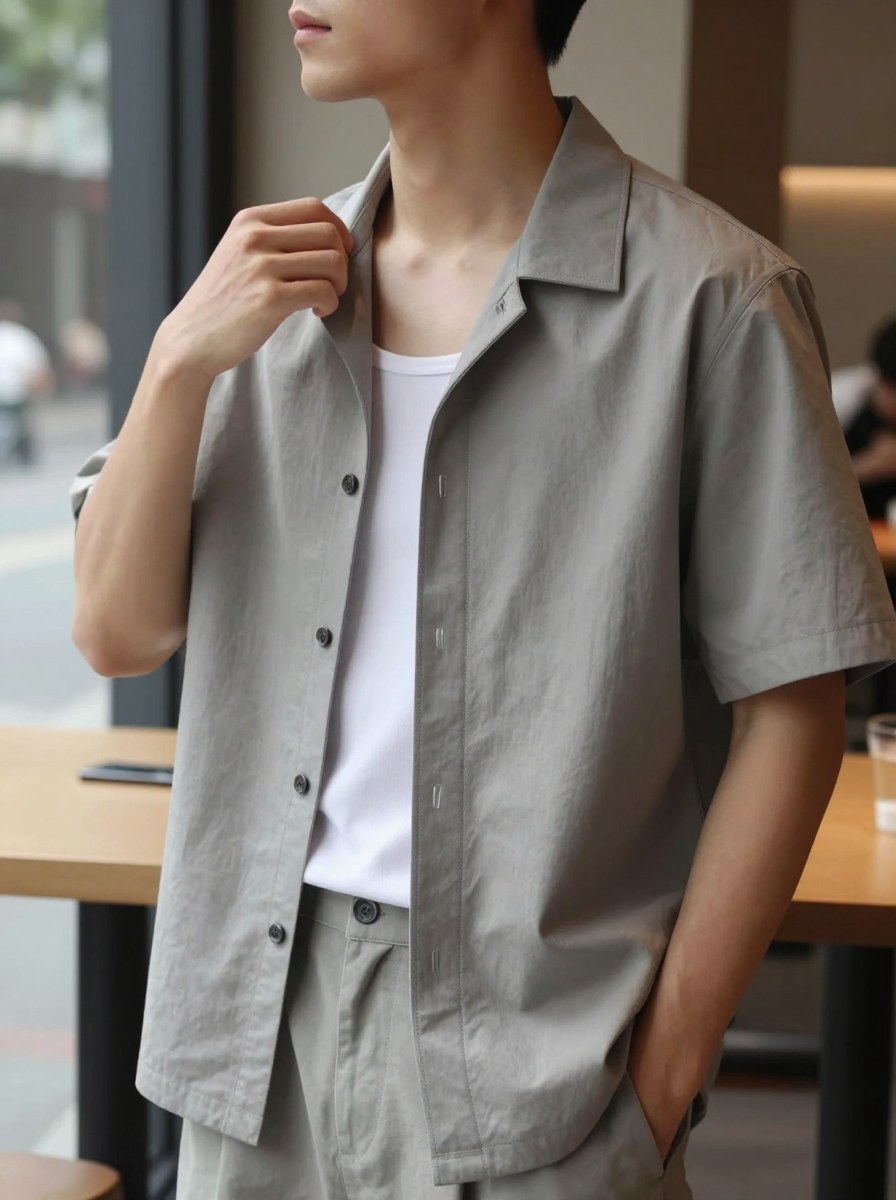
- Silver cuff bracelet + ribbed tank + lightweight overshirt: especially strong in summer, when the forearm and wrist become more visible than the neckline.
- Silver cuff bracelet + camp-collar shirt + loose trousers: ideal for cleaner library-mood and light-commute looks. The wrist detail adds structure without age.
- Silver cuff bracelet + knit polo + khaki or grey trousers: a very good way to keep knitwear from feeling too proper or too flat.
- Silver cuff bracelet + slim ring or silver-wire glasses: one of the best ways to build a low-noise silver accessory language across the whole upper body.
All of these formulas share the same principle: the cuff bracelet is not the hero, but once the clothes are already basic enough, it can push “ordinary” one step closer to “resolved.” In current Chinese-internet menswear, that small step is often more valuable than buying yet another average shirt.
7. Who should add one now
- Readers who already own plenty of white tees, tanks, camp shirts, knit polos, and straight trousers, but still feel their outfits are missing one final layer of completion;
- Readers who do not want to wear a watch every day, or feel watches can sometimes read too mature, too heavy, or too functional;
- Readers already comfortable with silver rings, slim chains, or silver-wire glasses but whose hand area still feels underdeveloped;
- Readers drawn to campus-boy, cleanfit, softboy, and Korean casual dressing who want to look more considered without relying on loud jewelry.
For these readers, a silver cuff bracelet is a very smart investment. It does not demand a new wardrobe or an overly explicit accessory identity. But it can improve the efficiency of the clothes you already own almost immediately.
8. BoyStyle’s conclusion
Silver cuff bracelets are returning to the center of Chinese-internet youth menswear in 2026 not because they suddenly became a new jewelry craze, but because they solve a very real problem: once the clothes are already basic, clean, and wearable, how do you stop the hand area from feeling empty, and how do you add structure without noise?
They are lighter than a watch, quieter than a chain bracelet, more modern than cords or beads, and far more complete than leaving the wrist blank. Especially in campus-boy, cleanfit, Korean casual, and softer summer styling, a cuff bracelet with the right width, the right reflection, and the right restraint can create the kind of effect BoyStyle values most: not louder, but more finished.
Read next: Why slim silver rings are taking over men’s accessories, Why slim silver chain necklaces are back, Why silver-wire glasses are returning to cleanfit menswear, Why a real white tee still matters in youth menswear.
Chinese-trend reference pattern: this article is grounded in public Chinese-platform content and product-language signals around phrases such as “男生银色手镯 cleanfit,” “textured bracelet,” “men’s accessories completion,” and “what to wear besides a watch,” together with Chinese e-commerce naming around “cuff bracelet,” “titanium steel,” “minimal,” “cold style,” “silver,” “commute,” and “men can wear,” plus the broader youth-menswear discussion around white tees, tanks, camp shirts, knit polos, and hand-area finishing.