Slim Silver Chain Necklaces Are Moving Back Into the Center of Campus and Cleanfit Menswear
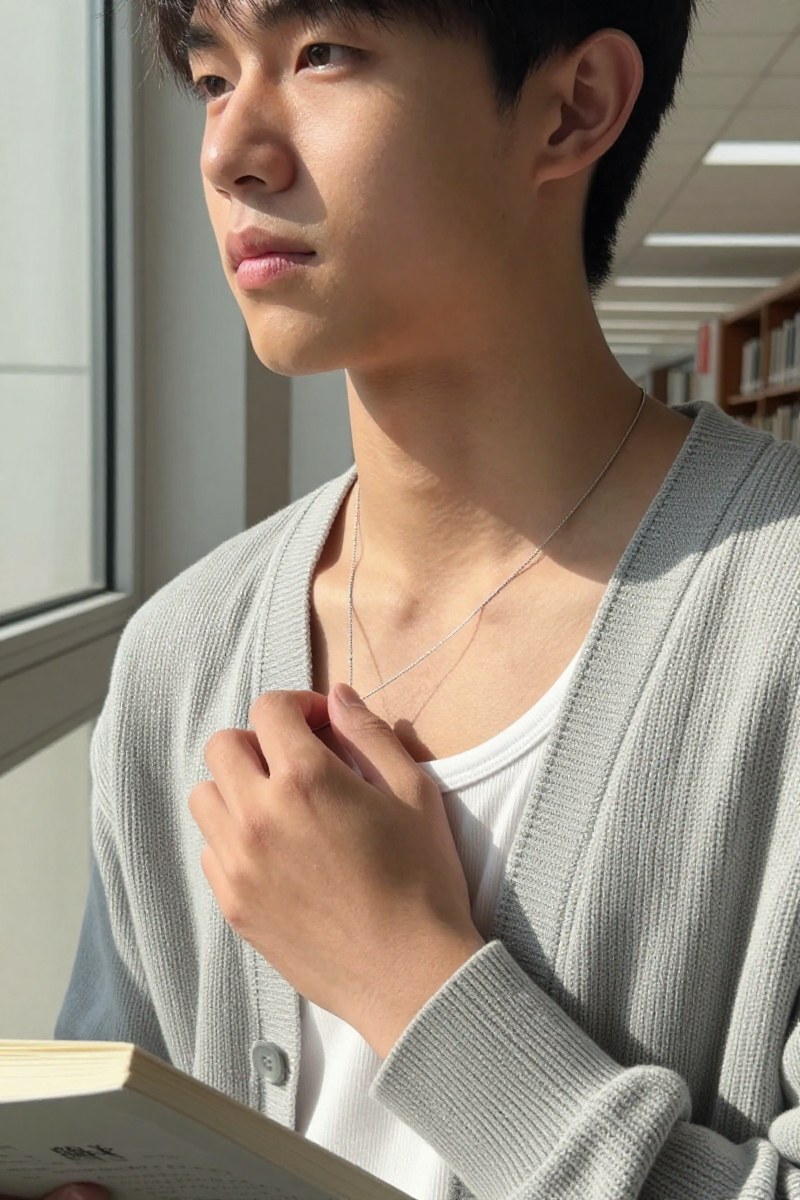
If you keep watching Chinese menswear content right now, one shift becomes difficult to ignore. People are still talking about cleanfit, campus-boy dressing, Korean casual looks, light commuting outfits, and soft academic styling, but the thing that often makes those looks feel less like “clothes that are fine” and more like “a person whose whole mood has finally come together” is not necessarily a more expensive shirt or a stronger jacket. Very often, it is a tiny layer sitting close to the neck and collarbone: slim silver chains, collarbone necklaces, light stainless-steel chains, titanium-steel chains, and low-presence silver necklaces.
This matters not because necklaces are suddenly new, but because the Chinese-internet understanding of men’s jewelry is changing. For years, men’s necklaces were often pushed toward two extremes: too heavy, too loud, too street-coded, or too decorative, too gift-shop, too unserious. In 2026 spring and summer, more Chinese-platform style content is placing necklaces in a smarter position. The useful necklace is no longer the star. It is a light structural layer between the neckline and the skin. It does not dominate the outfit, but it immediately improves the finish of a white tee, an open-collar shirt, a cardigan, a knit polo, even a simple sweatshirt.
Put more directly, the best slim silver chains now are not there to prove that you “wear jewelry.” They are there to stop an outfit from feeling too flat, too empty, too template-like. They make basic clothes feel slightly more alive, slightly more human, and much more complete.
1. Why this is happening now
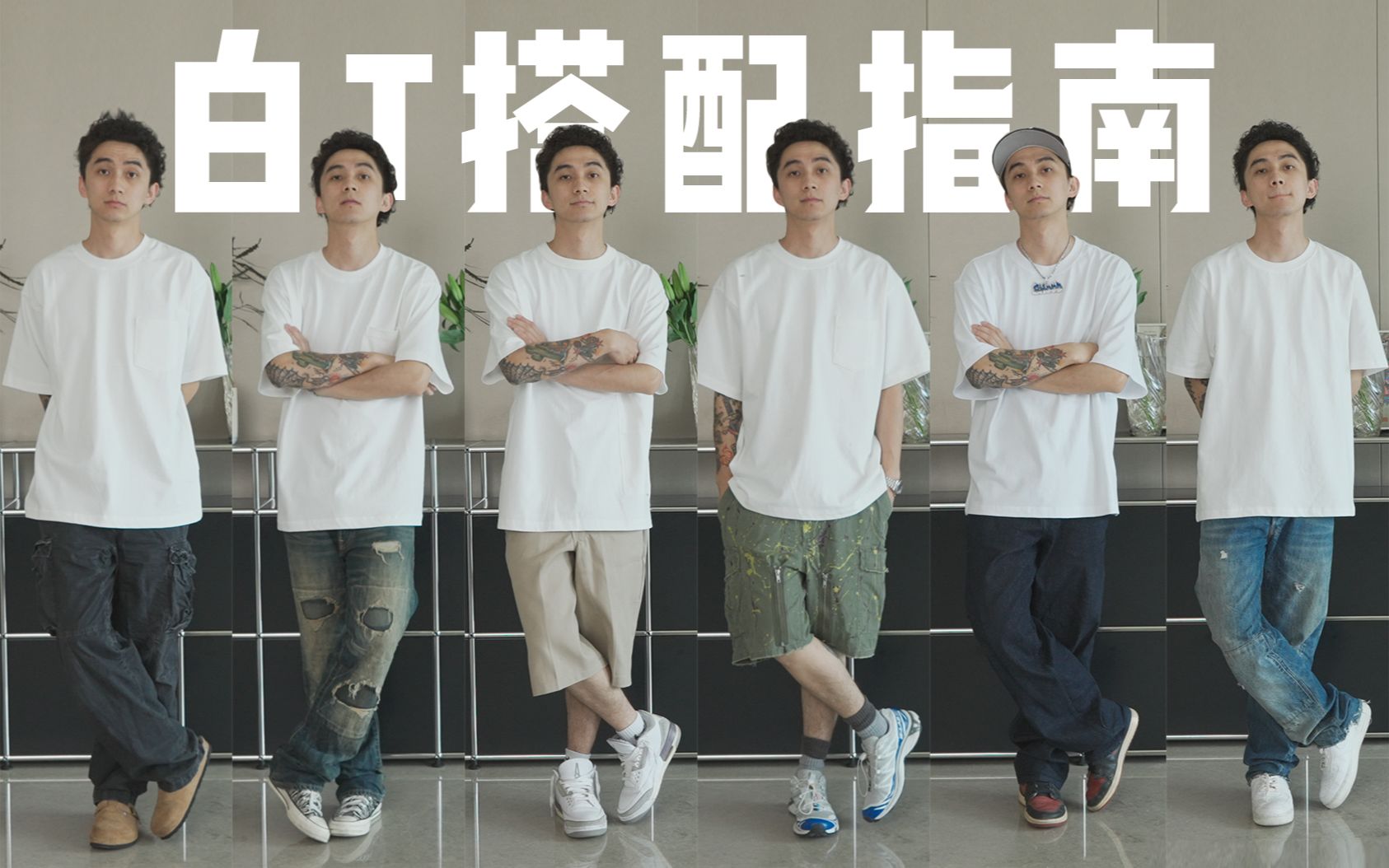
If you line up the signals from Chinese platforms, the direction is surprisingly clear. Xiaohongshu-style titles repeatedly circle around phrases like “men’s slim chain,” “collarbone chain for men,” “Korean necklace men,” “necklace for white tee,” “cleanfit accessories men,” and “how to wear men’s necklaces without looking forced.” Bilibili-style content keeps asking practical questions: how should men choose jewelry, what necklace works with white tees, how to wear necklaces without looking tacky, what necklace lengths actually suit everyday outfits. On the commerce side, the language is equally revealing: titanium steel, waterproof, non-fading, minimalist, collarbone length, low presence, Korean cold-tone, small niche design, easy daily wear.
Those phrases tell the same story. People are not mainly searching for dramatic jewelry. They are searching for a small, wearable layer that can cooperate with basic clothing without dragging the wearer into obvious performance styling. In other words, necklaces are becoming a wardrobe problem rather than a subculture costume problem.
That shift matches the wider direction of youth menswear on the Chinese internet. The strongest contemporary looks are less dependent on hype signifiers and more dependent on believable finish: cleaner silhouettes, calmer color, stronger facial rhythm, better upper-body energy, and styling that looks like it could actually be worn outside. Slim silver chains fit that perfectly. They are light enough not to contaminate cleanfit, close enough to the skin to affect the mood immediately, and small enough not to make the wearer seem like he is acting out a jewelry persona.
Chinese-internet signals behind the return
2. What it actually fixes
The reason slim silver chains are useful has very little to do with “decoration” in the old sense. Their real job is to solve a very specific menswear problem: the space between the collar and the skin often feels too empty. A white tee, open shirt, cardigan, or knit polo can all be perfectly good pieces, but if the collarbone area contains zero information, the whole upper half can feel slightly unfinished.
This matters even more now because the dominant youth-style lanes on Chinese platforms do not rely on loud layering or oversized fashion moves. They rely on looking clean, calm, easy, and real. That makes small details near the face and neck disproportionately important. A slim silver chain is one of the cleanest ways to create that missing rhythm. It behaves like a line between cloth and skin. It makes the outfit breathe without making it noisy.
3. Why slim chains work better than heavier necklace styles right now
Heavier chains are not dead, but if your target is current campus-boy dressing, cleanfit, lighter Korean casual style, or soft academic menswear, slim silver chains are much easier to use well. There are four big reasons.
- First, they do not steal the whole scene. Thick chains announce themselves first. Slim chains usually let the person and the clothes stay in front.
- Second, they cooperate better with basic tops. White tees, grey tees, open-collar shirts, knit polos, cardigans, and thin sweatshirts all accept a slim chain more naturally than a heavier one.
- Third, they fit the current low-saturation, believable-outfit atmosphere on Chinese platforms. The strongest young menswear images now are not about hardness. They are about clean realism.
- Fourth, they are much safer for beginners. If your judgment is slightly conservative, a slim chain rarely destroys the outfit. A heavy chain or a large pendant can throw the entire look off immediately.
So the current shift is not simply “men are wearing necklaces again.” It is more precise than that: men have found the necklace proportion that actually belongs inside their everyday wardrobe.

4. The five necklace directions worth buying first
1. Pure no-pendant slim box chain or round-link slim chain
This is the safest and smartest first purchase. No symbol, no dramatic message, no styling burden. Its value lies in adding a controlled line near the collarbone.
2. Slim chain with a very small pendant
If you want a little more identity, choose something extremely restrained: a tiny plate, a tiny ring, a miniature geometric form. The keyword is tiny. Current youth menswear works best when the pendant feels like punctuation, not a headline.
3. Icy grey silver or muted gunmetal-silver chain
These usually age better than bright mirror silver. They cooperate more easily with low-saturation wardrobes and calmer cleanfit styling.
4. Titanium-steel or stainless-steel daily-wear chain
This is a very Chinese-platform solution in the best sense: practical, durable, low maintenance, budget-friendly. For many readers, these materials are a better first step than precious-metal maintenance anxiety.
5. Minimal double-layer chain with only a slight drop difference
If you already know you like slim chains, a very controlled two-layer stack can work. The key is to keep it light enough that it still reads like one and a half layers, not a pile of jewelry.
5. What to check before buying
1. Check the length before the brand story
The best daily slim chain usually sits close to the collarbone and can appear lightly inside a crewneck, open shirt, or partially unbuttoned collar. Too short and it feels tight. Too long and it drops into the middle of the shirt, where it no longer helps the neckline.
2. The chain should feel like a line, not a rope
The moment it begins to read as rope-like or heavy-chain adjacent, it has already drifted away from the center of this trend.
3. Prefer softer, lower-reflection metal finishes
Very shiny silver can look cheap or too fashion-prop-like. The current sweet spot is softer, quieter, slightly matte metal.
4. Inspect the clasp, connector rings, and finishing points
Many inexpensive chains fail not in the main body, but in the small finishing hardware. Since slim chains carry very little visual information, bad clasps and cheap joins become obvious fast.
5. Pendants should be smaller than your first instinct
If you follow campus, cleanfit, or Korean casual styling, your pendant should feel like a whisper. The bigger and more symbolic it becomes, the more it starts to pull the whole outfit elsewhere.
6. If the budget is limited, prioritize proportion and material stability
For most daily wear, correct proportion and clean execution matter more than luxury branding. A good titanium-steel chain can outperform an expensive but badly proportioned silver chain.
7. Look for real try-on images
Flat product shots are not enough. You want to see white-tee wear, open-shirt wear, and realistic skin-and-collarbone context.
8. The more basic your tops are, the simpler the chain should be
If your wardrobe revolves around white tees, blue shirts, cardigans, polos, and straight trousers, the most useful necklace is usually the simplest one.
9. Real daily chains should survive sweat, commuting, and repeated wear
This trend matters because it belongs to normal life. That means the chain should make sense for heat, backpacks, movement, and frequent use, not only for one styled photo.



6. The outfit formulas where it works best
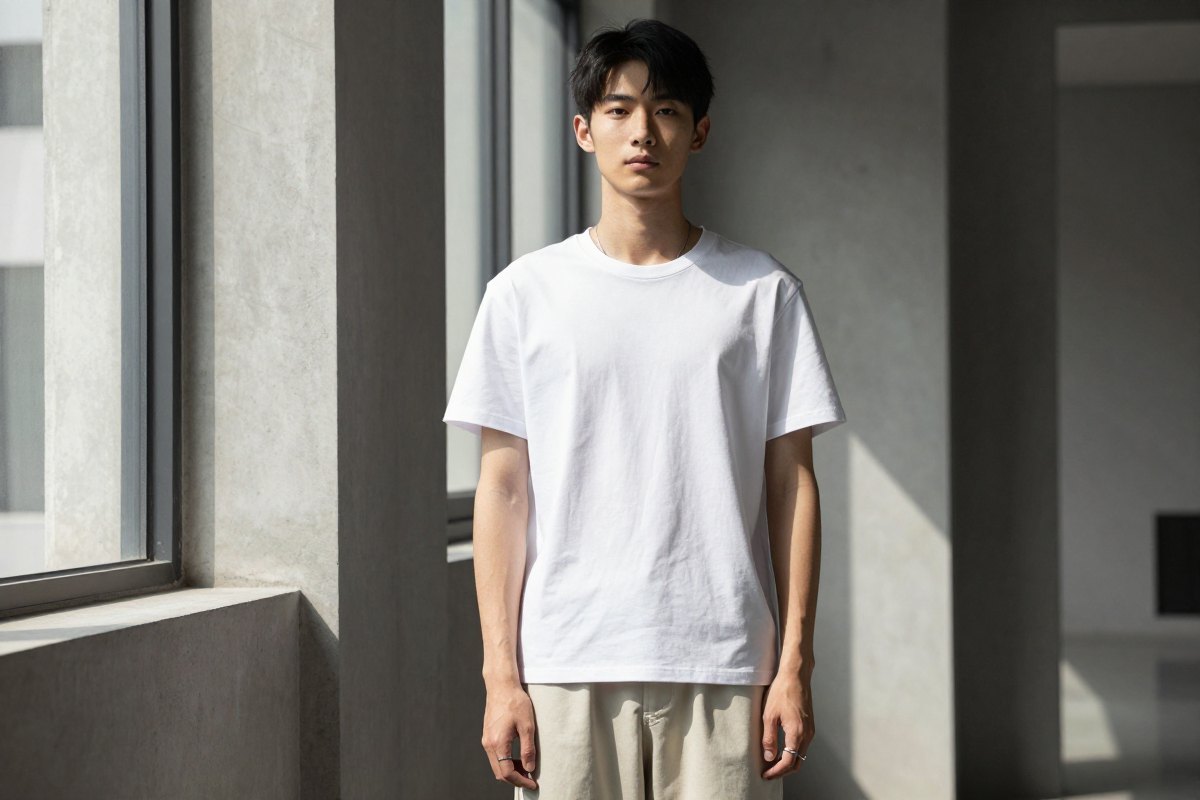
- Slim silver chain + white tee + light denim: one of the clearest campus-boy formulas. The chain stops the neckline from feeling empty while denim and sneakers keep the look grounded.
- Slim silver chain + open-collar shirt + khaki trousers: especially strong for lighter Korean casual and library-cleanfit styling. The chain turns an open collar from accidental to intentional.
- Slim silver chain + knit polo + straight trousers: useful for a slightly more polished route. Here the chain should stay very quiet, just enough to stop the upper body from becoming too formal.
- Slim silver chain + cardigan + white tank or tee: one of the cleanest softboy-campus combinations. The cardigan brings softness; the chain adds one controlled metallic line.
- Slim silver chain + light athletic tank or relaxed training top: this direction is also appearing more often in Chinese-platform styling. The point is not to make the chain overtly sexy, but to complete the neck and collarbone area after movement.
All of these formulas share one rule: the necklace works with the neckline, not separately from it. Think of it as a second structure living inside the collar.
Shopping routes
7. The store signals worth watching
The best shopping routes for this category are not always big jewelry stores. Often, the most useful sellers are the ones that actually understand men’s upper-body styling. They show white-tee try-ons, open-collar shirt styling, collarbone close-ups, length comparisons, matte metal detail, and how the chain sits next to rings, bracelets, or simple earrings. That tells you they are selling a mood, not just a metal object.
By contrast, sellers who only show black-background reflective product glamour shots, or who still frame everything around loud old narratives like “street king,” “explosive trend,” or “hype chain,” are usually not aligned with the direction that matters here. What you want are shops fluent in low presence, white-tee compatibility, commuting wearability, academic mood, and cleanfit-friendly jewelry.
Concretely, the best Chinese-platform store signals usually include:
- styling examples built around white tees, open shirts, cardigans, or polos;
- clear information on chain length, width, material, and clasp build;
- real skin-tone and real neck-area try-on images instead of only polished campaign shots;
- a wider ecosystem of light jewelry such as slim bracelets, subtle rings, and simple studs.
That usually means the shop understands a full young-menswear accessory system rather than throwing random chains into a listing page.
8. Who should buy one now
- Anyone whose wardrobe already includes white tees, shirts, cardigans, polos, denim, and straight trousers, but whose upper half still feels one layer short.
- Anyone interested in campus-boy, cleanfit, Korean casual, or light academic style, but not ready to begin with heavier rings, earrings, or thick chains.
- Anyone who used to think men’s necklaces were too loud, too coded, or too difficult, and now wants a lower-risk entry point.
- Anyone who wants one accessory that works for daily life, campus, commuting, photos, and casual social settings without becoming a costume piece.
The reason slim silver chains are moving back into the center of menswear in 2026 is not just that they look good. It is that they fit the exact thing contemporary Chinese-platform youth style needs most: not another giant statement, but one more layer of believable, light, long-term finish. They turn men’s jewelry from a risky extra into a smart basic option.
If I had to recommend just one jewelry purchase for a mostly basic wardrobe this season, it really would be a slim silver chain with the right length, a controlled finish, clean construction, and strong long-term compatibility with white tees and open collars. It will not transform you into someone else. But it may be the first thing that makes your outfit feel complete.
Read next: Why college-boy style has become a stable menswear language again, Why knit polos are becoming a smarter spring and summer buy, Why silver wire glasses are moving back into the center of cleanfit and campus menswear, and Why cardigans still anchor the softboy wardrobe
Source references: Xiaohongshu searches around “men’s slim chain,” “collarbone chain men,” “white tee necklace men,” and “cleanfit accessories men”; Bilibili searches around “men’s necklace recommendation,” “how men choose jewelry,” “what necklace works with white tees,” and “Korean necklace men”; Taobao searches around “slim silver chain men,” “titanium steel necklace men minimal,” “Korean collarbone chain men,” and “minimal pendant necklace men slim chain”; Douyin searches around “men’s slim chain necklace,” “campus-boy necklace styling,” and “white tee necklace cleanfit.” Recent Chinese-platform titles and product naming patterns clearly show rising interest in slim chains, collarbone chains, and low-presence silver necklaces for young men.