Why slim belts are back at the center of 2026 youth menswear waists: not old-money costume, but a missing layer of cleanfit and campus proportion
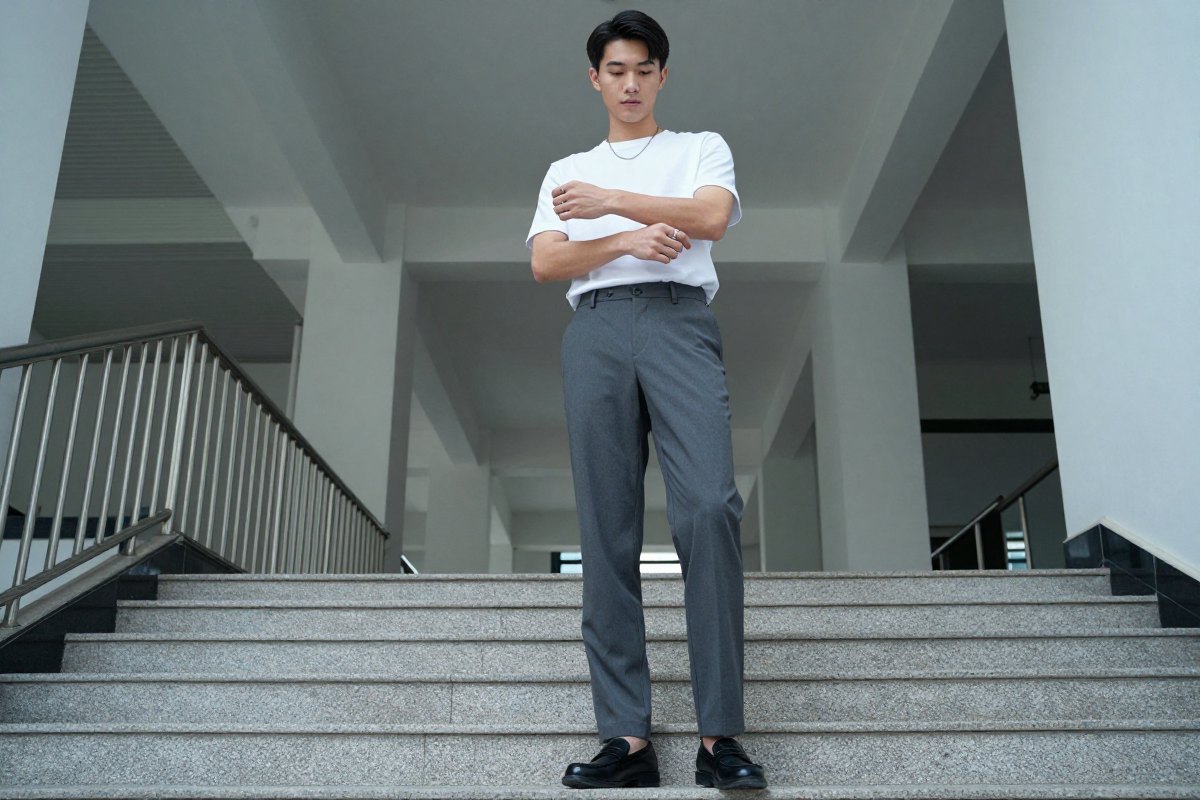
If you sort recent Chinese-internet menswear discussion toward the waistline, one change becomes obvious. People are still talking about college-boy dressing, cleanfit, cropped tops with wider trousers, straight pants, wide-leg trousers, light commuting, knit polos, waist placement, longer legs, and proportion. But another object has quietly moved back into that conversation: slim belts, narrow belts, silver-buckle belts, brown slim belts, and understated waist details for wider trousers.
This matters not because belts are new, but because belts in 2026 Chinese youth style no longer read only as office gear, faux old-money props, or overly mature accessories. The real questions now are much more specific: Do wide trousers need a belt? Does a slim belt improve proportion? How should the waistline work when tops get shorter? Are silver-buckle belts right for cleanfit? Do brown belts work better with lighter summer trousers? Those questions reveal the real demand. People are not looking for “a belt.” They are looking for a way to organize the waistline.
That is why slim belts are coming back. The return is not about looking richer or older. It is about the fact that once tops get lighter, trousers get wider, and outfits get cleaner, the waist becomes one of the most important places in the whole look. Slim belts quietly restore order there.
1. Why slim belts feel relevant again right now
One of the clearest shifts in recent Chinese menswear content is that discussion has moved downward. For a long time, most style conversation focused on shirts, polos, jackets, glasses, necklaces, caps, and bags. Now more of the pressure is on the lower body and the waistline. You see repeated discussion around wide-trouser proportion, waist placement, how to avoid a flat five-five proportion, whether to tuck or half-tuck, and whether a belt helps wider trousers feel more intentional.
Once those questions become common, the meaning is clear: people are no longer satisfied with single-item styling. They want the whole silhouette to close properly. That is especially true in the strongest youth-style lanes right now—light-commuter cleanfit, college-boy daily dressing, wider straight trousers, and cropped or neater tops. Those looks all push the waist into view.
E-commerce language points in the same direction. Instead of only seeing “business men’s leather belt,” you increasingly see titles using minimal, narrow, slim, silver buckle, matte, daily, cleanfit, Korean-inspired, campus, and relaxed commute. The market is not selling status first anymore. It is selling compatibility and proportion.
Chinese-internet signals behind the slim-belt return
2. What slim belts actually add is not maturity, but waistline structure
Many outfits fail not because the trousers are wrong or the shoes are wrong, but because the waistline is unresolved. The top half of the body often already has enough information—collar, neckline, glasses, a bag strap, maybe jewelry. The lower body has trouser shape and footwear. What often disappears is the transition in the middle.
A slim belt works as a line between the top and the trousers. Once that line becomes clear, the whole outfit stabilizes. Tops no longer simply fall downward without a boundary, and trousers no longer look as if they are only “there.” That is especially useful with zip knit polos, basic tees, cropped light outerwear, relaxed trousers, and more silhouette-driven pants.
This is also why slim belts fit cleanfit much better than many people assume. Cleanfit is not about adding nothing. It is about adding quietly. That is the same logic behind slim silver rings, silver wire glasses, and lightweight bags. The right belt should not announce itself first. It should make the whole proportion feel settled.
3. Why the best version now is not the thick logo belt or the heavy old-money belt
If your target is the most stable youth-menswear language right now—campus, cleanfit, light Korean casual, and low-noise commuting—the worthwhile belt choices are rarely complicated. The strongest options usually fall into a few clear groups:
- A black slim matte belt: the safest and easiest option for darker straight trousers and cleaner light-commuter looks.
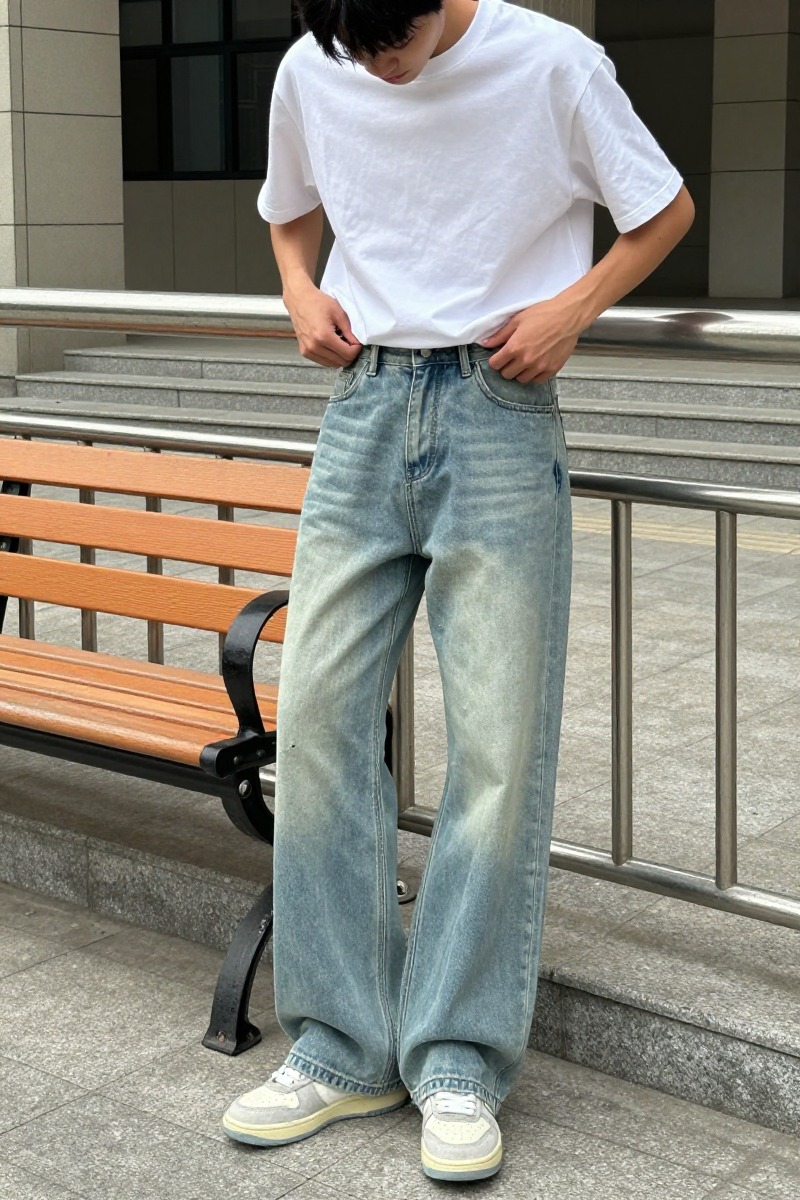
- A dark-brown slim belt: especially useful with lighter summer trousers, washed denim, beige pants, and softer campus palettes.
- A small silver-buckle minimal belt: ideal if you already wear silver wire glasses, rings, or quiet bag hardware.
- A lightly aged narrow belt: useful for readers who want a touch of relaxed Japanese or vintage softness without costume energy.
The versions to be more careful with are usually the obvious ones: large-logo buckles, overly wide belts, and heavy glossy belts that only really work in staged old-money imagery. Those versions often overpower the waistline instead of finishing it.
Put more directly: this return is not rewarding money-coded styling. It is rewarding judgment. The best slim belt is not there to compete with the knit polo, trousers, or shoes. It is there to connect them.
4. Ten useful checks before you buy
1. Narrower is usually safer than wider
For most youth-style outfits, a slim belt works better than a broad one. Wider belts easily make the waist look heavier than the rest of the outfit.
2. The buckle should be thin, not chunky
Many belts fail at the buckle. Thick, flashy, overly sculpted buckles quickly cheapen the look.
3. A matte surface usually works better than a glossy one
High shine can still work in formal tailoring, but in cleanfit and campus dressing it often looks too deliberate.
4. The color needs to connect to your actual trouser rotation
Black, deep brown, coffee, and charcoal-adjacent tones are usually the most wearable. Avoid novelty colors unless your wardrobe really supports them.
5. Judge belts on-body, not only in flat-lay product photos
A belt is a positional item. You need to see how it works on wide trousers, straight pants, denim, or summer slacks.
6. It should help the trousers, not perform over them
If the belt is already the visual star in the product image, it is probably too loud for daily youth dressing.
7. Check belt-loop compatibility
Some very slim belts look great in theory but feel awkward with common trouser loops. Think about the trousers you actually own.
8. Silver buckles should live smoothly with your other metal details
If you already wear silver-toned frames, rings, or bag hardware, a silver buckle can help the whole outfit feel more organized.
9. Brown does not automatically mean older
With lighter denim, beige trousers, off-white pants, and summer knitwear, dark brown can often feel softer and more modern than hard black.
10. The right daily belt should survive movement, commuting, sitting, and repeated wear
This trend matters because it is becoming more practical. Belts that are too stiff, too heavy, or too fragile are not worth high-frequency use.
Useful Chinese shopping-entry patterns
5. What trousers and tops slim belts work with best
- Wide-leg tailored trousers: one of the clearest home bases for the slim belt. It gives the waistline a real center.
- Light-wash straight denim: especially good with brown or small silver-buckle belts.
- Charcoal straight trousers: black slim belts are almost automatic here, especially for light-commuter cleanfit.
- Micro-flare or silhouette-led trousers: these pants usually benefit from a cleaner waistline edge.
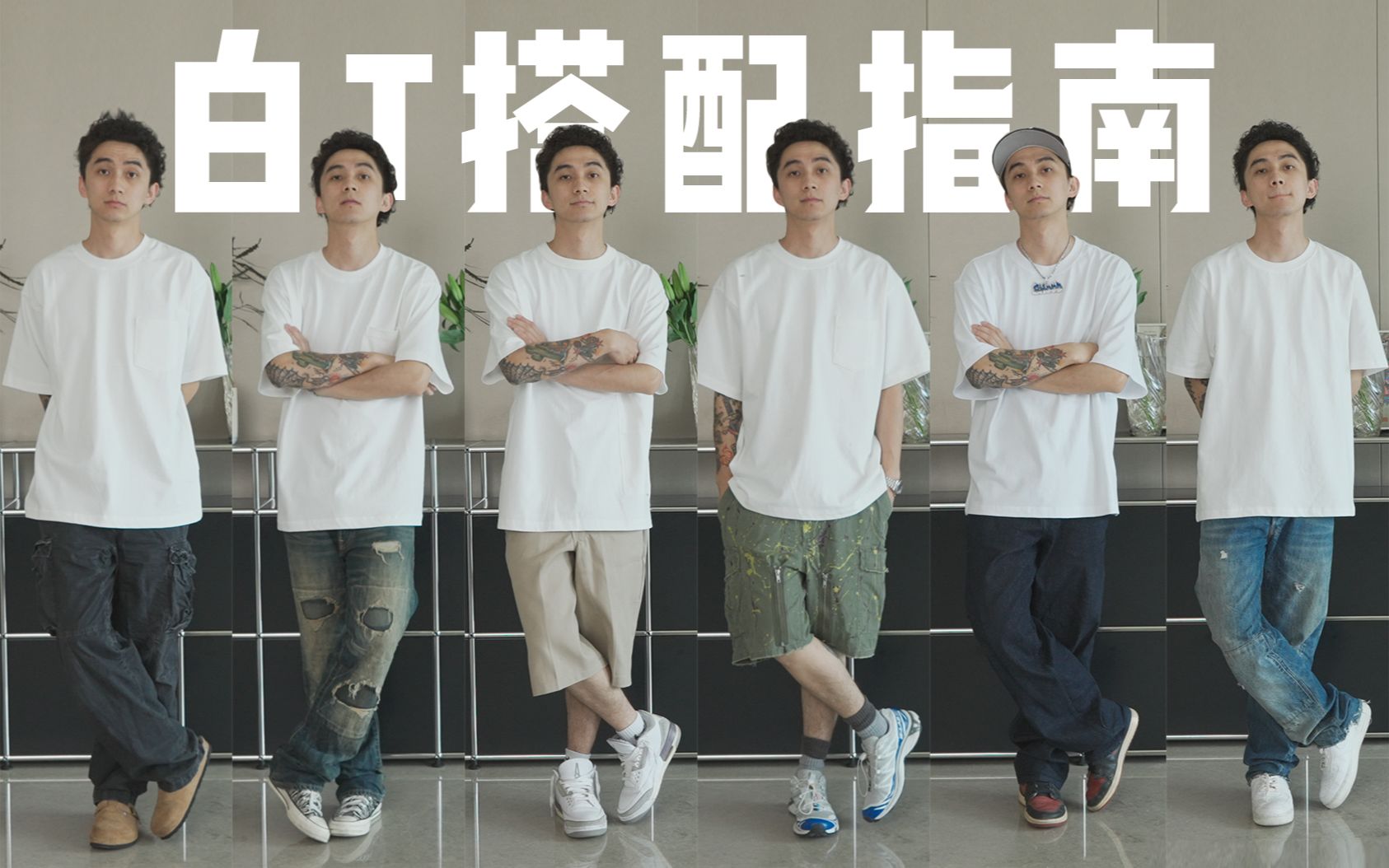
On the top half, slim belts work especially well with zip knit polos, basic white tees, cropped light outerwear, short knit layers, and neater shirt shapes. Those tops all tolerate a visible waistline better than longer, looser tops that hide it completely.
6. BoyStyle’s conclusion: the belts that stay will be slim, light, and low-noise
If I had to reduce the whole thing to one judgment, it would be simple: slim belts will remain part of 2026 youth menswear, but the versions that remain will not be the thick-buckle, logo-heavy, old-money costume versions. The versions that stay are the ones that have been made more daily, more cleanfit, and more campus-compatible.
Their value is not that everyone suddenly needs to “care about belts.” Their value is that they give readers who already have good trousers, good tops, and good shoes one more layer of waistline order. We spent a long time writing about the upper body—glasses, necklaces, caps, knitwear, shirts. Now the waistline is finally being treated with the same maturity. Slim belts matter again because they no longer need to prove wealth or maturity. They just need to do their job for the trousers, for the silhouette, and for real life.
Read next: why the light-commuter cleanfit wardrobe matters more now, why micro-flare trousers re-entered the campus cleanfit conversation, why zip knit polos are taking over the summer upper body, why slim silver rings are taking over men’s accessory energy, and why nylon crossbody bags still matter in light-commuter dressing.
Chinese-internet reference pattern behind this article: the judgment here is based mainly on recent public Chinese-language content and naming patterns around waistlines, cropped tops, wider trousers, “showing proportion,” slim belts, silver-buckle belts, brown belts, and campus cleanfit styling; together with common e-commerce phrasing inside searches such as “细皮带 男,” “窄版皮带 男,” “银扣 细皮带 男,” “棕色 细皮带 男,” and “极简 腰带 男.” Public entry examples include Baidu: Xiaohongshu / men / slim belt / wide trousers, Baidu: Douyin / college-boy cleanfit / waistline, Taobao: slim belt men, and Taobao: silver-buckle slim belt men.