Men’s fashion underwear is no longer just a base layer: from Calvin Klein and Supreme to boxer briefs, briefs, and logo-waistband language
Men’s underwear spent a long time being treated as something quiet, hidden, and purely functional. But if you look back carefully at fashion culture, advertising, and branded image systems, men’s underwear has not been only practical for decades. It belongs to body imagery, logo culture, and one of the most compressed forms of menswear communication: very little fabric, but a very strong message.
From Calvin Klein’s iconic campaigns to Supreme-style logo culture and the constant re-reading of boxer briefs, briefs, trunks, and waistband visibility, men’s underwear is no longer only about whether something gets worn. It is about how the most intimate layer can organise body, brand, and style language at once.
1. Why Calvin Klein still defines the visual template
If one brand must be named in any discussion of men’s underwear as fashion culture, Calvin Klein remains unavoidable. What it accomplished was not only selling underwear, but building a visual system in which underwear could be clean, direct, body-aware, and unmistakably branded without becoming visually overcomplicated.
The power of that system still echoes now. It made men’s underwear visible as image, not just as utility. It created a modern masculine template that many later brands still work around.
2. Brand underwear sells body imagination as much as fabric
Underwear branding is never only about comfort. It also sells support, maturity, discipline, urban cool, street presence, and a sense that even the waistband can become part of public visual identity. That is why underwear is so image-dependent.
It sits too close to the body to avoid body politics, and it is too structurally minimal to rely on anything except cut, branding, and silhouette.
3. Boxer briefs, briefs, and trunks are different image systems
- boxer briefs: the most stable modern format, with fuller line and broader support
- briefs: more direct, more leg-releasing, and often closer to classic underwear and swim-inspired imagery
- trunks: shorter and often more urban, compact, and younger in feeling
These differences are not only about length. They change the relationship between waist, hip, upper thigh, and body organisation.
4. Why the logo waistband became such a strong symbol
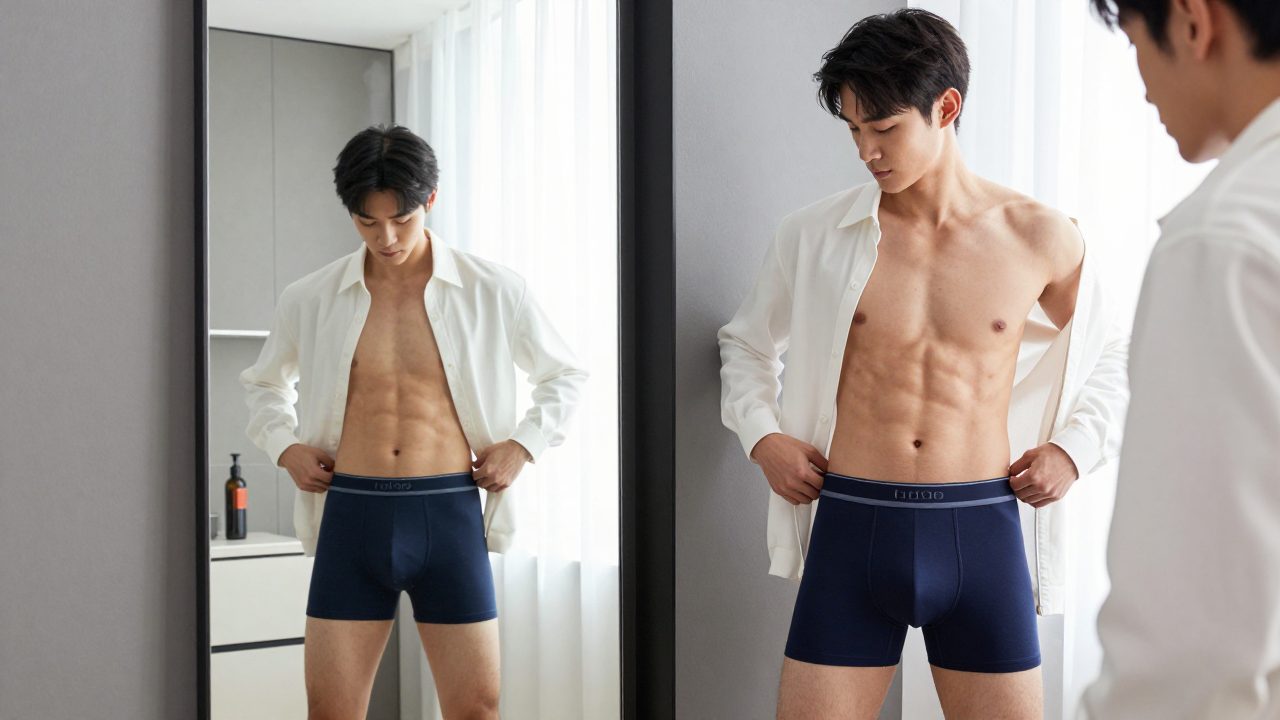
For many brands, the waistband is the real interface between underwear and fashion visibility. It is the part most likely to appear in lower-rise trouser styling, sportswear, loungewear, mirror imagery, and branded campaign language. That makes it one of the most efficient points of identity in the whole category.
Calvin Klein understood this early, and many later brands extended the logic in their own way.
5. What brands like Supreme changed
If Calvin Klein represents modern minimalist underwear image culture, Supreme and similar names pulled underwear back toward youth, street, and logo-conscious brand language. The garment itself may not change radically, but the way it is read changes. It becomes less about quiet modern sensuality and more about coded cultural recognition.
That shift reminds us that men’s underwear never exists outside wider menswear culture. It absorbs the dominant visual language of the moment.
6. Fabric and support decide whether it feels elevated or generic
Even in a style-driven reading, fabric matters deeply. Cotton, modal, stretch blends, and technical fibres all affect surface feel, support, and line. Too loose feels cheap. Too thin loses structure. Too rigid stops behaving like an intimate layer.
The most convincing fashion underwear is not the most revealing. It is the one that creates a cleaner and more deliberate body organisation inside the smallest amount of clothing.
7. The relationship with outer trousers and loungewear matters more now
Underwear is being seen more often not only through campaign images but through the way it interfaces with joggers, lower-rise trousers, lounge shorts, and mirror content. Once the waistband or base layer edge begins to enter the outfit visually, underwear stops being fully invisible and becomes a style detail.
That is why waistband design, color control, and edge finishing matter so much: this tiny layer now has a way of entering the whole look at unexpected moments.
8. The most common mistakes
The first mistake is buying only the brand name and ignoring cut. The second is trusting campaign imagery without checking fabric and support. The third is assuming that any visible waistband automatically equals style. The stronger fashion-underwear logic is much more controlled than that. It knows when to be seen and when to retreat.
That restraint is exactly what gives the category its real sophistication.
Continue with: why jeans remain so hard to replace in youth menswear, why hoodies remain such a stable youth top layer, and why socks are becoming one of the smartest small details in youth menswear