Tank-top base layers are moving back into the 2026 summer wardrobe: why they have become one of the smartest additions for college-boy, cleanfit, and light athletic casual dressing
Across recent Chinese-internet menswear content, one signal has become increasingly obvious even though it still has not been written through clearly enough: when people talk about summer tops now, they are no longer only talking about white tees, cool-touch tees, short-sleeve shirts, and knit polos. They are returning to a deeper and more practical question — what should sit underneath, so the whole outfit feels cleaner, calmer, and less awkward in real life? That is why terms like “men’s tank top,” “ribbed tank,” “sleeveless base layer,” “shirt undershirt,” “tank top cleanfit,” and “college-boy summer tank layer” are rising at the same time across Xiaohongshu-style posts, Taobao listings, Douyin selling language, Weibo discussion, and Bilibili roundup culture. It is no longer just a gym item, a homewear item, a beach item, or a hard-style photo prop. It is moving back into the real everyday wardrobe as a useful basics layer.
The most important part of this shift is not that tank tops are suddenly “trending” again. It is that the Chinese-internet understanding of them has changed. For a long time, the phrase “men’s tank top” triggered two extremes. Either it meant something too homewear-coded, too much like dorm sleepwear or an old-fashioned undershirt, or it meant something too body-conscious, too close to gym selfies and heavy American-style image-making. By spring and summer 2026, that interpretation has clearly shifted. The more common discussion now is much more practical: should an open-collar shirt be paired with a clean ribbed tank underneath, what can sit under a white shirt without looking messy or too sheer, what keeps a lightweight overshirt from feeling empty, how does a college-age man stay clean-looking while moving between classroom, mall, and transit, and how does cleanfit add a layer of structure without piling on accessories? Tank-top base layers matter again because they are being treated as a way to solve summer upper-body order, comfort, and completion, not just as attitude pieces.
On a more practical level, this topic matters because tank-top base layers have now clearly entered the buying-decision zone across Chinese platforms. Taobao and Tmall increasingly bind together phrases like ribbed tank, cotton tank, no-show base layer, shirt undershirt, non-sheer base tank, cleanfit tank, campus tank, broad-shoulder tank, and athletic casual tank. Xiaohongshu- and Weibo-style discussion leans more toward whether a tank looks clean instead of greasy, whether it reads as underwear or as clothing, whether it improves an open-shirt look, and whether a tank worn on its own can still look modern and young. Bilibili-style content leans more toward problem-solving: what men should wear under summer shirts, why some tank tops look dated, and why some read more like innerwear than real clothes. That means this is no longer a niche taste detail. It is a real basics category that many people are preparing to buy, while still feeling unsure how to judge it well.
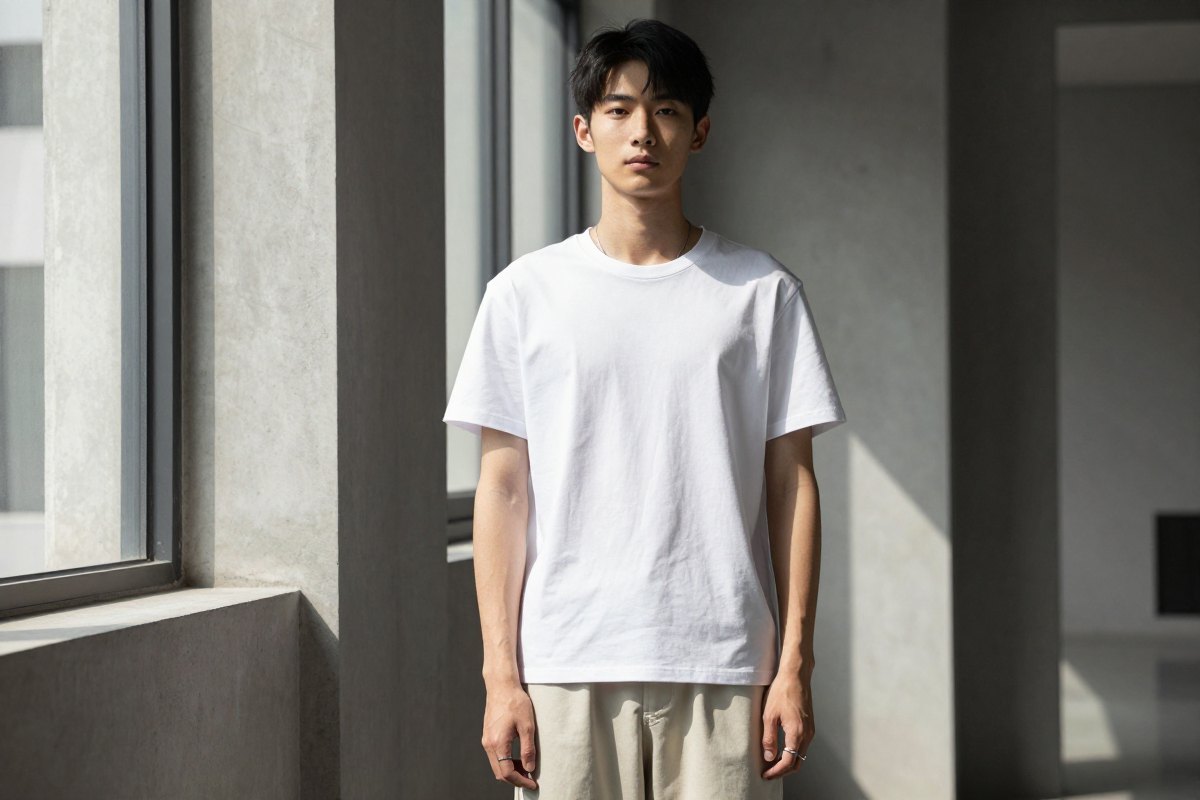
1. Why tank-top base layers are back at the center right now
Start with the content-side signal. Chinese youth menswear now cares much more about believable real-life dressing than before. It is no longer enough for an outfit to work only in a photo. It has to make sense in dorms, classrooms, shopping centers, subways, cafés, and evening walks. A plain white tee used to be treated as the universal answer to “clean summer dressing,” but the current questions have become more precise: will a white shirt be too sheer, will an open shirt feel empty inside, will a thin overshirt feel too thick if you add a normal tee under it, and will the neckline or chest area collapse as soon as you start moving? Tank-top base layers are moving back into the center because they answer those small but persistent summer problems unusually well.
Then look at the shopping side. Recent Chinese e-commerce language around men’s summer inner layers clusters around the same set of needs: ribbed, cotton-blend, light but not sheer, shirt base layer, open-collar undershirt, non-stuffy, wearable on its own, cleanfit, athletic casual, campus daily use, broad-shoulder balance, and clean visual finish. That language matters because it shows that platforms are no longer selling tank tops only as gym-adjacent items. They are selling them as a real summer basics-layer solution. Consumers are not just buying a sleeveless garment. They are buying a more stable upper-body foundation.
There is also a bigger style reason behind this. Current Chinese youth menswear — especially college-boy dressing, soft clean styling, light Korean casual, and light athletic casual — increasingly needs a form of lightweight layering. People do not want heavy outfits in summer, but they also do not want a top half built from only a single flat short sleeve. Tank-top base layers sit exactly in that middle zone. They give open shirts, light outerwear, zip knits, and thin overshirts a cleaner inside layer, while also becoming wearable as minimalist standalone tops in some situations. They are not the loudest item in the outfit, but in many real summer looks they are the quiet lower structure that keeps everything else from falling apart.
Chinese-internet signals behind this topic
2. What tank-top base layers actually solve
First, they solve sheerness. In summer, many men want to wear white shirts, pale open-collar shirts, light overshirts, or thin short-sleeve shirts, but they do not want the body, skin tone, or sweat pattern to show through too directly. In that situation, a tank-top base layer is lighter than a full white tee, but much safer than wearing nothing. It does not fight the outer layer, yet it stabilizes the most awkward part of the upper body.
Second, they solve heat and bulk. Many people dislike wearing a full tee under a shirt in summer because it adds too much thickness and makes the whole outfit feel stuffed. A tank-top base layer keeps the order of an inner layer while reducing the thermal burden. That makes it especially useful under open-collar shirts, lightweight long-sleeve shirts, nylon sun shirts, and zip knit tops — items that benefit from an inside layer but often do not want a full short-sleeve tee beneath them.
Third, they solve upper-body completion. A lot of summer outfits feel slightly unfinished not because the hero piece is wrong, but because the top half lacks lower structure. Open shirts can feel too loose on their own, light zip knits can feel empty without anything inside, and a thin white tee can sometimes feel too flat. In those moments, a tank top with a clean neckline, sensible strap width, and non-cheap fabric can suddenly make the whole outfit feel resolved. It may not be the first thing people notice, but it is often the thing deciding whether the outfit feels settled.
3. Why it can fit some college-boy and cleanfit situations better than a white tee
White tees are not going away. But in the current Chinese-internet mood, tank-top base layers can clearly handle some summer situations better than white tees can. What people want now is not a single white tee to solve every upper-body question. They want lower-resistance solutions by scene. College-boy dressing wants ease, youthfulness, and real-life believability. Cleanfit wants order, quiet layering, and visual calm. Light athletic casual wants low thermal load and easy movement without drifting into true performancewear. Tank-top base layers sit right where those three demands overlap.
They work especially well with the outer layers that keep showing up right now: open-collar short-sleeve shirts, textured short sleeves, sun shirts, light nylon outer layers, short zip knits, and fine knit polos. These pieces all rely on lightness and flow. If the inside layer is still a normal white tee, the neck and chest area can start feeling thicker and visually heavier than the outer layer wants. The advantage of a tank-top base layer is not that it steals attention. It is that it lets the outer layer read more clearly.
There is also a practical wardrobe advantage. Tank-top base layers increase usage more easily than many “designed” summer tops. You do not need to rebuild your wardrobe or suddenly change your whole style identity. If you already own open shirts, white shirts, nylon outer layers, straight trousers, shorts, and a pair of clean shoes, a tank base layer can enter your real rotation immediately. That is why it behaves more like a basics category than a trend item.
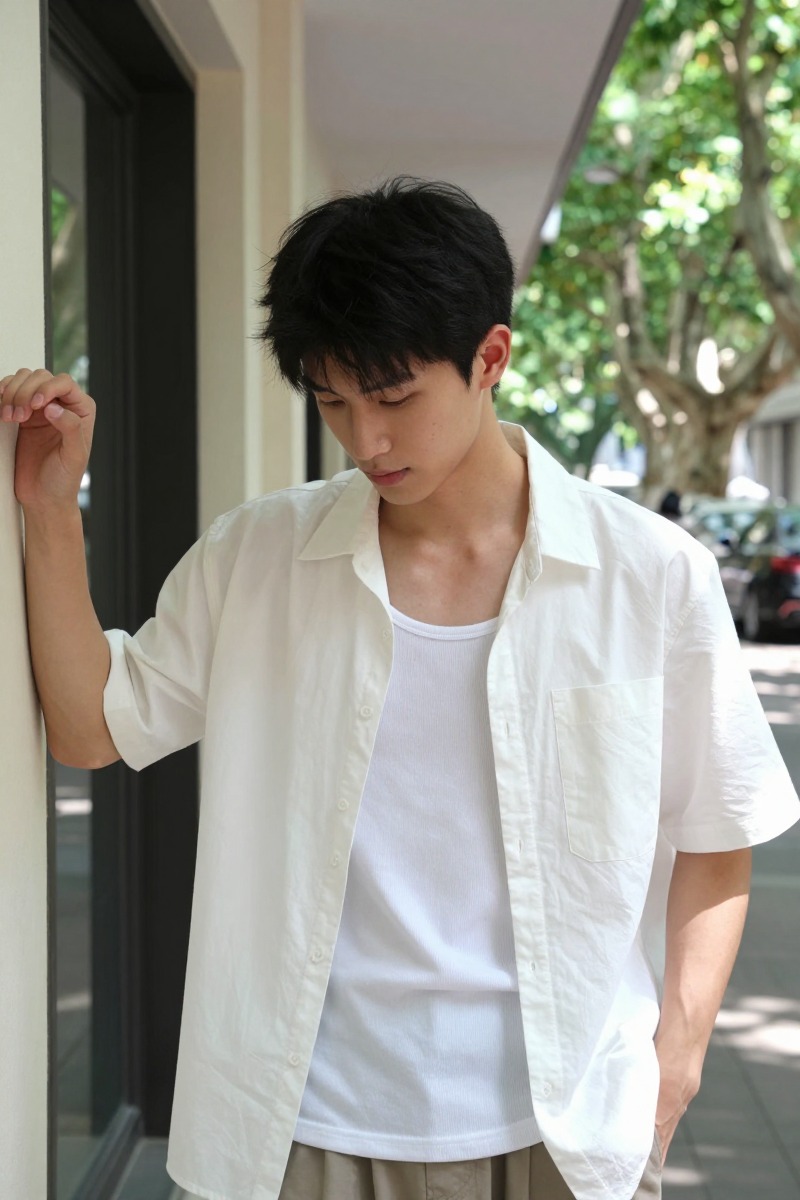
4. The four directions most worth checking first
1. Solid ribbed tanks
If you already lean toward cleanfit, minimal dressing, or light commuter style, then white, off-white, pale grey, and grey-blue ribbed tanks are usually the best place to start. Their advantage is not drama. Their advantage is low styling resistance and clear layering logic, especially inside open shirts and light overshirts. The checks are simple: avoid overly coarse ribbing, avoid shine, avoid necklines that dip too low, and avoid straps that are too narrow.
2. Smooth lightweight tanks
If your need is very practical — you want something under a white shirt or pale outer layer that feels light, stays unobtrusive, and handles transparency — then a smoother lightweight tank is often more useful than a visibly ribbed one. It does not insist on being seen. It behaves more like a hidden but essential structural layer. These are not always the strongest for wearing alone, but they are often excellent as problem-solving innerwear.
3. Slightly broader-shoulder, slightly firmer tanks
If you want to wear a tank top on its own outside, then the best versions usually have slightly broader shoulders, a neckline that does not collapse, a chest area that does not cling too tightly, and a hem that still feels like clothing rather than loungewear. The recent Chinese-internet examples where men’s tanks look genuinely clean and modern are usually built on this type, not on old undershirt logic.
4. Clean light-athletic casual tanks
If you walk a lot, carry a bag, move between indoor and outdoor spaces, or already dress closer to light athletic casual, then a cleaner function-leaning tank can also make sense. But the key is not to let it look like a training top. The useful versions keep logos low, shine low, and neckline-and-shoulder construction calm enough that the piece still belongs inside youth menswear rather than the gym.
The four strongest buying entries
5. Ten checks before buying one
1. Is the neckline too deep?
For real everyday use, deep necklines are risky. Once the neckline drops too far, the tank can quickly stop reading as a clean basics layer and start reading as body display or old undershirt logic.
2. Are the straps wide enough?
Very narrow straps almost always push a tank toward underwear energy or gym-coded styling. The versions that fit college-boy and cleanfit dressing usually leave enough width to feel like actual clothing.
3. Does the fabric shine?
One of the biggest failures in cheap tank tops is not just thinness but shine. Once the fabric reflects too much light, the whole piece starts falling back into bargain training-wear or low-grade homewear territory.
4. Does it cling too much?
No matter how comfortable it feels, a tank that grips the chest and back too tightly is hard to wear cleanly. The better versions leave a little controlled space away from the body.
5. Is the rib too coarse?
Rib texture adds useful surface, but more is not always better. Overly large ribbing can make the tank feel old-fashioned or visually cheap. The better youth-menswear versions usually use finer, denser ribbing that reads calmer from a distance.
6. Do the product photos depend only on highly muscular bodies?
If the listing only works because of extreme body shape and dramatic lighting, it is not especially useful for judging how the tank will work for ordinary daily dressing. Natural light, normal body shapes, open-shirt styling, and seated or moving shots are much more useful.
7. Is it meant to be an inner layer or an outer layer?
This needs to be clear before buying. A lot of bad purchases happen when a very thin hidden-layer tank is forced into outside wear, or when a stronger outer-wear tank ends up feeling too present inside a shirt.
8. Is the lightness built on sheerness?
White and pale grey tanks often run into this problem. If your use is hidden layering, a little transparency may be survivable. But if you want to wear it on its own, the safety margin has to be much higher.
9. Can it connect to your existing wardrobe?
Good basics should not work only inside a product page. A worthwhile tank should connect easily to your open shirts, white shirts, sun shirts, jeans, straight trousers, shorts, canvas shoes, and understated sneakers.
10. Does it look like clothing or like a consumable underlayer?
This is the final and most important question. A tank-top base layer worth wearing often should still look like a youth-menswear garment, just a quieter and lighter one. If it visually reads like a disposable household item, it will be very hard to integrate into a real outfit system.
6. Six low-risk ways to wear it
- White ribbed tank + pale open-collar shirt + light-wash jeans: the clearest summer college-boy formula — easy, young, and much more stable than wearing an open shirt on bare skin.
- Off-grey tank + open white shirt + off-white trousers: ideal for cleanfit, cafés, libraries, and light commuter dressing, with lighter layering than a full tee underneath.
- Smooth base tank + thin sun shirt + nylon shorts: great for moving a lot, sweating faster, and keeping thermal burden low.
- Firmer outside-wear tank + charcoal straight trousers + understated sneakers: useful for men who want to try wearing a tank on its own without drifting into gym styling.
- Tank + half-zipped knit + relaxed shorts: especially useful for air-conditioned interiors and indoor-outdoor switching.
- Ribbed tank + lightweight nylon outer layer + cap or silver-wire glasses: good for light athletic casual and city movement, as long as the whole outfit stays quiet and low-noise.
The shared logic across these formulas is simple: a tank-top base layer is not a hero piece. It is a lower structural layer that helps the outer layer, trousers, and overall atmosphere feel more settled.
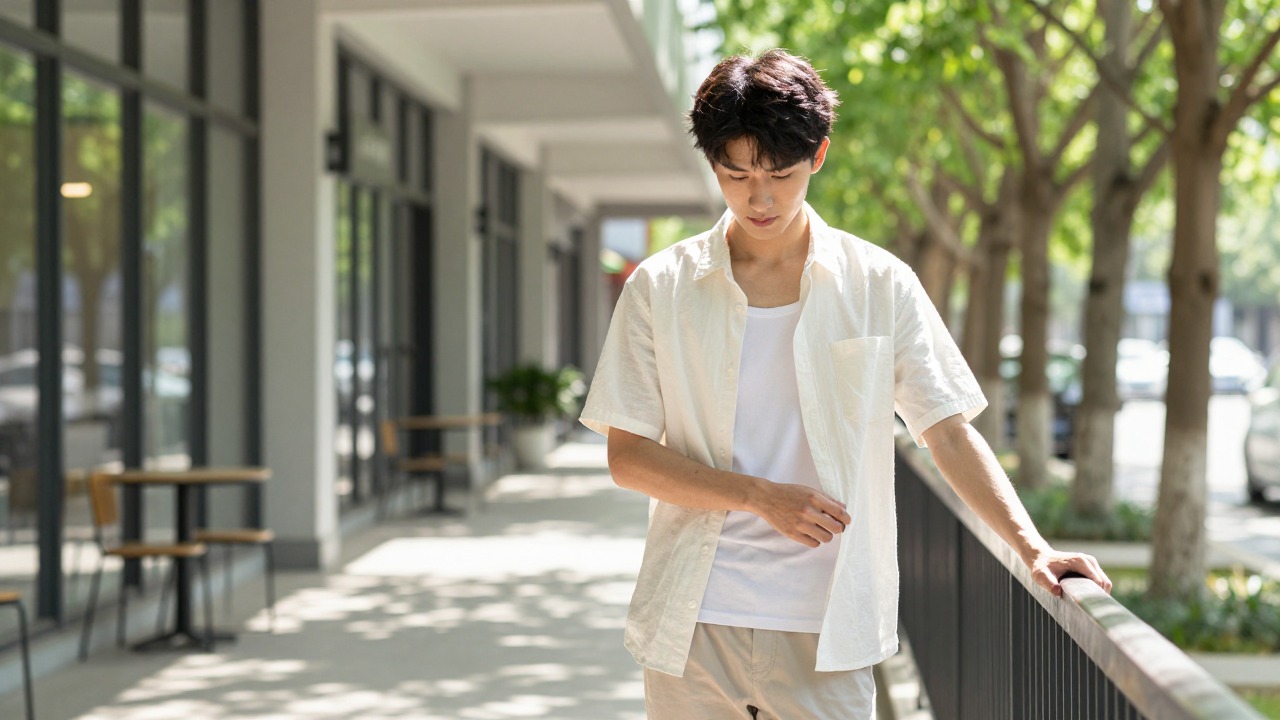
7. The Taobao and Chinese shopping searches most worth checking first
Shopping / search entry points
These search entries matter because they show which side of the category Chinese e-commerce is trying to build right now. The products most worth continuing with usually share a few traits: they do not depend entirely on muscles or dramatic lighting, the fabric does not shine too much, the neckline and strap width stay balanced, the page includes shirt-layering or natural daily scenes, and the outfit logic still reads as youth menswear rather than gym-product marketing. If the page is all deep necklines, tight fits, chest emphasis, and dramatic body display, it is probably not the right choice for most real college-boy or cleanfit wardrobes.
8. BoyStyle’s read on this tank-top base-layer wave
The most interesting thing about this 2026 Chinese-internet wave is not that tank tops have become a new trend gimmick. It is that they have found a very specific wardrobe position again. They are not here to replace the white tee, and they are not here to drag everyone into gym-coded or heavy American styling. They are here to rebuild the layer between the body and the outer garment — the layer summer outfits most often ignore.
If you only want to add one basics layer that improves summer upper-body efficiency, helps shirts and light outer layers look better, and does not make dressing feel much heavier, then yes — a tank-top base layer deserves a place near the front of the list. But only if it is the right kind: controlled neckline, straps with enough visual weight, low fabric shine, lightness without cheapness, and a look that still reads as clothing instead of mere utility. Its value has never been exaggerated skin exposure. Its value is that it keeps you more stable inside the real scenes that define Chinese youth-style life: classes, commuting, bags on the shoulder, malls, air-conditioned spaces, and summer evenings out.
Continue with: Why open-collar short-sleeve shirts are back at the center of summer menswear, Why cool-touch tees are taking over the late-spring basics layer, Why sun shirts have become a key cleanfit summer top layer, and A summer cleanfit shop radar.
Reference pattern: recent Chinese-platform discussion around men’s tank tops, ribbed tanks, shirt undershirts, college-boy summer base layers, cleanfit tank styling, and “how to wear them without looking greasy or dated”; Taobao and Tmall search paths such as “men ribbed tank cleanfit,” “men tank shirt undershirt non-sheer,” “men outside-wear tank broad shoulder,” and “men tank base layer summer campus”; Xiaohongshu-, Weibo-, and Bilibili-style discussion around light summer layering, anti-sheer shirt styling, open-shirt tank use, and tank-top no-mistake-buying logic.