2026 sun-shirt shop radar: why ice-cooling shirts, lightweight UV overshirts, and campus-to-commuter sun shirts are taking over cleanfit summer wardrobes
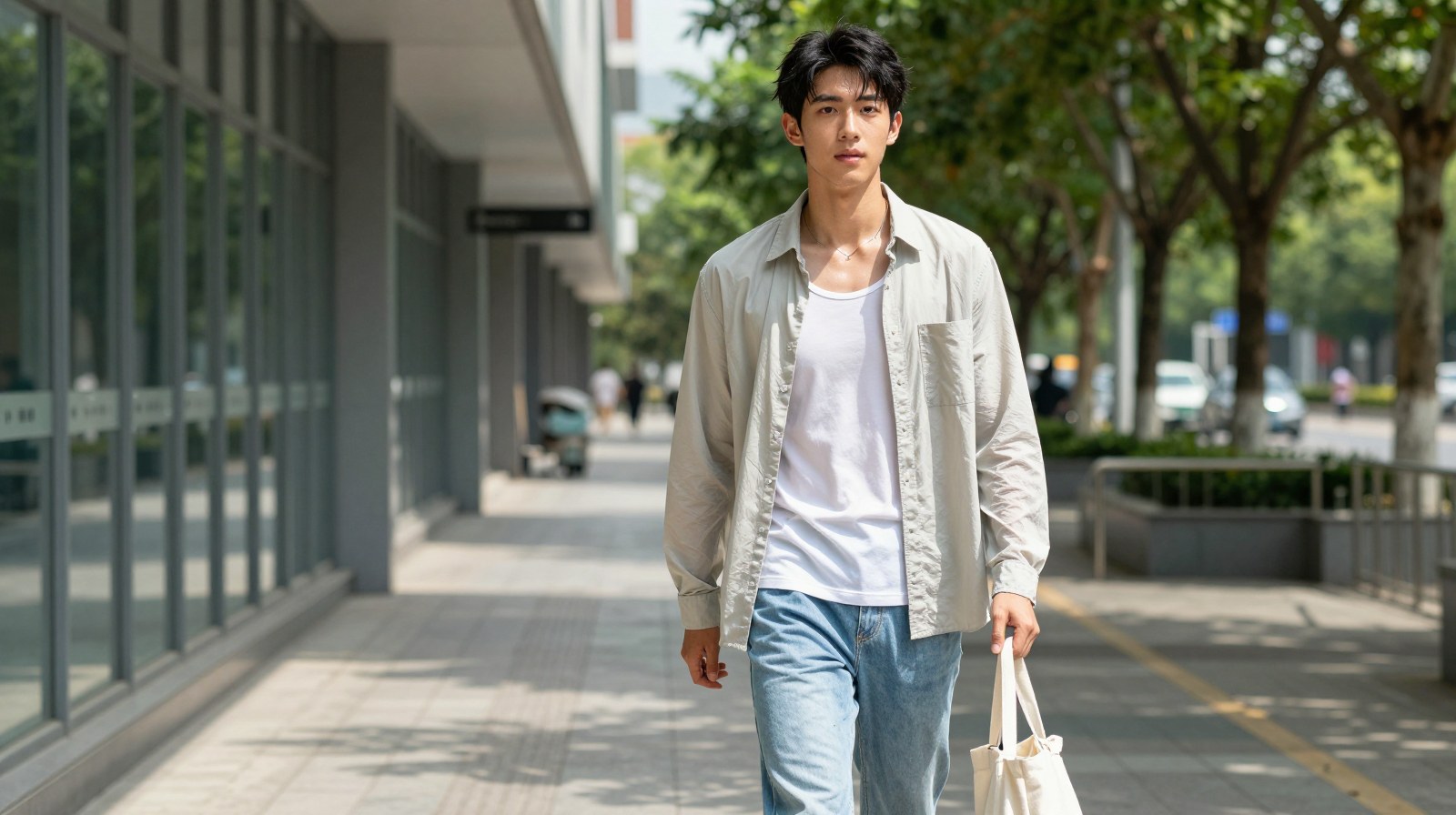
If you break down the latest round of Chinese-platform menswear discussion in 2026, one shift becomes very clear. People are still talking about white tees, short-sleeve shirts, straight trousers, German trainers, caps, and nylon bags. But the piece most often used to solve the question of “what do I wear when summer outfits start feeling too flat” is increasingly the sun shirt / UV shirt / ice-cooling shirt / lightweight UV overshirt. The conversation is no longer just about sun protection itself. It is about a more realistic youth-menswear problem inside Chinese internet culture: the weather is hot, the sun is harsh, the subway and mall AC are cold, a single tee feels too bare, and a normal shirt can feel too stuffy—so is there a layer that can block sun, stay breathable, and still keep cleanfit and campus dressing looking complete?
Across recent Chinese-platform title language, product naming, and buying signals, that demand is extremely concentrated. Bilibili menswear videos keep repeating ideas like “summer light jackets,” “commuter outer layers,” “how men can wear sun-protection pieces without looking awkward,” “AC-room overshirts,” “holiday travel outfits,” and “please stop wearing only white tees.” On ecommerce platforms, product naming clusters around phrases like “ice-cooling shirt,” “UV shirt,” “lightweight breathable,” “quick-dry,” “cool-touch,” “drapey,” “loose fit,” “Japanese,” “Korean,” “commuter,” “outdoor casual,” and “machine washable.” These words may look messy at first, but together they say something very clearly: the Chinese internet is not really asking for a pure performance sun jacket, and not really asking for a formal shirt either. It is looking for a summer outer layer that works in real life and still supports style.
That is exactly why this topic deserves a proper shop radar. The useful question is not just “which stores sell sun shirts.” It is: which kinds of stores are actually worth browsing first, what kinds of sun shirts really fit campuses, subways, offices, coffee shops, malls, and weekend travel, and what kinds of product images immediately tell you a store is only rebranding cheap functional gear?
1. Why Chinese-platform menswear is focusing on sun shirts again in 2026
When recent Chinese-platform signals are placed together, at least six very practical forces appear behind this shift.
- First, summer menswear is moving from “just stay cool” to “stay cool and still look complete.” Many summer wardrobes used to be nothing more than tees, shorts, and sneakers. Now Chinese platforms are trying to solve a different problem: how not to look too empty, too flat, or too accidental.
- Second, the sun-protection category has been re-styled into fashion. “Sun shirt,” “ice-cooling shirt,” and “AC-room overshirt” all frame the category as daily style rather than pure outdoor equipment.
- Third, both cleanfit and campus-boy dressing need a summer outer layer. One extra layer over a tee immediately gives the upper body more structure, but normal shirts, cardigans, and jackets often feel too hot. The sun shirt lands exactly in the middle.
- Fourth, platform supply is already mature. Taobao, Tmall, and Douyin commerce all show stable naming around cooling shirts, UV shirts, lightweight outer layers, breathable shirts, and AC shirts. This is no longer just a content-platform word.
- Fifth, Chinese-platform taste increasingly likes outdoor details made daily. Not full gorpcore, but a small amount of technical lightness and breathability translated into campus and commuter life.
- Sixth, the category solves several problems at once. Sun protection, AC-room layering, upper-body flatness, and heat management all get handled together.
So the rise of the sun shirt is not about people suddenly loving “performance” as a concept. It is about youth menswear on Chinese platforms reaching a more precise stage: people want a realistic, breathable, stylish middle layer for summer.
Chinese-internet signal patterns behind this topic
2. The four kinds of stores worth browsing first
As with many small menswear categories, the most useful way to buy sun shirts is not to memorize store names first. It is to know what kind of store you should browse. Under the Chinese ecommerce label of “sun shirt,” completely different things get mixed together: some are really just outdoor skin jackets, some are Japanese-style lightweight shirts, some are commuter-friendly cooling overshirts, and some are cheap shiny synthetic layers pretending to be fashion. For BoyStyle readers, the four most useful store types are below.
1. Cleanfit daily light-layer stores: best for white tees, tanks, straight trousers, nylon bags, and campus life
If I had to recommend one direction that is hardest to mess up for most people, it would be the cleanfit daily light-layer store. These stores usually do not treat UV protection as the only selling point. They focus more on whether the piece works as a real garment: the shoulder sits correctly, the length stays usable, the placket does not collapse, the color stays restrained, the fabric does not look cheap and overly shiny, and the layer works naturally over a white tee or a tank.
This kind of store fits one of the most stable youth-menswear combinations on Chinese platforms right now: white tees, sleeveless base layers, straight trousers, relaxed denim, sporty shorts, German trainers, canvas shoes, nylon crossbody bags, and baseball caps. What these stores really sell is not “professional outdoor sun gear.” They sell upper-body completion at a low effort cost.
Several details quickly tell you whether such a store is worth following:
- the color palette stays controlled;
- the fit is roomy but not uncontrolled;
- the placket and collar read like clothing rather than gear;
- the model styling can actually connect with basics.
If you already like pieces such as the summer sun-shirt cleanfit guide, the ice-cooling shirt guide, or the light commuter cleanfit wardrobe, this store type is usually the most natural shopping entry point.
2. Ice-cooling shirt / cool-touch fabric stores: best for people who run hot, face subway AC, and still want daily style
The second store type worth watching closely is the ice-cooling shirt / cool-touch shirt / cooling-fabric light-layer store. These shops usually lean heavily into words like cooling, breathable, cool-touch, drop-temperature, AC shirt, and lightweight technical fabric. Their real value is not turning you into a performance-wear person. It is letting you keep an outer layer in high heat without wanting to take it off after ten minutes.
This matters because these are now very typical Chinese ecommerce buying words. Many young men may not actively search “lightweight overshirt,” but they do search things like “is the ice-cooling shirt worth buying,” “cool shirt recommendations for men,” “AC-room overshirts,” and “UV shirts that don’t feel too hot.” That means they are not buying a concept. They are looking for a realistic long-term solution.
While browsing this category, the key question is whether the store is selling a genuinely wearable cooling shirt or just synthetic marketing language. Several checks help immediately:
- the fabric should not be overly shiny;
- the drape should feel light but not flimsy;
- the collar and placket should still hold shape;
- the store should show close-up fabric and motion detail shots.
This category is especially useful for people moving between subway commutes, mall air conditioning, office cooling, and weekend travel. At its best, it does not read like a pure outdoor UV jacket or a formal shirt. It reads like a light, wearable, structured second layer for summer.
3. Light-commuter shirt stores: best for readers who want to look a little more grown but not office-uniform dressed
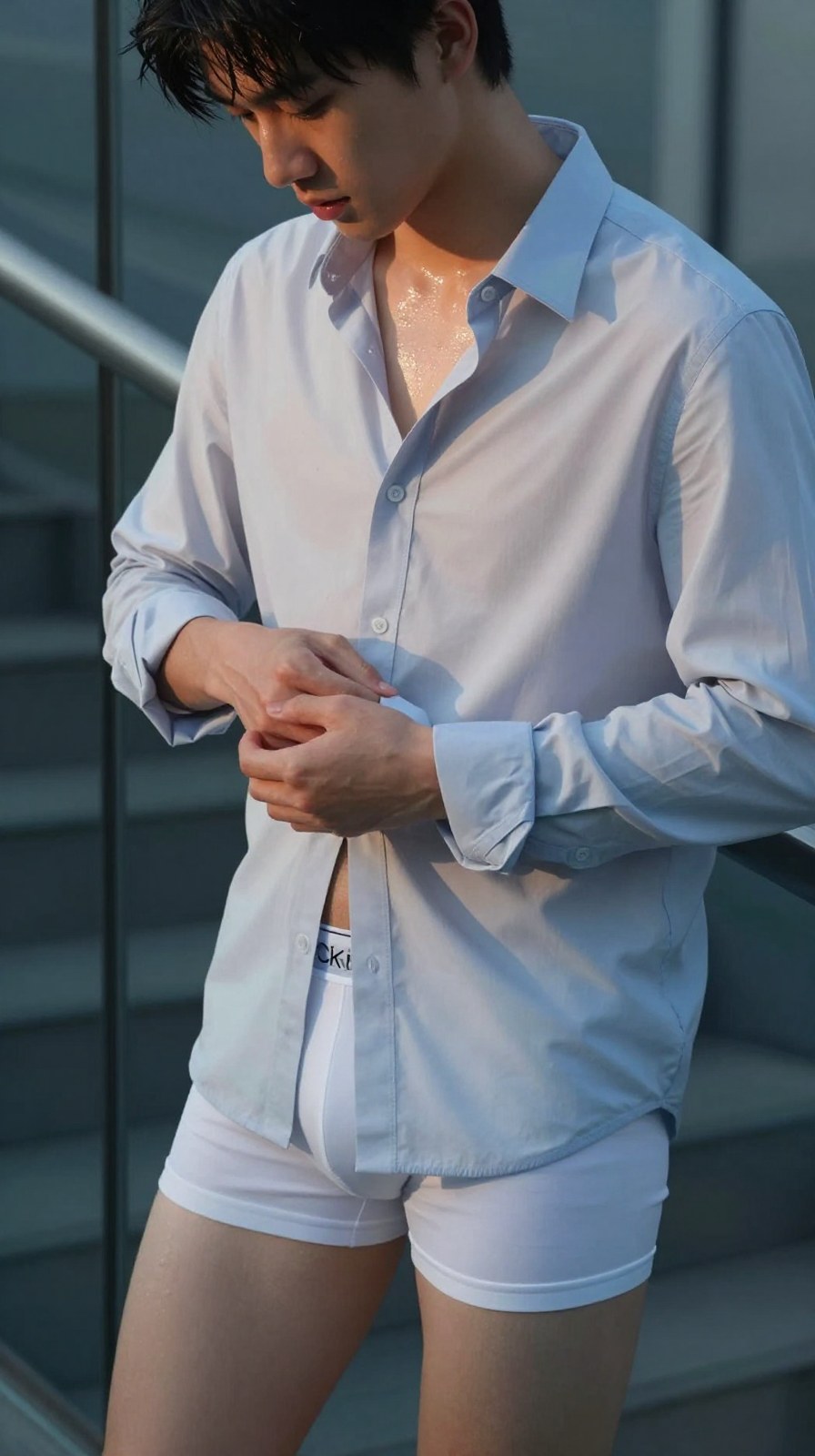
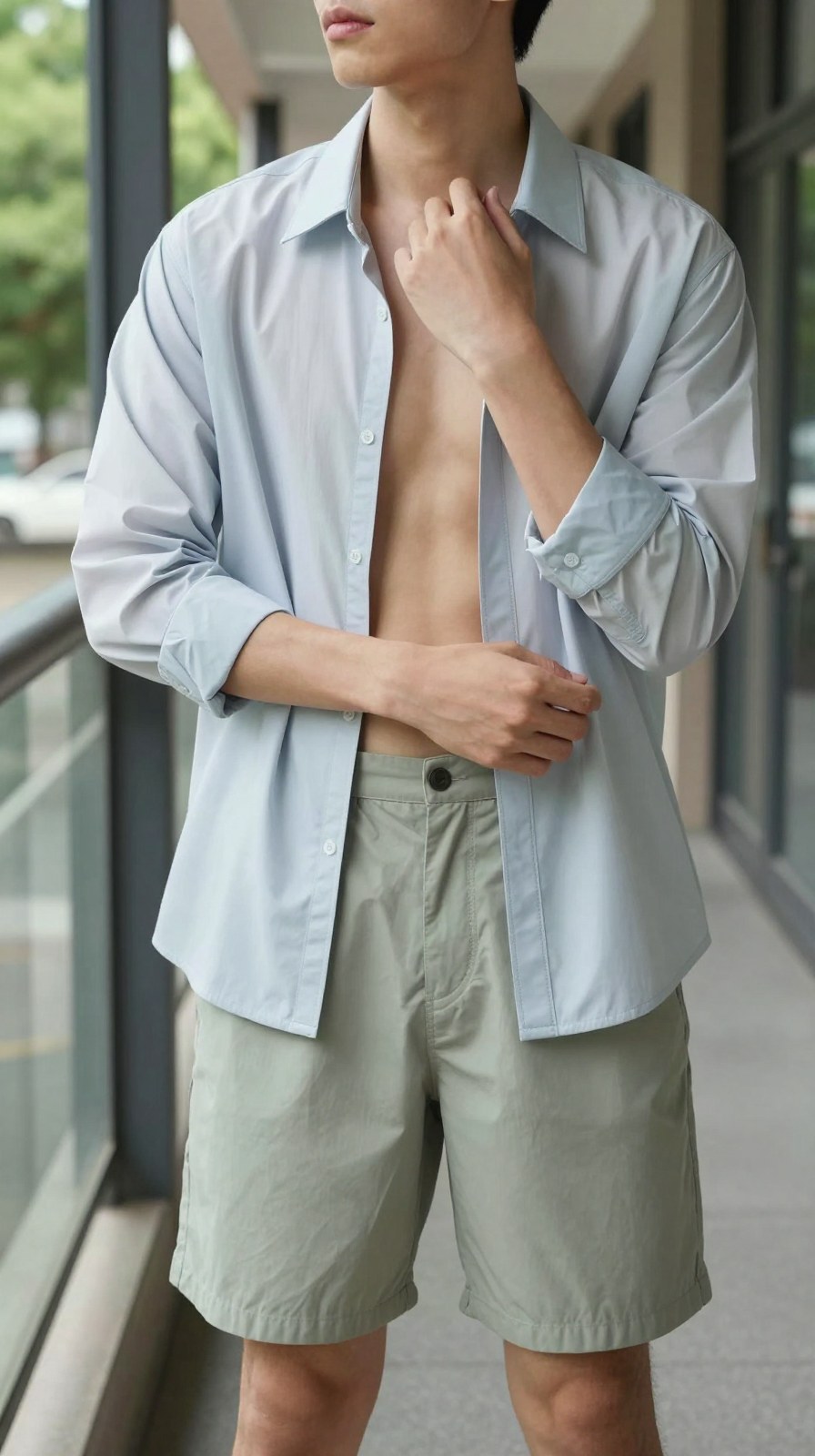
The third type worth tracking is the light-commuter shirt store. These shops often mix UV shirts, lightweight overshirts, short-sleeve shirts, open-collar pieces, and cooling long sleeves together. The overall visual language is a little more controlled than campus-heavy stores, and they are usually better at placing clothes inside subways, offices, malls, coffee shops, and city weekends. They do not sell pure student energy and they do not sell hard businesswear. They sell a very current Chinese-platform youth-menswear state: clean, light, slightly mature, quiet, but never too formal.
The real value here is that these stores understand the ratio between “shirt” and “outer layer.” Many cheap UV shirts fail because they either look too much like skin-protection gear or too much like a thin office shirt. Good light-commuter stores build a rarer middle state: the collar looks neat without feeling strict, the fabric is light without collapsing, the colors feel mature without becoming old, and the piece can connect to trousers, denim, or casual shorts.
Three things matter most when judging these stores:
- they should show complete outfits rather than one isolated garment;
- they should aim for maturity rather than oldness;
- they should avoid over-fitted tailoring.
If you already read content like the light commuter cleanfit wardrobe, the non-sheer base tee, and the linen-blend drawstring trousers, this category often works better than a purely campus-coded store for the next step.
4. Japanese relaxed lightweight-shirt stores: best for softboy dressing, light Japanese casual, and weekend travel
The fourth type is the Japanese relaxed lightweight-shirt store. These shops do not always emphasize UV protection directly, but they often carry many long-sleeve lightweight shirts that work perfectly as sun-protection outer layers: softer fabric, mistier colors, roomier shapes, lighter collars, and more fluid hem movement. They are especially useful for softboy wardrobes, light Japanese casual styling, and weekend travel dressing.
The biggest strength of this store type is that it understands the aesthetics of summer light layering. It knows you do not want a loud technical shell. You want a shirt that can naturally connect to a white tank, pale grey tee, denim, drawstring trousers, canvas shoes, silver jewelry, and a tote bag.
But this category also fails very easily, because many sellers turn “Japanese relaxed” into “shapeless oversized sack.” So you should pay special attention to:
- motion images and side views rather than just flat product shots;
- fabrics that are soft without becoming lifeless;
- transparency level;
- the hem shape.
This type of store overlaps heavily with readers who already like pieces such as the open-collar short-sleeve shirt, the blue striped shirt, and quiet silver accessories. It is not the most functional lane, but it is often the most naturally photogenic and the most lived-in.
3. The six sun-shirt directions most worth adding to cart this year
Product directions and buying entry points
4. The 10 easiest ways to buy a bad sun shirt
1. The fabric is too shiny
Once it shines too hard, it starts reading like cheap sportswear or event gear. Lightweight does not mean glossy.
2. The fit is too oversized
Many sellers translate “relaxed” into “shapeless.” Good roominess still needs body and direction.
3. The placket is too soft
Once the placket collapses, the shirt loses garment structure and becomes gear-like.
4. The collar feels too much like a skin jacket
If the neck treatment is too sporty and too close to the throat, the piece becomes hard to place inside daily style.
5. The color feels too outdoorsy
Bright orange, neon green, and aggressive sporty blues are difficult to integrate unless that is your actual wardrobe direction.
6. The length is too long
Long UV shirts can easily damage upper-body proportion, especially when worn with shorts.
7. There are too many details
Too many zip pockets, reflective lines, tabs, or utility panels quickly move the piece away from cleanfit and daily campus style.
8. The store only shows flat product images
This category must be judged in motion. Sleeves, hem, placket, and shoulder line all matter while moving.
9. The store only piles up technical words
Cooling, UV, quick-dry, wrinkle resistance, and breathability do not automatically create a good garment. Without clothing detail shots, be careful.
10. The styling is too equipment-heavy
If every model is paired with hiking trousers, trail shoes, and tactical layers, the piece may not really belong in campus cleanfit or light commuter wardrobes.
5. How different readers should choose their sun shirts
- Campus-boy route: choose light colors, clean plackets, and natural fits, then layer over a white tee or tank.
- Cleanfit route: choose fog grey, off-white, pale blue-grey, or light khaki, avoid shiny fabrics, and pair with straight trousers and low-profile sneakers.
- Softboy route: softer Japanese-style long sleeves work well with light denim, silver jewelry, and canvas bags.
- Light-commuter route: choose cooling shirts with clean collars, controlled surfaces, and a fit that is breathable but not sloppy.
- Weekend-travel route: you can accept a little outdoor language, but details still need to stay quiet.
These routes look different, but the underlying logic is the same: the real value of a sun shirt is not making you look like someone who bought a high-tech item. It is giving summer a breathable, natural, upper-body order.
6. What store signals are most worth tracking long term
If you work backward from public Chinese-platform product and content naming patterns, the stores most worth tracking over time usually share several characteristics:
- they show fabric close-ups, detail shots, and motion photos rather than only distant mood images;
- they place the sun shirt inside a full outfit rather than selling slogans;
- they consistently connect the piece to white tees, tanks, straight trousers, drawstring trousers, light sneakers, totes, and nylon bags;
- they talk not only about cooling and UV protection, but also color, drape, fit, and real-life context;
- they make the item look like clothing rather than equipment.
These stores are not always the loudest on the platform, but they are much more likely to offer layers that can actually live inside classrooms, subways, offices, malls, weekend trips, and ordinary city life. For BoyStyle, that matters much more than looking aggressively technical.
7. BoyStyle’s conclusion on this sun-shirt buying wave
The 2026 Chinese-internet discussion around sun shirts, ice-cooling shirts, lightweight outer layers, AC shirts, and summer commuter overshirts may look like a functional trend on the surface. In reality, it is closer to a search for a middle layer that can reconnect the summer upper body in youth menswear. It needs to be light enough, cool enough, easy enough to maintain, and still garment-like enough to work with white tees, tanks, denim, straight trousers, drawstring pants, and sneakers.
That is why the pieces really worth buying are not the most aggressive, most technical, most gear-looking products. They are the ones with quiet color, low-shine surfaces, breathable room in the fit, enough placket and collar structure to still feel like clothing, and enough flexibility to move naturally between campus and commuting. In the end, the sun shirt is becoming important not because young men suddenly want to dress like outdoors specialists, but because it solves a very specific and very modern Chinese-platform problem: summer is hot, but people still want the upper body to look finished.
Continue with: how to wear sun shirts in cleanfit summer dressing, what actually makes an ice-cooling shirt worth buying, building a light commuter cleanfit wardrobe, and why linen-blend drawstring trousers pair so well with lightweight summer layers.
Chinese-internet reference pattern: this topic was built from public, recurring Chinese-platform title language, search-word patterns, and ecommerce naming around “sun shirts,” “ice-cooling shirts,” “summer commuter outer layers,” “AC-room overshirts,” “light jackets,” and “stop wearing only white tees,” then translated into a more useful BoyStyle shopping radar focused on real product judgment and wardrobe fit.