Woven belt shop radar 2026: why it is taking over the most overlooked waistline-finish problem in cleanfit, campus-boy, and light-commuter summer dressing
If you break down the latest round of Chinese-platform youth-menswear discussion carefully, one quiet but very real shift becomes impossible to ignore. People are still talking about knit polos, open-collar short-sleeve shirts, cooling shirts, linen-blend trousers, bermuda shorts, German trainers, boat shoes, baseball caps, and crossbody bags. But more and more explanations of why one outfit suddenly feels cleaner, why the same white tee and shorts can look far more complete on one person than another, or why some cleanfit looks feel sharp without looking complicated, keep returning to the same zone: the waistline.
And the item that has really started rising inside that zone is not the heavy hardware belt, not the oversized logo belt, and not the industrial streetwear strap forced into everyday dressing. The thing that now feels most worth writing about—and most worth buying—is the version that fits the current Chinese-platform youth-menswear mood much better: the woven belt. More specifically, woven belts with light bodies, stable weave density, quiet buckles, controlled colors, and the ability to work with both shorts and straight trousers, both knit polos and white shirts, both campus-boy dressing and light commuting.
Why has it suddenly gained so much buying value in summer 2026? Because it solves a problem that used to be easy to ignore but is now much easier to see: Chinese-platform summer youth menswear no longer lacks pieces as much as it lacks middle-section finishing. Many readers already own decent tops, and many have already moved into better lower halves too—straighter trousers, better shorts, cleaner summer pants. The whole outfit still feels one step short of complete. The reason is often not bad clothing, but an empty center: a waistband and shirt hem that do not connect, shorts and belts speaking different languages, a buckle that is too bright, a color break that is too harsh, or an outfit that looks dressed but not actually organized. That is the exact gap the woven belt is starting to fill.
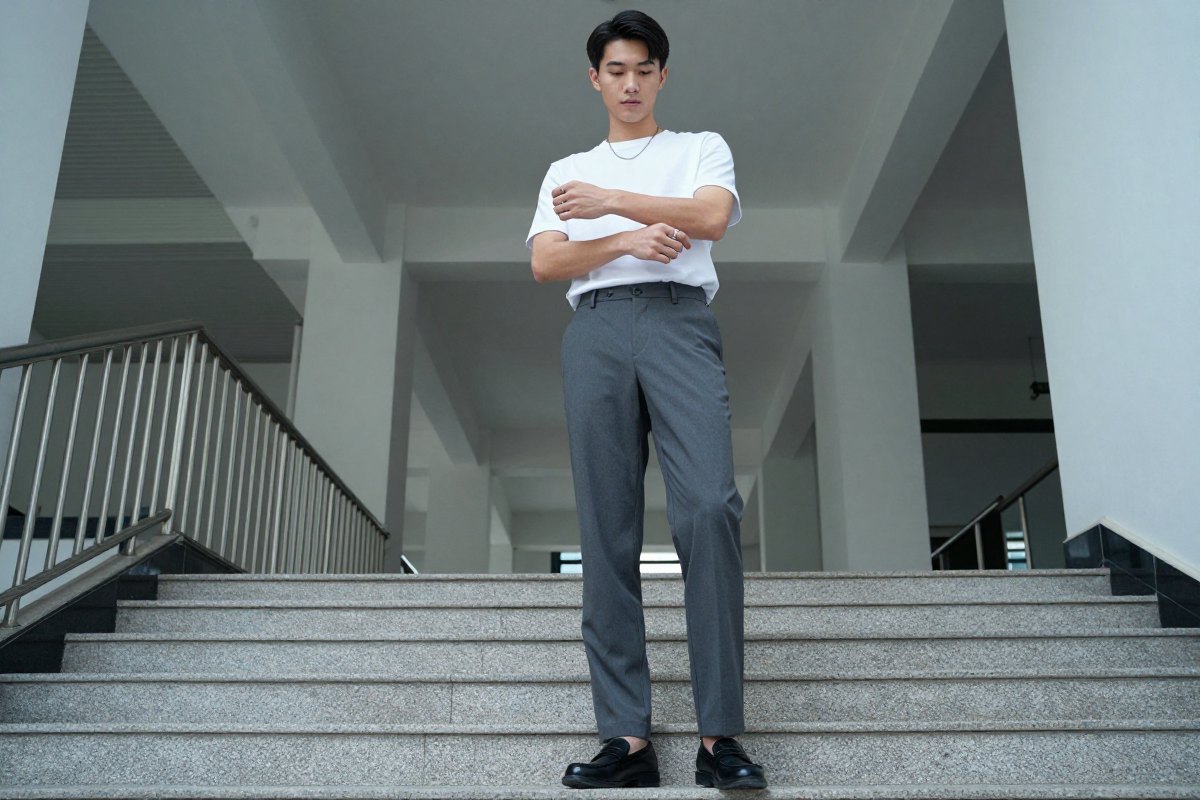
1. Why woven belts have moved back into the center of Chinese-platform menswear
Start with the content signals. Across current discussion around campus-boy dressing, cleanfit, shorts, knit polos, open-collar shirts, linen trousers, and light commuting, people are asking more detailed questions than before: should shorts use a belt, what kind of belt keeps a polo from looking old, should the tee be tucked or untucked, how should the waistband of straight trousers be treated, why does one look feel more complete even with very few accessories. That shift in language matters. It means people are no longer only searching for garments. They are searching for finishing methods.
Now look at commerce and product naming. The Chinese-platform language around belts is clearly concentrating around words that imply something lighter, narrower, simpler, and more summer-friendly: woven, elastic woven, narrow version, low-key buckle, commuting, Korean simple style, Japanese basic, easy to match, shorts, tailored shorts, straight trousers, youth, student, cleanfit, breathable, light-business but not old. That is a very different world from the heavy-logo, heavy-metal, heavily signaled belt language that used to dominate other styling eras.
There is also a wider background change. Current Chinese-platform youth menswear increasingly values looking like someone who really lives in the clothes, not someone dressing only for staged photos. Campus-boy, soft clean, light Korean casual, library-like calm, and light commuter dressing all need a similar thing: low-noise completion. Woven belts are rising not because they are dramatic, but because they fit this new standard almost perfectly. They do not fight for attention, yet they make the center feel smoother, the waistband more stable, shorts less scattered, and knit polos or white shirts less abruptly cut off.
Chinese-internet high-frequency signals behind this topic
2. Why woven belts fit the 2026 summer mood better than many ordinary leather belts
The most important reason is simple: they fit the current clothing mood better. The most active youth-menswear pieces on Chinese platforms right now cluster around knit polos, light open-collar shirts, white tees, cooling shirts, linen-blend trousers, tailored bermuda shorts, light denim, low-presence footwear, and canvas or nylon bags. These pieces are not trying to look “formal,” and they are not trying to look “street.” They are trying to feel light, smooth, clean, and breathable. Traditional wide leather belts and bright business-style buckles often break that lightness immediately.
The advantage of the woven belt is that it provides structure without becoming stiff. It does not cut the waistline as harshly as a solid formal leather belt, but it also does not leave the waistband and shirt hem completely unresolved. Especially when the lower half is built from shorts, light slacks, linen trousers, cotton-linen blends, or softer straight denim, woven texture almost always feels more natural than a hard slab of leather. It does not try to pin the waistline down. It tries to settle it.
Another underrated point is that woven belts work unusually well inside today’s “semi-dressed” summer state. Many young men do not want to look fully businesslike, but they also do not want to stay forever in the zone of pure sports shorts and sneakers. So they pick knit polos, white shirts, open-collar shirts, simple shorts, German trainers, boat shoes, canvas shoes, and thin-soled casual footwear. The problem is that those pieces can all be individually good while still missing a connector in the middle. Woven belts solve that connector problem without making the wearer look suddenly old or over-dressed.
And in practical shopping terms, woven belts often adapt to more trouser shapes than many ordinary leather belts. You do not necessarily need one for shorts, one for light trousers, and another for denim. If the color and buckle are correct, one dark-brown or charcoal woven belt can often serve straight denim, drapey shorts, linen trousers, and light slacks all at once. For BoyStyle readers, that kind of multi-scene value is especially strong.
3. The four kinds of stores worth browsing first
As with many youth-menswear accessories, the most effective way to buy a woven belt is not to memorize brands first. It is to know what kind of store you should be entering. Chinese e-commerce “woven belt” results mix together completely different products: loose low-quality student belts, fake-business versions with shiny hardware, clean light-commuter versions that work very well, and softer campus-oriented versions for shorts and daily dressing. So store type matters more than store name.
1. Cleanfit basic-accessory stores: best for readers buying their first serious woven belt
If your wardrobe already includes knit polos, white shirts, straight trousers, easy shorts, German trainers, boat shoes, and nylon bags, the best first stop is the cleanfit basic-accessory store. These stores usually care less about “trendiness” and more about quiet completion. Their woven belts tend to focus on stable weave density, quiet buckles, calm colors, and compatibility with grey, black, white, khaki, and other foundational summer wardrobes.
These stores are valuable because they think about belts inside whole outfits rather than as isolated accessories. You are more likely to see belts paired with white tees, knit polos, shorts, straight trousers, thin-soled shoes, and canvas bags rather than only product flat lays. That helps filter out many belts that look fine alone but become awkward on-body.
- Start with dark brown, charcoal black, foggy taupe-brown, and navy.
- Prefer matte or low-reflection buckles over mirror-finish hardware.
- Prefer moderate thickness, clean edges, and woven surfaces that do not fuzz out.
If what you want is a belt you can wear immediately and keep wearing with most of your summer trousers and shorts, this is the safest store category.
2. Campus-boy / campus-casual stores: best for shorts, denim, white socks, and backpack-oriented styling
The second type worth following is the campus-boy / campus-casual store. These stores usually sell woven belts that feel less businesslike and less mature, and more believable inside a real student wardrobe. They pair them with denim, bermuda shorts, striped shirts, white tees, backpacks, canvas shoes, German trainers, and white socks. In other words, they understand the image of a young person who actually lives in the clothes.
Their woven belts usually share a few traits: the colors are not too heavy, the buckles are not too formal, the belt body is a little lighter, and the overall feel is better for shorts and denim. For readers who want shorts to look less scattered and less like an afterthought, these stores are especially useful.
- White tee + denim + woven belt: one of the clearest daily campus-boy finishing moves.
- White shirt / striped shirt + shorts + woven belt: can suddenly make shorts look organized rather than random.
- Knit top + easy shorts + woven belt: usually more complete than wearing no belt, but lighter than forcing in a rigid leather belt.
If your wardrobe already leans toward campus dressing, white tees, denim, stripes, and light Korean casual, this category often works better than commuter-focused accessory stores.
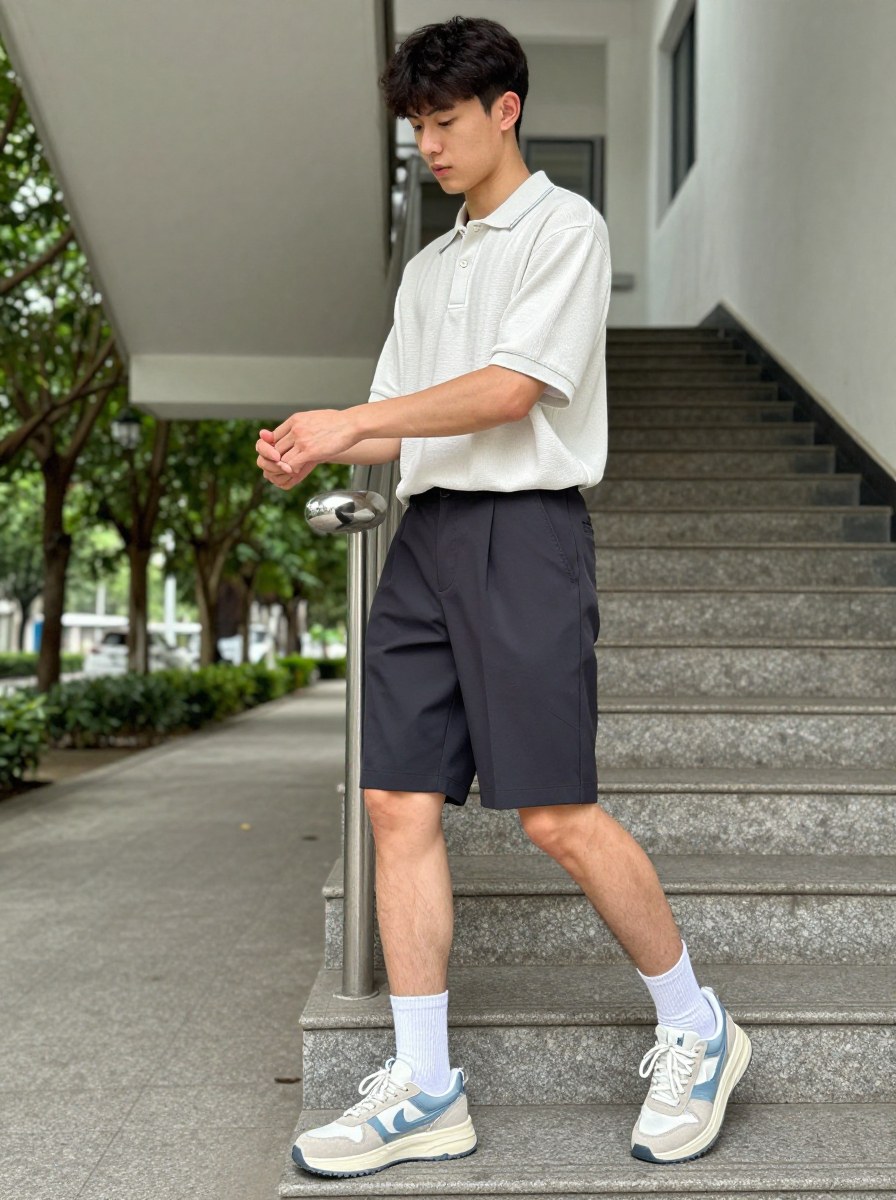
3. Light commuter mixed-accessory stores: best for knit polos, light slacks, and shirt-to-shorts transition wardrobes
The third category is the light commuter mixed-accessory store. These stores often sell not only woven belts, but also slim belts, cardholders, watch straps, clean tote bags, eyewear chains, and restrained accessories. Their value lies in understanding the whole middle-section system rather than only one product. In other words, they are selling a complete light-commuter or cleanfit accessory language.
For readers wearing knit polos, light shirts, drapey slacks, and straighter shorts, these stores understand what kind of woven belt can stay youthful without making the whole outfit too student-coded. They often pay closer attention to consistent metal language, the relationship between bags and belts, and whether the waistband and buckle are too visually loud. That systems-level thinking matters more than whether the belt looks attractive on its own.
If you are dressing increasingly close to any of the following combinations, this category deserves special attention:
- knit polo + straight slacks
- white shirt / open-collar shirt + tailored shorts
- light outer layer + straight trousers + simple thin-soled shoes
The real test here is not how many variations the store offers, but whether the belt, waistband, buckle, bag, and shoes all speak the same quiet language.
4. Japanese light-casual / vintage-brown stores: best for softer, calmer, more lived-in summer wardrobes
The last category is the Japanese light-casual / vintage-brown store. These stores usually understand deep brown, tobacco brown, old-wood brown, and greyed beige-brown much better. Their woven belts may not always look the most sharply modern, but they often work beautifully with blue shirts, off-white trousers, denim, knit cardigans, canvas bags, and softer softboy or lightly Japanese wardrobes.
Their strength is that they turn the belt from a pure function piece into a natural transition layer. If your wardrobe already contains a lot of off-white, pale grey, light khaki, denim blue, and softer shirting, a deep-brown or taupe woven belt often feels more lived-in than pure black and less severe too.
But this category is also easy to get wrong, usually for three reasons:
- the color turns too red or too orange and reads fake-vintage;
- the belt body becomes too thick and loses summer lightness;
- the buckle and edge finishing become too old-fashioned and suddenly age the whole outfit.
If those mistakes are avoided, this is one of the strongest long-term accessory routes to keep tracking.
4. The five woven-belt directions most worth buying first
Product directions / search entries
5. The nine judgment points to check before buying
1. Is the weave density stable?
This is the first judgment point. Loose weave reads cheap immediately and creates visual mess around the waistband.
2. Is the belt thickness correct?
Too thin can feel like a free gift. Too thick can make the whole summer middle section feel heavy. For most youth-menswear trousers and shorts, moderate presence works best.
3. Is the buckle too bright?
Mirror-like metal hardware is one of the easiest ways for a belt to fail. The buckle should feel like a background element, not the lead actor.
4. Is the color low-saturation enough?
Deep brown, taupe, charcoal, and navy usually work much better than bright white, bright beige, red-brown, or loud high-saturation colors inside the current Chinese-platform menswear mood.
5. Do the product images dare to show full outfits?
If a belt is only shown in flat lays and macro close-ups but never in relation to trousers and shirts, its reference value is limited.
6. Can it handle at least two trouser categories?
A woven belt really worth buying should handle at least two of the following: shorts, denim, light slacks. If it only works with one, it may just be a photography item.
7. Is it relaxed or merely loose?
This is the most common woven-belt confusion. Good woven belts feel easy but still structured. Bad ones feel soft, collapsed, and boundaryless.
8. Is the buckle shape dated?
Old oversized business-belt buckles can instantly drag a woven belt toward an older menswear zone, even when the woven strap itself is decent.
9. Is it serving the waistline or stealing the waistline?
This is the most important question. The best woven belt makes the whole person feel more complete, not the waist itself more obvious.
6. The six safest woven-belt outfit routes
- Deep-brown woven belt + white tee + light-wash straight denim: one of the clearest campus-boy daily combinations. The waistline shifts from empty to resolved immediately.
- Charcoal woven belt + knit polo + grey-black straight trousers: excellent for cleanfit and light commuting, very quiet but very complete.
- Taupe woven belt + blue striped shirt + off-white trousers: softer, more Japanese in tone, and especially good for library or café-oriented wardrobes.
- Deep-brown woven belt + open-collar short-sleeve shirt + tailored shorts: helps pull shorts back from looking loose into looking intentionally arranged.
- Elastic woven belt + white tank / white tee + relaxed bermuda shorts: best for high heat and more lived-in campus scenes, as long as the belt itself does not look cheap.
- Charcoal woven belt + light white shirt + linen-blend trousers: a strong summer light-commuter route that stays calm but not boring.
The shared logic of all these combinations is simple: the woven belt is not there to create a new style. It is there to gather the style you already have. It is a middle-section order tool, not a visual special effect.
7. BoyStyle’s conclusion on this woven-belt rise
The most important thing to remember about the woven-belt rise on Chinese platforms in 2026 is not just that men are “wearing belts again.” It is that youth menswear has finally started taking the middle section more seriously. People are no longer satisfied with the top and the bottom being separately decent. They care whether the space between them has been truly organized. Woven belts are becoming stronger because they offer a very practical, highly wearable, and extremely summer-appropriate solution: light, smooth, low-key, but obviously effective.
If you only want to add one accessory this summer that is not too expensive, not easy to waste, but able to improve the overall completeness of an outfit immediately, I would seriously rank the woven belt near the top. The conditions are still clear: no loud colors, no bright buckles, no loose weave, no overly thick body, and product pages that are willing to show the belt inside real outfits. Once those boxes are checked, the belt stops being just “something the trousers need” and becomes one of the most underestimated but highest-use accessories in a 2026 summer wardrobe.
Read next: summer belt shop radar, why knit polos are becoming a smarter summer top buy, why tailored shorts pull cleanfit back into daily life, and how to build a light-commuter cleanfit wardrobe.
Chinese-internet signal pattern basis: this article mainly draws on recent publicly visible Chinese-platform search and product-naming patterns around phrases such as “men’s belt recommendations,” “woven belt cleanfit,” “what belt goes with shorts,” “what belt works with a polo,” “straight-trouser waistline,” “slim belt men summer,” “student simple belt,” and “commuter versatile woven belt,” together with high-frequency youth-menswear discussion around knit polos, white shirts, shorts, straight trousers, light commuting, and middle-section proportion, then reorganizes those signals into a more practical woven-belt shop radar for actual browsing, image judgment, and buying decisions.