Why the short-sleeve shirt over tee is back at the center of 2026 Chinese-internet campus and cleanfit menswear
If you line up the Chinese-internet keywords that have been clustering around youth menswear lately, a very clear meeting point appears: campus-boy dressing, cleanfit, light commuting, air-conditioner shirts, cool-touch shirt layers, drapey short-sleeve shirts, sun-protection shirt layers, open-collar short sleeves, and summer upper-body layering. On the surface these look like separate conversations. In reality they are all answering the same question: what should a young man wear on the upper body in late spring and summer if he wants to stay light, look complete, and avoid looking either underdressed or overworked?
That is why the short-sleeve shirt over tee has moved back to the center. Its value is not only that short-sleeve shirts are popular again. The more important point is that real Chinese-internet dressing needs have pushed this formula back into daily relevance. Many readers no longer want an entire summer of white tees alone. They do not necessarily want to jump straight into long-sleeve shirting either. And they definitely do not want to look as if they dressed entirely out of low-grade livestream buzzwords around cooling, sun protection, and technical comfort. A short-sleeve shirt that can stay open over a tee or tank, work in classrooms, trains, malls, cafés, and evening walks, and restore some upper-body structure without real weight, has become a near-perfect middle answer again.
For Zboystyle, this matters more than simply reviewing another shirt as an isolated item. This is really about a broader summer upper-body system: why some wardrobes full of tees and trousers still feel incomplete in warm weather; why adding one light shirt layer can shift someone from looking merely casual to looking properly put together; and what kind of short-sleeve shirt is actually worth buying once Chinese content and shopping signals start shouting about them again.
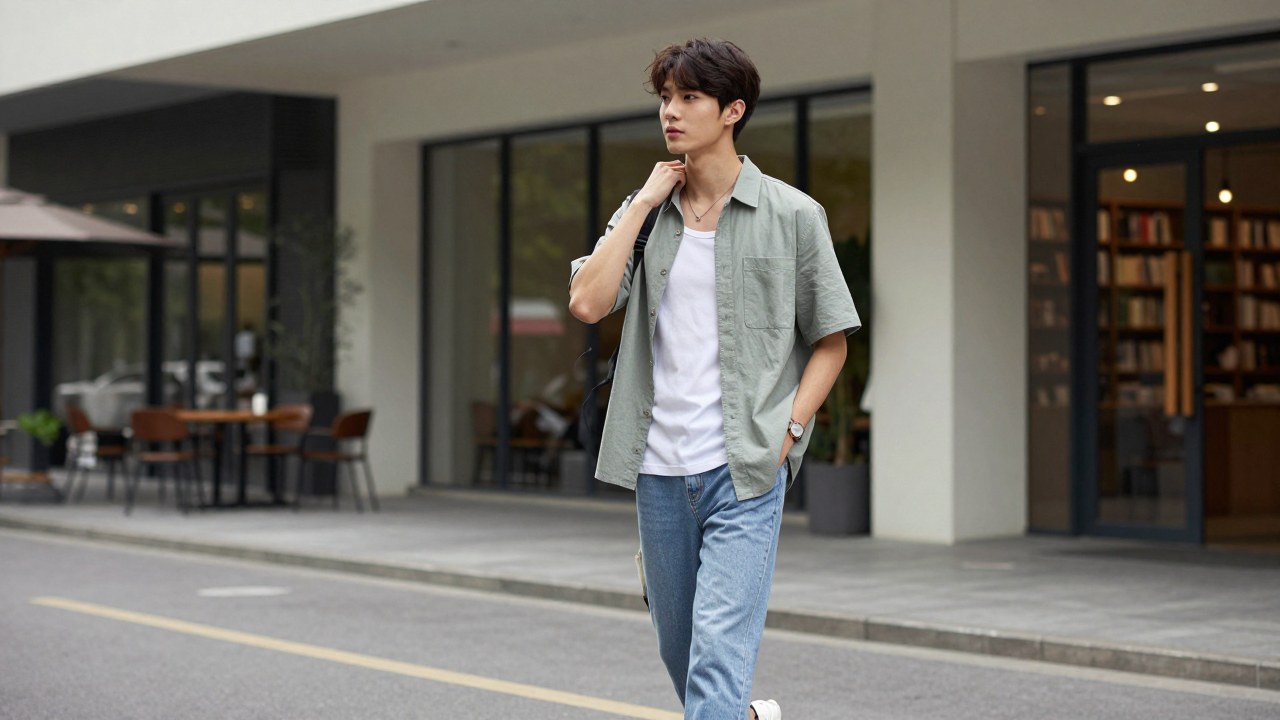
1. Why this formula is returning now
The first reason is simple: summers keep feeling longer, but people are less satisfied with dressing that only solves temperature. The old default of a white tee and shorts still works, but many readers now hit a limit with it very quickly. After a few days, the upper body can start feeling too flat, too empty, too unfinished. In today’s Chinese-internet youth-menswear language—especially where campus style, cleanfit, and light commuting overlap—people no longer want only comfort. They want comfort that still looks like a real outfit.
The second reason comes from shopping and content language. Even where direct access to some social platforms is more limited, public naming patterns remain clear enough. The words that keep appearing are not only “summer menswear” in a broad sense. They are much more specific: air-conditioner shirt, sun shirt, open short-sleeve overshirt, cool-touch drapey shirt, campus outer layer, light-commuter summer shirt, and upper-body layering for young men. That tells us both content and commerce have moved toward the same problem: summer dressing now revolves around whether the upper body needs a second layer, and what kind of layer can do the job without becoming heavy or awkward.
The third reason is flexibility. This one formula can move toward campus-boy dressing, cleanfit, softboy, Korean-inspired casual, Japanese-style light layering, or understated city commuting. It can sit over a white tee, over a tank, and under light seasonal accessories. It can work with jeans, straight trousers, drawstring pants, bermuda shorts, and even cleaner nylon bottoms. Unlike football jerseys, it does not come with such a strong emotional style charge. Unlike dressier short-sleeve shirts, it does not age the wearer so easily. Unlike typical sun-protection tops, it does not automatically push the whole look into technical-gear territory. Its real strength is that it stays recognizably stylish while remaining widely usable.
The most useful Chinese-internet signals behind this topic
2. What it really solves
Many people assume the short-sleeve shirt over tee is mostly a visual upgrade. That is only partly true. Its real value is practical because it fixes three recurring summer problems at once.
First problem: the upper body feels empty. A white tee can be clean, but the issue is often not the tee itself. It is that a single layer leaves too little visual structure. In late spring, early summer, or in air-conditioned transitions, one tee can make the wearer look flat, light, and unfinished. The short-sleeve shirt over tee adds the smallest possible amount of architecture: collar, placket, sleeve line, hem, and a fuller outer outline.
Second problem: tees feel too basic while long-sleeve shirts feel too heavy. Long-sleeve shirting can solve structure, but in many Chinese city climates it becomes too much as soon as the day gets hot. For campus-boy and light-commuter readers, long-sleeve shirting can also push the outfit too far toward polish. The short-sleeve overshirt sits in the middle. It keeps shirt language without long-sleeve burden, gives a layer without needing jacket weight, and provides shape without over-maturing the look.
Third problem: low tolerance when moving through multiple situations. A real day is not lived in one place. Home or dorm, classroom, subway, café, mall, convenience store, evening walk—many readers move across all of them. A tee may work in one moment, then feel too exposed or too plain in the next. A short-sleeve shirt over tee keeps the upper body in a more stable state across those changes. It does not need to be thick. It only needs to make the wearer look noticeably more complete than “I only put on one short sleeve.”
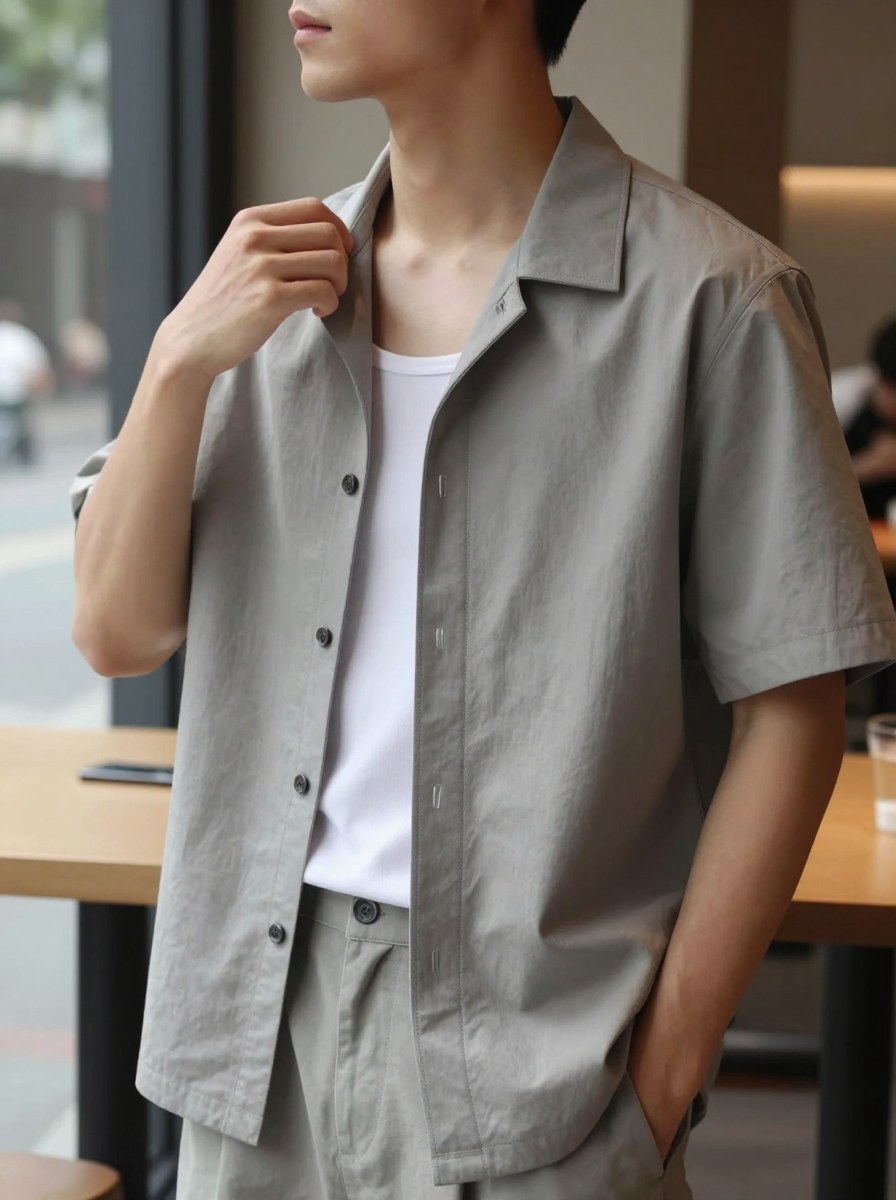
3. Why it works better than many overtly technical summer tops
Chinese menswear shopping language now overflows with words like cooling, sun protection, quick-dry, technical, machine-feel, air-conditioning layer, and summer functionality. The problem is that many of these garments solve parameters while weakening everyday style. For campus-boy dressing, cleanfit, softboy, or light commuting, clothes cannot only be easy to wear. They must still look as if they belong to a coherent youth wardrobe.
The short-sleeve shirt over tee is stronger than many technical tops because it keeps normal menswear grammar intact. It still speaks through collar, placket, hem, drape, quiet color, and upper-body outline. That makes it naturally compatible with the site’s existing core logic: the clean upper-body discipline of knit polos, the low-noise base of the white tee, the proportion-control of straight trousers, and the movement logic of the nylon crossbody bag.
In other words, technical summer tops often sell claims. This formula sells state. It says: you can look like someone who knows how to dress, without suffering for it. In the present Chinese-internet youth-menswear environment, that is a more durable kind of value.
4. The five directions that are most worth buying
1. Low-saturation open-collar short-sleeve shirts
This is the safest first entry. Misty white, grey-blue, soft khaki, pale olive, cream, and smoke-grey all connect easily to white tees, tanks, light-wash jeans, charcoal trousers, bermuda shorts, and white socks with sneakers. Open collars feel lighter and more natural worn open, and they age the wearer less than more formal shirt collars.
2. Light drapey shirts that are not glossy
These often appear in Chinese shopping language as drapey short-sleeve shirts, commuter shirts, air-conditioner shirts, or cooling overshirts. The key is not drape as a word. The real test is whether the surface stays matte enough and the fabric remains light without turning limp, slippery, or sleepwear-like.
3. Shirt-like sun layers
For readers who genuinely need sun protection and indoor-outdoor flexibility, this route is useful. But the shirt must still look like a shirt first and gear second: the collar and placket should work, the color should stay controlled, and the surface should avoid loud synthetic glare.
4. Subtle-texture short-sleeve overshirts
Light texture, soft surface irregularity, and understated fabric expression can create depth without relying on loud prints. This route is particularly strong in summer because it gives the outer layer more visual life while staying calm and readable.
5. Quiet stripes or low-noise color play
Readers who like a cleaner academic or library-coded mood often get more value from fine stripe shirts and softened cool palettes than from louder floral or graphic shirts. These work naturally with glasses, canvas bags, straight trousers, and low-key summer shoes.
Most useful Chinese shopping-entry searches
5. Ten buying checks that matter more than trend words
- Do not let the fabric get too shiny. Too much glare quickly turns the layer cheap.
- The placket must fall naturally when worn open. If the shirt hangs stiffly, the whole idea collapses.
- The collar should feel relaxed but not dead. Too formal ages the wearer; too limp removes energy.
- Sleeve length should not crush proportion. Loose is fine, but overly long sleeves often make the body look shorter and sloppier.
- The hem should stay clean. Slight curve or natural straight fall usually works best.
- Color must work in a real wardrobe, not only in a product thumbnail.
- Product photos should show inner-layer styling. If the store never shows a tee or tank under it, that is a weak signal.
- Reviews should mention whether it still looks proper outside the screen.
- Compatibility with your existing trousers matters more than micro-trend novelty.
- The garment should behave like a smarter second layer, not like a cheap summer substitute.
6. The most dependable ways to wear it
- Short-sleeve shirt over white tee + light-wash jeans: the most classic campus-boy route.
- Short-sleeve shirt over tank + bermuda shorts: better for softer summer layering and weekend movement.
- Short-sleeve shirt over white tee + straight trousers: one of the cleanest light-commuter cleanfit formulas.
- Short-sleeve shirt over grey tee + drawstring trousers: useful for air-conditioned transitions and city movement.
- Striped overshirt + white tee + khakis: especially good for library and understated academic mood.
- Drapey overshirt + tank + light trousers: a softer Korean-inspired route, as long as the fabric stays matte enough.
All of these looks rely on the same truth: the shirt does not need to dominate. It only needs to restore structure to the upper half with the smallest possible amount of effort. Once that happens, trousers, shoes, bags, and accessories become easier to resolve as well. That is why this kind of purchase often delivers more real value than louder trend items that cannot survive ordinary life.
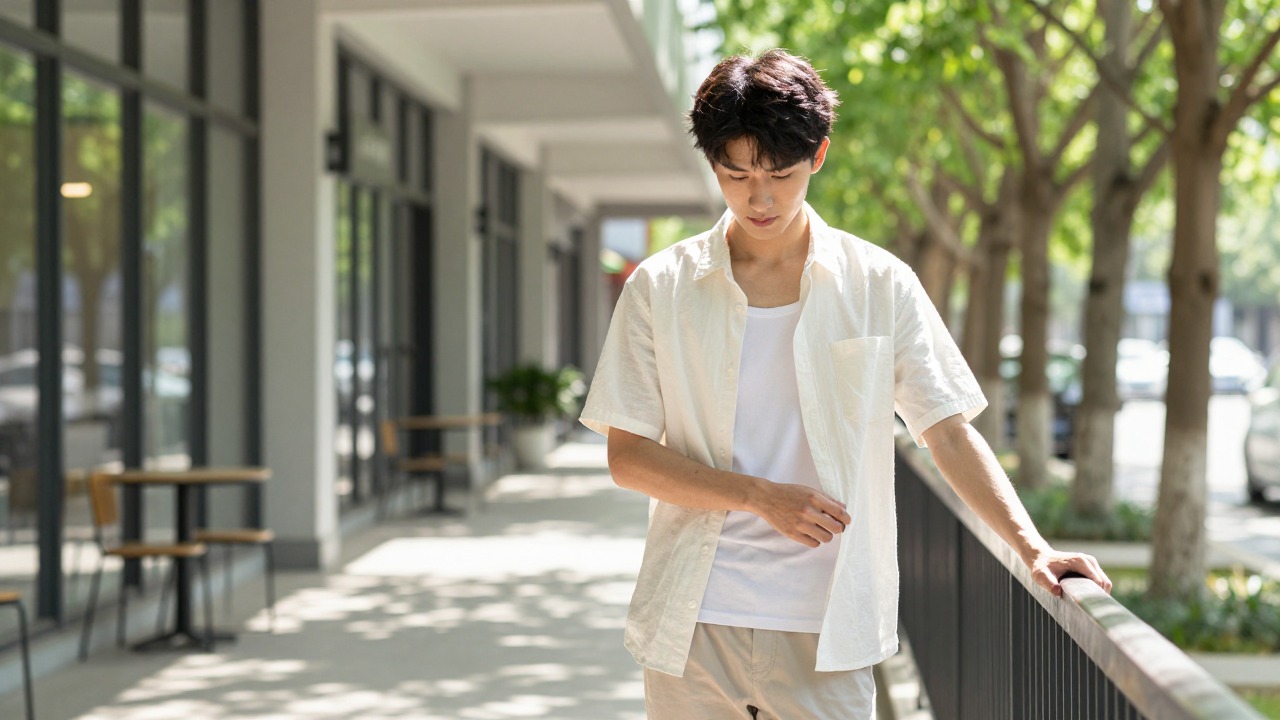
7. Who should buy one now
- Readers with lots of tees and trousers who still feel empty above the waist in summer.
- Anyone moving through campus, subways, cafés, malls, and indoor-outdoor transitions who wants to stay normal, light, and complete.
- People drawn to campus-boy dressing, cleanfit, softboy, light Korean, or light Japanese casual, but who dislike looking overdressed.
- Anyone already getting tired of the idea that summer upper-body dressing must stop at a single tee.
8. Zboystyle’s judgment
I do not think this is a short-lived keyword trend. It feels more like a recurring answer produced by real Chinese-internet youth life: people do not want to live in pure functionalwear, but they also do not want only plain tees; they want lightness and structure at the same time; they want to look styled without looking theatrical. The short-sleeve shirt over tee does exactly enough of all those things to matter.
That is why it deserves a strong place in the 2026 summer conversation. It is not the loudest trend, but it may be one of the most reusable. It connects Chinese trend language, e-commerce buying signals, and the site’s existing content tree around cleanfit, campus style, softboy dressing, and light commuting. If you want to add one upper-body category with real return value this late spring and early summer, this one belongs near the front.
Read next: Why open-collar short-sleeve shirts are back at the center of summer menswear, Why textured short sleeves are taking over summer 2026 tops, Why the light-commuter cleanfit wardrobe matters more now, Why cool-touch tees are becoming a key late-spring basics layer, and Why nylon crossbody bags still matter so much in daily movement dressing.
Source-pattern references: this feature was built from recent Chinese-internet search and naming patterns around campus-boy dressing, cleanfit summer styling, short-sleeve shirt layering, air-conditioner shirts, sun-protection shirts worn as outer layers, cool-touch shirts, drapey short-sleeve shirts, and light-commuter summer shirting, together with corresponding e-commerce language in search entries such as “开领短袖衬衫 男 外搭,” “垂感短袖衬衫 男 轻通勤,” “防晒衬衫 男 外搭,” “冰皮衬衫 男 短袖,” and “男大 短袖衬衫 外搭.”