Skiwear no longer belongs only to the slope: ski jackets, goggles, and mountain-coded winter fashion now shape youth style more clearly
Skiwear used to feel highly technical, highly situational, and almost fully locked to the slope. But over the last few years, as winter sports, mountain travel, ski-resort imagery, and snow-season social media all expanded, skiwear started to influence a much wider youth-menswear space. It is no longer only about skiing itself. It now affects how winter volume, goggles, shells, fleece, and mountain-coded body language are understood in broader youth fashion culture.
That does not mean wearing a full ski setup onto public transport is automatically stylish. What matters is how skiwear now works as a visual resource: it brings snow, speed, mountain atmosphere, protection, color blocking, and movement into winter clothing. That gives winter style more direction than simple warmth alone.
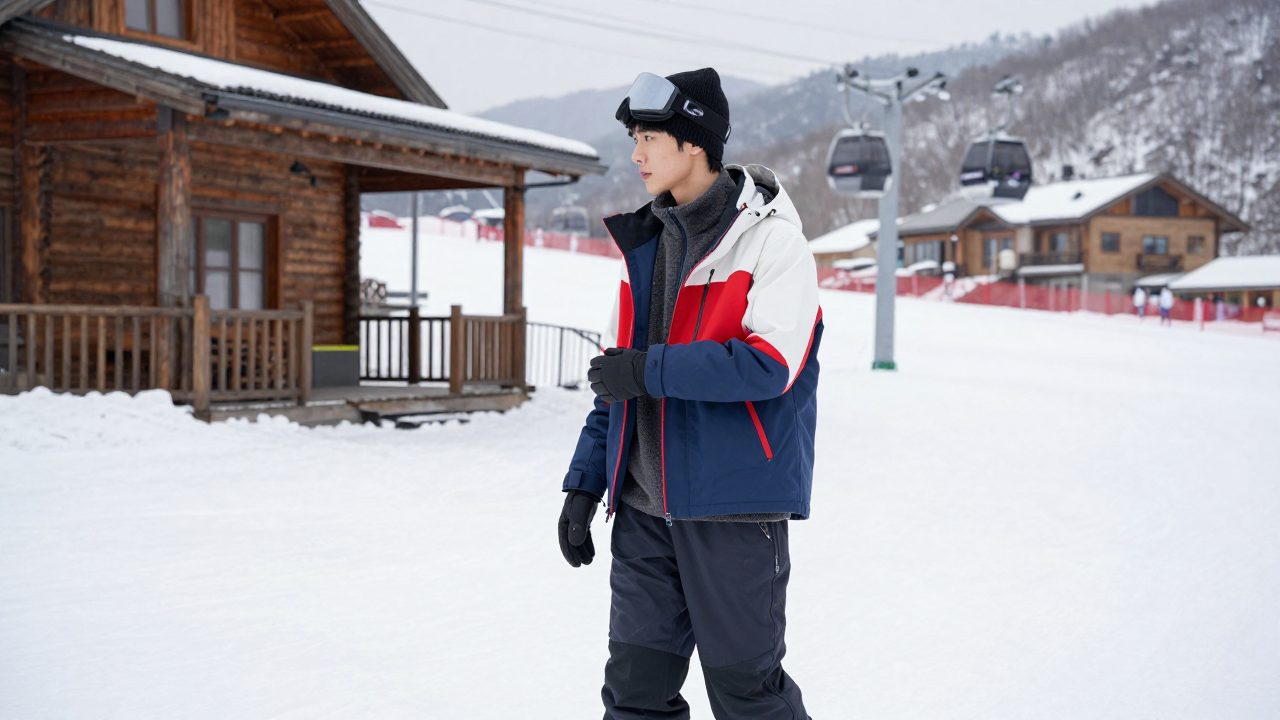
1. Why skiwear suddenly feels more fashionable
Part of the answer is image. Snow is an excellent background. Goggles reflect. Jackets take color well. Volume becomes graphic. Movement looks sharper. Skiwear naturally produces strong visual memory in a way many ordinary winter coats do not.
Another reason is lifestyle. Skiing, winter travel, and mountain resorts became far more visible in youth content culture. Even people who do not ski regularly now recognise the language of ski jackets, gloves, goggles, and resort-side winter dressing.
2. The point is not one jacket, but a whole system
Skiwear works as a system:
- outer jacket: silhouette, color, and volume
- ski trousers: lower-body realism and snow identity
- mid-layer fleece or performance layer: inner logic and warmth structure
- goggles, hats, gloves, neck protection: strong role-signalling accessories
- snow boots or heavier winter shoes: visual grounding
That means skiwear is strongest when the outfit explains why the wearer belongs in a cold, windy, mountain environment.
3. Why skiwear works so well in winter imagery
Because it adds directional winter atmosphere. A normal winter coat can simply look heavy. Skiwear looks like it belongs to weather, speed, altitude, cold air, and movement. It makes the body feel like it is entering an environment rather than just staying warm.
It also works extremely well on social media: mirrored lenses, snow backgrounds, resort wood, cable cars, helmets, masks, winter light, and color-blocked shells all carry strong image energy.
4. The most common mistake: assuming more equipment automatically means more style
Skiwear is highly functional, but that does not mean every visible item belongs in everyday dressing. One common mistake is piling on goggles, oversized trousers, gloves, boots, bright shell colors, and technical accessories all at once. The result often looks less like style and more like untreated gear display.
The better route is usually to keep selected skiwear language — jacket, fleece, goggles, hat, snow trousers, or winter footwear — rather than trying to wear the entire mountain system in every context.
5. The skiwear pieces most worth watching
- cropped or shorter ski jackets: easiest to bring into youth styling
- color-blocked snow jackets: strongest for winter image identity
- fleece mid-layers: easiest pieces to carry beyond the slope
- ski trousers: stronger role identity, but much more scene-dependent
- goggles and winter headwear: some of the strongest mountain-coded visual signs
6. The strongest skiwear formulas
- short ski jacket + fleece + straight trousers: strongest for city winter and lighter mountain-coded dressing
- jacket + ski trousers + goggles: strongest for full slope and resort imagery
- fleece + heavy beanie + nylon trousers: strongest for daily winter outfits that borrow skiwear energy without becoming costume
- high-color shell + snow background: strongest for winter image content, but also easiest to overdo
Continue with: why outdoor sportswear is moving into the center of youth menswear, how puffer jackets are splitting into clearer youth-menswear lanes, and why Stone Island still matters so much in functional menswear culture