Stone Island is not just another workwear label: fabric experiments, military-coded structure, and lasting recognition in menswear culture
Stone Island has always had an unusual reputation in Chinese internet menswear culture. It is not a brand everyone can explain in full historical detail, and it is not a conventional mainstream luxury name either, yet its recognisability is extremely strong. Many people can identify the compass badge instantly, but far fewer can explain why the brand matters. That is exactly why it gets flattened so often into “an expensive workwear label” or “a brand that survives on the badge.” Both readings are too shallow.
What makes Stone Island genuinely special is not one single hype item, but the way it keeps compressing fabric experimentation, military-coded structure, functionality, Italian menswear character, and street-level recognisability into one unusually stable visual system. It is not pure workwear, not ordinary streetwear, and not a brand that can be explained only through a logo. It is closer to a laboratory for outerwear and surface treatment.
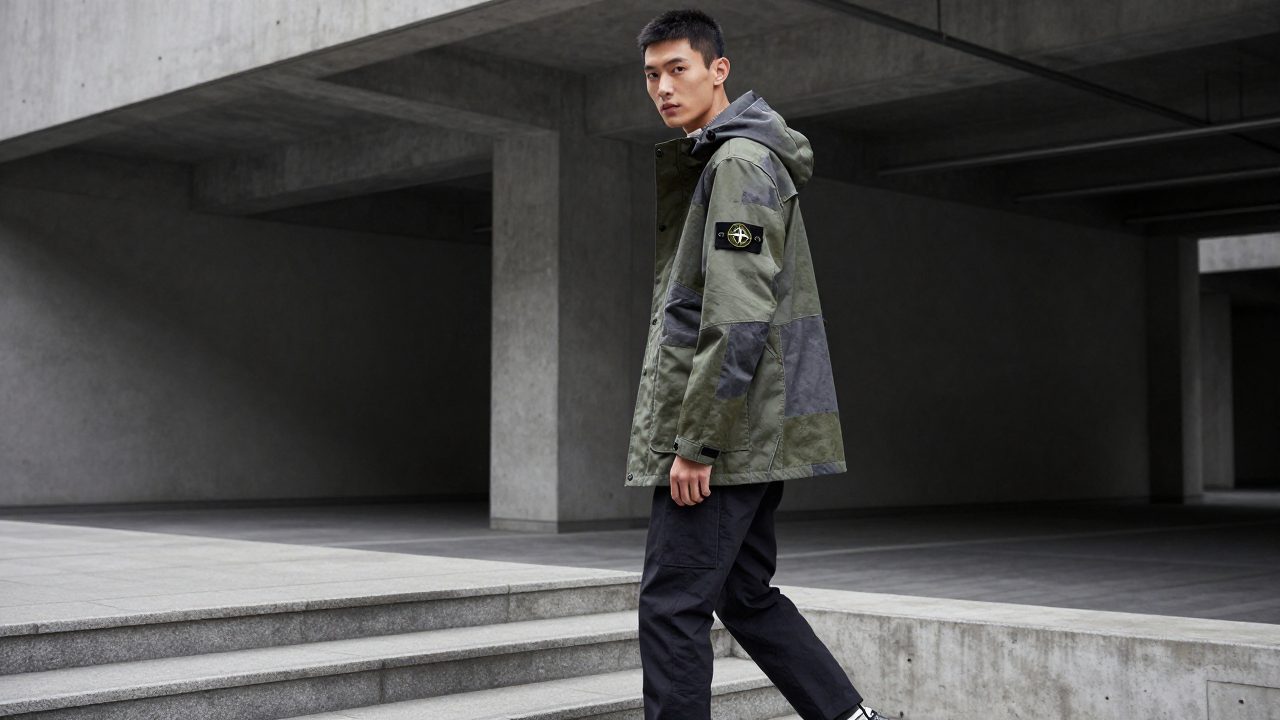
1. Start with Massimo Osti: the foundation was not hype, but experiment
If Stone Island is reduced to a sleeve patch, almost everything important disappears. The starting point has to be Massimo Osti and a very particular way of thinking about clothing: not “what is trending,” but “what else can fabric and surface become?” That mindset helped reconnect industrial references, military structure, functional design, and urban menswear in a way that still feels unusually relevant.
Stone Island was therefore never built through classic luxury storytelling. It did not begin by centring elegance, polish, or heritage refinement. It centred dye, wash, coating, treatment, altered material behaviour, and garment structure. That gave it an identity that felt neither like ordinary luxury nor like ordinary streetwear.
2. Why it has remained so stable in Chinese internet menswear culture
Because it is easy to read, but not easy to exhaust. The compass badge is obviously one of the strongest recognition devices in menswear. But the reason Stone Island keeps its place is deeper: it offers a way to look technical, masculine, structured, and materially serious without becoming traditional formalwear.
That combination has always been powerful in Chinese menswear culture, especially where sneaker culture, light technical dressing, workwear influence, military-coded silhouettes, and “knowing brands” all overlap. Stone Island may not always be the loudest brand, but it is often one of the fastest brands to signal that the clothes are not ordinary.
3. Its strongest appeal is not the badge, but what fabric treatment does to outerwear
Newcomers often focus on the badge first. People who actually care about the brand usually end up looking at the outerwear itself. Stone Island is strongest not when it makes a random logo tee, but when it produces shell jackets, dyed overshirts, treated zip layers, military-leaning outer pieces, and tops where surface depth and structure are doing the real work.
A good Stone Island jacket is attractive not because of one gimmick, but because the whole garment seems altered by weather, treatment, industrial logic, and material density. The color looks worked through. The surface looks processed. The silhouette feels controlled, masculine, and functional without becoming dull or clumsy.
4. How it differs from ordinary workwear brands
Stone Island is often grouped with workwear, military, and technical labels, but the difference is clear: it is not trying to look like literal work clothing. It is trying to look like functional clothing that has been re-engineered through design and treatment. Ordinary workwear often centres durability and direct practicality. Stone Island centres technical finish, surface depth, and recognisable material character.
That is why it moves more easily into fashion-aware styling than many ordinary workwear brands. Stone Island can live with jeans, trainers, knitwear, cleaner trousers, and more controlled silhouettes without needing the whole outfit to become a uniform of heavy utility.
5. The directions most worth watching now
- light outerwear and shell jackets: still the clearest place to read the brand’s value
- overshirts: one of the most useful forms for daily wear
- knits and zip layers: lower-noise but often very revealing of fabric and color control
- sweatshirts and hoodies: the easiest younger entry point and one of the most visible internet routes into the brand
- trousers: not always the first talking point, but important for understanding the full functional silhouette
If the question is real youth menswear value, I would still start with outerwear and overshirts rather than logo T-shirts.
6. Who Stone Island works for
It does not suit everyone. For readers who want only silent cleanfit basics, Stone Island may feel too present. But it works especially well for people who:
- like technical or military-coded dressing without wanting heavy costume workwear
- care about fabric, dye, treatment, and structure
- want recognition without looking like they bought the loudest hype item
- are interested in sneaker culture, street history, and material-driven menswear
It sits in a very useful middle zone for readers who are no longer satisfied by basics, but do not want to fall into overly theatrical designer dressing either.
7. The common mistake is making the whole outfit shout “Stone Island” at once
Because Stone Island already carries a lot of information, it becomes easy to overdo. Too many pockets, too much utility, too many heavy shoes, too much visible branding, too much technical messaging — and the whole outfit starts looking like gear stacking rather than style.
The stronger route is usually to let one Stone Island outer piece or overshirt act as the key visual layer while everything else stays quieter: straightforward jeans, cleaner trainers, calmer knitwear, a simpler bag. The brand needs structural support, not a chorus.
8. Where does it sit now?
In current youth menswear, Stone Island does not belong to the softest campus lane and it does not belong to the most experimental designer lane either. It works more like a central axis of functional masculinity: connecting workwear, technical dressing, city-outdoor influence, sneaker culture, and brand recognition without collapsing fully into any one of them.
That is why it still matters. It is not a temporary keyword. It is not simply a leftover old name. For readers who care about menswear texture, treated fabric, and recognisable structure, Stone Island still carries significant weight. In Chinese internet culture, it remains one of the clearest visual signals of “this person pays attention to men’s clothing.”
Continue with: why outdoor sportswear is moving into the center of youth menswear, why KENZO Paris feels newly relevant again, and why sweatshirts and hoodies remain such a stable middle layer