Why spring-summer vest layering is moving back to the center of youth menswear: a 2026 Chinese-internet cleanfit and college-boy read
If you line up the latest publicly visible Chinese-internet signals around youth menswear—short-video titles, Bilibili search results, store naming language, product-image mood, and discussion patterns—you can see one clear shift. People are still talking about cleanfit, college-boy dressing, Korean casual, light commuting, cityboy styling, low-noise outfits, and visual neatness. But what is starting to matter again is not only which short-sleeve top to buy. It is how to rebuild layering once the weather gets warm.
One of the strongest answers in this cycle is the vest. More precisely, it is the spring-summer transition vest that has been retranslated for everyday youth menswear: not a heavy winter sweater vest, not a costume-like school-uniform vest, and not an overbuilt utility shell, but a light structural layer that can reorganise the upper body without making the wearer feel too hot or too heavy.
Chinese-platform language around this is messy in a useful way. Some people call it vest layering or men’s spring-summer vest styling. Others hide it inside phrases like gentle androgynous dressing, relaxed cleanfit layering, college-boy light structure, transition-season outfit ideas, what to wear when a tee feels too flat, or practical layering for ordinary guys. The wording changes, but the problem is the same: after white tees, shirts, and polos have already become familiar answers, Chinese youth menswear is looking again for a lightweight upper-body structure layer.
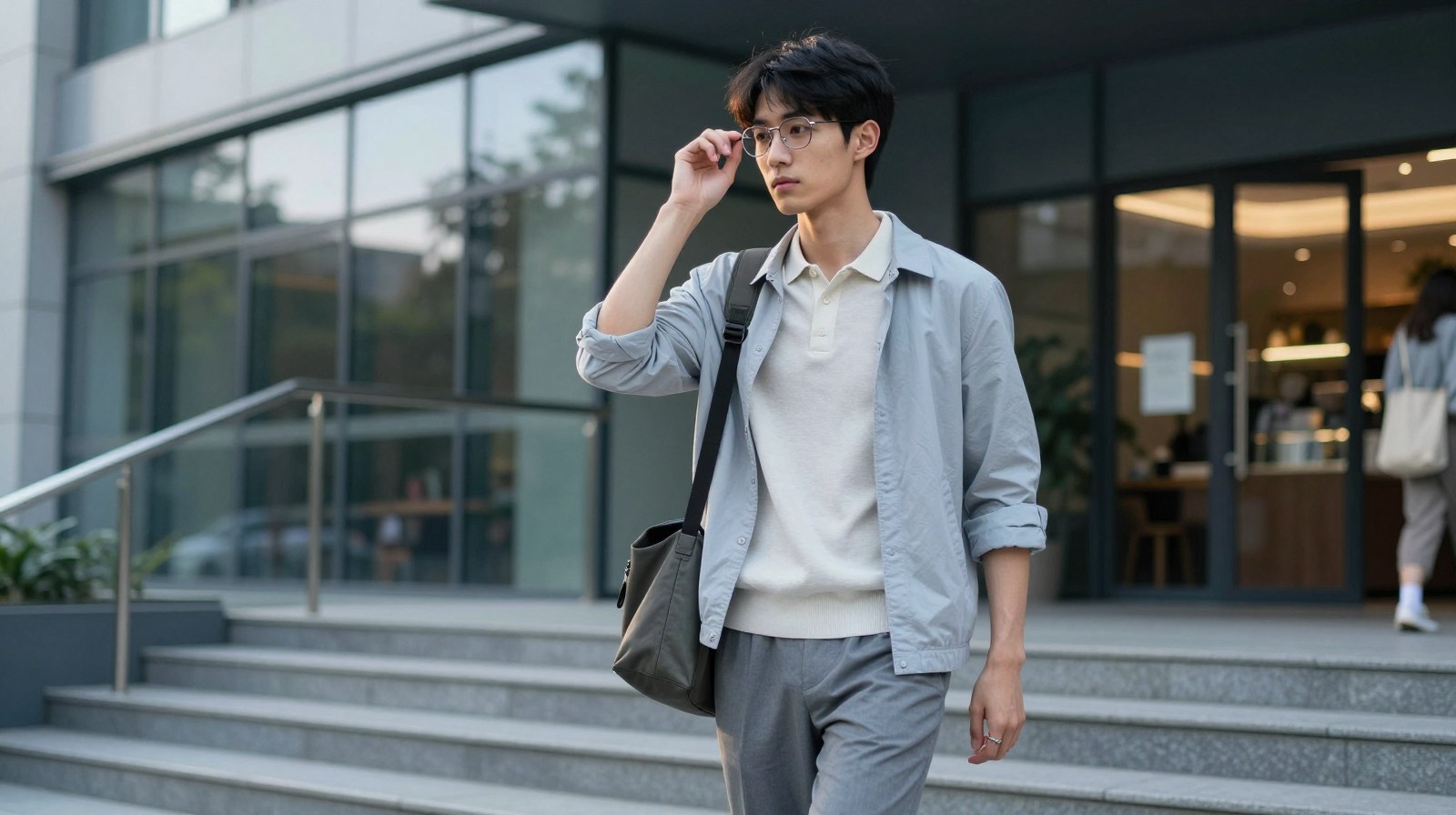
That is why this works best as a style article rather than only as a product note. In spring-summer 2026, the vest is not returning because one single product exploded. It is returning because its position inside the youth-menswear system has become useful again. It fills a gap: white tees can feel too flat, shirts can feel too proper, polos can feel slightly too mature, sport tops can feel too functional, and single undershirts can feel too body-dependent. The right vest sits in the middle.
1. Why Chinese menswear is talking about vest layering again
The most direct reason is simple: warm weather makes layering much harder. In autumn and winter, people can build structure through jackets, hoodies, shirts, scarves, and knits. Once spring and summer arrive, many wardrobes collapse back into “a short sleeve plus trousers.” That is not a problem on its own. The problem is that once everybody returns to basics, the difference between “simple” and “visually complete” becomes much more obvious.
Recent Chinese-platform signals push exactly in this direction. Public Bilibili search results continue surfacing routes around men’s spring-summer vest layering, cleanfit vest layering, transition-season dressing, practical layering for ordinary guys, youth-style store roundups, soft Korean vest-over-shirt styling, and campus commuter layering. In many of these content paths, the vest is no longer treated as an autumn-winter-only item. It is being repackaged as a transition-season tool, a light structural patch, and an accessible layering answer for ordinary young men.
Chinese-internet signals behind this topic
The second reason matters just as much: Chinese youth menswear now prefers “clean, but with some structure,” not just “simple at all costs.” An earlier cleanfit cycle mainly solved the problem of dressing less messily. The next question became: once I already know how to dress cleanly, how do I look a little more complete without becoming loud, heavy, or try-hard? The vest sits in that middle zone almost perfectly.
It is lighter than a jacket, more immediate than a secondary shirt layer, easier to wear out than a single tank, more shaped than a cardigan in some cases, and more believable than many decorative fashion tops. For Chinese youth menswear, that makes it a very useful “extra half-layer.”
2. The three kinds of vest that actually matter in this cycle
The word “vest” is too broad on its own. Too many unrelated things get mixed into it. The versions that really fit the BoyStyle mood and the 2026 spring-summer youth-menswear context are not all vests, but these three routes:
1. Light knit or cotton-touch sweater vests: best for cleanfit, campus style, and Korean casual
This is the easiest route to connect with current Chinese-platform menswear taste. It is not the heavy winter cable-knit vest and not a formal tailored waistcoat. The useful version is lighter, softer, and easier to connect to a white tee, a shirt, a striped base, or a thin long sleeve. Its strength is that it adds structure to the upper body without bringing too much tool-like or office-like energy.
It works especially well for campus life, libraries, light commuting, coffee shops, mall weekends, and soft date settings. It sits close to cleanfit, college-boy dressing, Korean casual, and Japanese relaxed styling, which makes it low-risk. A light knit vest rarely looks too dramatic. More often, it simply makes the wearer look like he put himself together properly.
2. Thin utility or light-pocket vests: best for citywalk, light outdoor, and urban-function edges
This route also appears repeatedly on Chinese platforms, but the number of actually good versions is smaller than people think. A lot of so-called utility vests are just pocket-heavy visual noise. They end up looking like camera gear shells or festival props. The truly useful spring-summer version is light enough, rhythmically pocketed, not too tactical in color, and able to connect naturally to white tees, grey tees, nylon shorts, straight trousers, and everyday bags.
It is more scene-dependent than the knit route and depends more heavily on the overall outfit. If you already like outdoor style, cityboy, urban function, or mountain-inspired youth styling, this can work very well. But if your wardrobe is mostly cleanfit, Korean casual, and simple campus dressing, this route should only enter carefully rather than take over the entire wardrobe.
3. Open-front or shoulder-panel style light vests: best for gentle androgynous and relaxed transition layering
This is the most underrated route and also one of the most Chinese-internet-friendly. It often does not even look like a traditional vest. It behaves more like a compressed sleeveless outer layer. Sometimes it comes from cardigan logic; sometimes from shirt-layer logic. Its value is not spectacle, but softness. It lets the whole outfit feel more relaxed, gentler, and visually breathable.
If you have recently seen Chinese-platform content around gentle androgynous menswear, easy boyfriend style, Korean spring-summer layering, shirt-plus-vest combinations, or relaxed layering, you have probably already seen this route—even if the creator did not explicitly call it a vest trend.
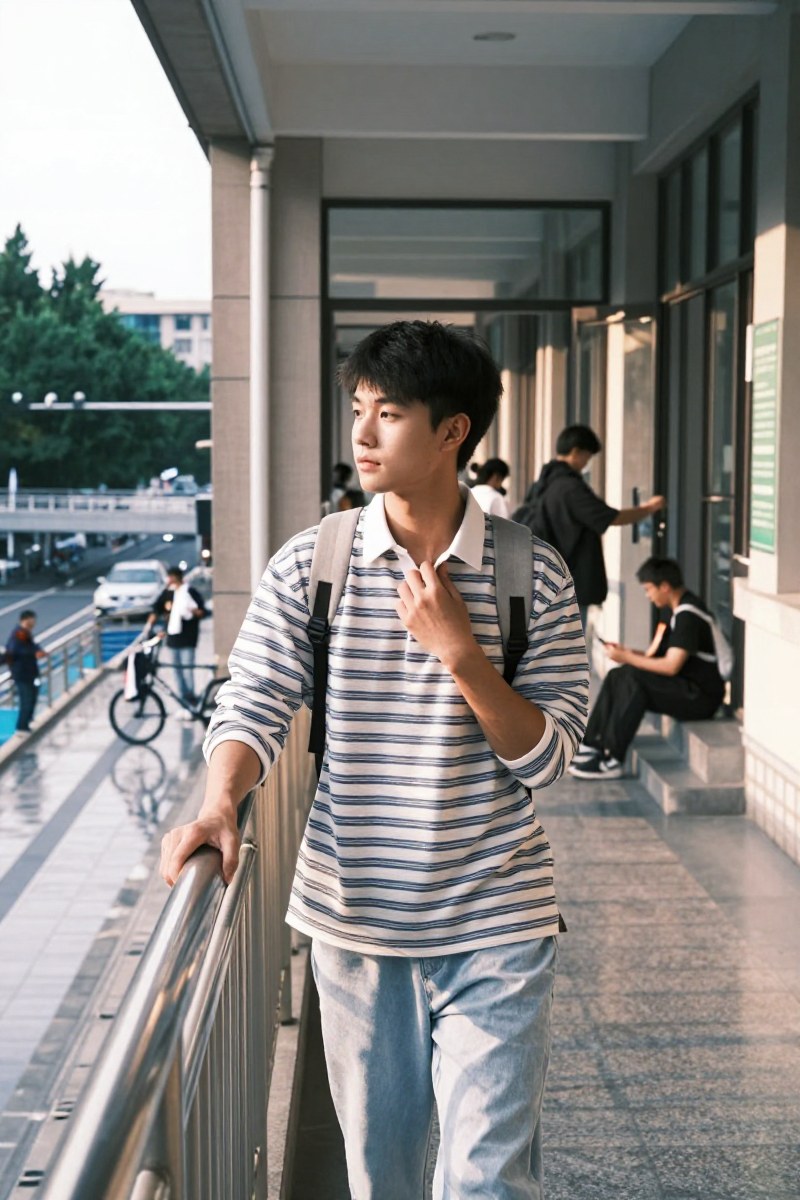


3. Why the vest has new value in warm weather
A lot of people instinctively feel that hotter weather means fewer layers. But the real question is not just whether you add a layer. It is whether that layer is too heavy, and whether it is worth its space. Older vest associations often meant thick, warm, formal, or unnecessary. The useful 2026 warm-weather vest does the opposite: it is light, thin, breathable, and only adds a small amount of structure.
Its spring-summer value mainly comes from three things:
- it adds visual memory: a plain white tee can leave the upper body too flat, while a vest reintroduces information around the chest, shoulders, neckline, and hem relation;
- it helps proportion: a vest sits higher and usually shorter than a jacket, which often improves the visual weight of the upper body for ordinary young men;
- it upgrades mood: basic cleanfit can look merely simple, while a good vest makes the same outfit look more considered.
There is also a practical reason. In the most common Chinese youth-menswear settings—classrooms, subway rides, shopping districts, air-conditioned spaces, cafés, libraries, dates, and travel transfers—the vest survives more easily than an actual jacket. It does not carry the burden of “should I take this off now?” but also avoids the visual thinness of a single short sleeve.
4. Five vest formulas worth copying first
1. White tee + light knit vest + pale straight-leg jeans
This is the most stable formula in the college-boy cleanfit context. The white tee keeps things fresh, the vest provides upper-body structure, and pale denim pulls everything back into the young zone. It is not “serious layering,” but it looks much more complete than a short sleeve alone.
2. Blue-striped shirt + thin vest + khaki or charcoal straight trousers
This works better for light commuting, libraries, coffee shops, and more bookish settings. The striped shirt already brings order. A thin vest makes the upper half even more composed. The key is that the vest must stay light. Otherwise the whole look starts feeling like autumn styling dragged into summer.
3. Grey tee + light utility vest + nylon shorts or light trousers
This is the citywalk and light-outdoor route. It suits people who already like some urban function, sport casual, or mountain-inspired youth energy. The real focus is not the number of pockets. It is whether the whole outfit stays light, believable, and wearable in ordinary life.
4. Tank-style base + open-front light vest + relaxed trousers
This gets closest to the Chinese-internet lane of gentle androgynous dressing and relaxed cleanfit. The key is not how much skin shows. It is whether the relationship between layers stays soft. This is best for readers already leaning toward Korean, soft, and slightly literary styling.
5. White tee + thin vest + baseball cap, silver-frame glasses, or canvas bag
If you do not want to rebuild the wardrobe all at once, this is probably the smartest starting route. The vest should not be treated as an isolated product. Together with a cap, glasses, or bag, it completes the sentence. On Chinese youth-menswear platforms, this combination of light upper-body layering plus small closing details has become a very stable success formula.
5. Eight things to check before buying, so the vest does not turn into a prop
Product-image checklist
The easiest mistake in this cycle is treating the vest like an external style plug-in. What Chinese youth menswear really rewards is a vest that does not need explanation to make sense. It should not exist as concept alone. It should sink naturally into a believable outfit.
6. Better Chinese e-commerce search entries to try first
Search routes
If you are evaluating stores rather than single products, I would rank them like this: first, stores already strong in cleanfit, college-boy dressing, Korean casual, and light commuting; second, softer stores that understand striped shirts, knits, and trouser proportion; and only third, utility and cityboy stores. If a store’s vests only appear with exaggerated accessories, oversized silhouettes, chunky shoes, or very heavy tactical trousers, it is probably not a good daily-wear entry for ordinary readers.
7. Is this just a short-term buzzword? BoyStyle’s read
If you treat the vest as a single hype item suddenly pushed by one platform, then of course it has a heat cycle. But if you treat it as the return of a light structural layer inside spring-summer youth menswear, it will outlast the buzzword. That is because it solves a very stable real-life problem: when the weather is too warm for jackets, what can an ordinary young man still use to make the upper body feel more complete?
On that question, the vest is a very strong answer. It is more direct than a secondary shirt layer, cleaner than a cardigan in some contexts, lighter than a full jacket, and easier to wear in public than a single undershirt. It will not suit everybody equally, but it has clearly returned to the mainstream shortlist of useful youth-menswear options.
The real danger is not trend expiry. The real danger is buying the version that looks most like a prop, traps the most heat, is hardest to style, and needs the most explanation. Choose the right direction, and the vest becomes one of the smartest layers in spring and summer. Choose the wrong one, and it turns into the kind of item that looks interesting in photos and gets worn once in real life.
Read next: why the light-commuter cleanfit wardrobe is taking over the stable zone, why the blue-striped shirt remains one of the strongest spring-summer layering tools, why cardigans still matter for softboy and Korean casual layering, why silver-frame glasses make the upper body feel more complete, and the summer cleanfit shop radar.
Chinese-internet source pattern: this piece mainly draws on publicly visible Chinese-platform signals and platform phrasing, including Bilibili result clusters around men’s spring-summer vest layering, cleanfit vest layering, transition-season styling, and practical layering for ordinary men; short-video and community language around gentle androgynous dressing, relaxed cleanfit, college-boy light commuting, and youthful layering; and Taobao-style naming around knit vests, thin layering vests, utility vests, campus shoulder panels, and soft upper-body layering, combined with the site’s existing cleanfit, striped-shirt, cardigan, straight-trouser, silver-frame-glasses, and light-commuter coverage.