Football jerseys are moving into the college-boy summer tops rotation: a 2026 Chinese-internet blokecore buying guide
If you flatten the latest Chinese-internet menswear signals, one shift becomes very obvious. People are still talking about cleanfit, college-boy dressing, Korean casual, and daily campus style, but the next layer of upper-body experimentation is no longer limited to knit polos, open-collar shirts, and baseball shirts. A more clearly sport-sourced piece with stronger thumbnail memory is now pushing its way into the conversation: the football jersey, or more broadly, the jersey-coded top.
In Chinese style culture, it appears under many overlapping labels. Some people call it football-jersey dressing or vintage football jersey styling. Others use the imported trend word blokecore. Many content titles do not use either label directly; they fold the same mood into phrases like sporty summer menswear, college-boy pitch-side style, team-coded short sleeves, campus sporty tops, or what to buy when you do not want to wear only white tees. Commerce language makes the shift even clearer. On Taobao, Tmall, and Douyin, common naming patterns now include vintage football jersey, loose jersey, mesh short sleeve, team-style top, campus sport mood, contrast paneling, oversized jersey, breathable mesh, unisex team top, and retro football shirt. That is enough to show one important point: inside the 2026 Chinese youth-menswear context, football jerseys are no longer only fan merchandise. They are becoming a real summer tops category.
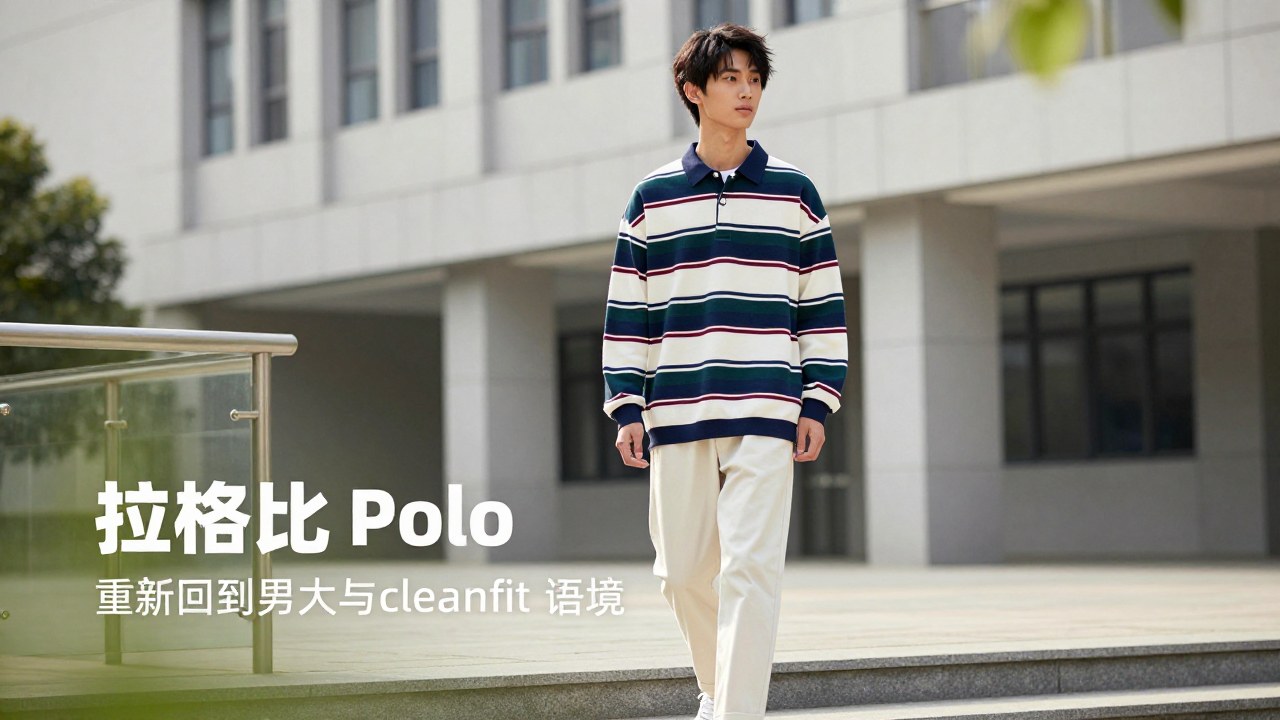
Why is this worth publishing? Because this is not just another disposable hype item. What is moving football jerseys into everyday menswear is not only football fandom, not just match culture, and not simply imported trend vocabulary. The deeper push comes from a stronger Chinese-platform demand: summer tops should not feel too flat, too formal, too mature, or too visually forgettable. White tees remain the foundation. Knit polos still work. Short-sleeve shirts are still important. But once readers start feeling bored with those answers, the next thing they often become curious about is exactly this kind of clearly sport-sourced but newly everyday-translated top.
1. Why football jerseys instead of safer generic sport tees?
A generic sport tee can be wearable, but it often reads too functional and too anonymous. A basketball tank depends more heavily on body shape. A training tee depends more on actual athletic setting. A baseball shirt behaves more like a layering tool. A football jersey lands in a very useful middle zone. It has more visual structure than a basic athletic tee, enters daily life more easily than a tank, and feels lighter and more immediately top-like than a baseball shirt.
More simply, the football jersey already contains things that help the summer upper body work on its own: graphic rhythm, neckline information, team-coded origin, light mesh or performance-surface texture, and strong shoulder-to-chest panel logic. All of that gives the upper body content without needing outerwear or layered complexity. For the current Chinese youth-menswear environment, that answers a very practical question: I want more memory than a white tee, but I do not want to look office-ready, and I do not want to rely on heavy style knowledge either.
That is also why the category is being seen again through college-boy and campus-style routes. Jersey-coded tops naturally connect to after-class social life, pitch-side movement, dorm-area hanging out, weekend malls, campus grass, and everyday youth activity. They feel more like something a real young man might actually wear than many forced street-graphic tops, and more image-friendly than plain training wear. Chinese platforms consistently reward exactly this kind of trend: one that can grow out of believable daily life rather than costume logic.
Chinese-internet signals behind the topic
2. What Chinese youth menswear is actually accepting is not full fanwear, but an everyday-translated jersey top
When people hear football jersey, they often jump to two extremes. One is literal fanwear: club, year, sponsor, badge, and number fully intact. The other is pure trend styling: oversized jerseys, loud shorts, tall socks, heavy shoes, and exaggerated attitude. The version that really enters the 2026 Chinese youth-menswear mainstream is usually neither. It sits in the middle: it keeps some team-coded and jersey-origin information, but trims it into a top that fits campus and city life more naturally.
In other words, the platform-favoured direction is not “I look ready for professional football.” It is “my top carries some football energy, but I still look like a believable young man in daily life.” These more wearable jersey-coded tops tend to share a few traits:
- the color is present, but not out of control: navy-white, red-white, green-white, black-gold, and blue-white are common because they keep team energy without becoming cartoonish;
- the fit is loose, but not dragging: good jerseys should not behave like dresses or giant fabric rectangles;
- the material has sports origin, but not cheap shine: mesh, dry-touch, and light performance surfaces work well, but plastic gloss is dangerous;
- graphics exist, but do not scream across the whole garment: collars, shoulder lines, chest badges, stripes, and panel blocks are useful; overdone sponsor-like noise is not;
- the styling returns to daily life: denim, straight trousers, sport shorts, canvas shoes, retro trainers, caps, and tote bags matter more than full athletic kit.
This is where blokecore is actually being translated successfully into Chinese youth dressing. It is not a copy of overseas trend templates. It is a breakdown of football-jersey language into something ordinary young male readers can realistically buy and wear. The strongest football jersey right now is therefore not the most match-authentic one. It is the one most likely to survive inside a normal summer wardrobe.
3. Why it matters more in summer 2026
First, summer needs a top that can create a full image by itself. Once outerwear disappears, many people get stuck rotating between white tees, shirts, and polos. A football jersey can carry upper-body structure on its own. The neckline, badge logic, stripes, contrast panels, perforated fabric, and shoulder seams all keep the torso from going flat.
Second, Chinese youth menswear is no longer satisfied with simply looking clean. The current demand is closer to clean, but with some personality. If an earlier cleanfit wave mainly solved the problem of dressing more neatly, the next question became: how do I add style judgement without becoming messy, try-hard, or too mature? The football jersey answers that well. It has more attitude than a white tee, more structure than a generic athletic top, less pressure than a shirt, and less visual noise than many heavy street graphics.
Third, Chinese platforms now offer more believable everyday entry points for this top. In the past, jerseys were tied too tightly to the pitch. Now they appear in campus dressing, weekend citywalk looks, coffee-shop outfits, pitch-side social scenes, malls, and travel styling. Once those entry points become normalised, the category becomes much easier to turn into real purchases.
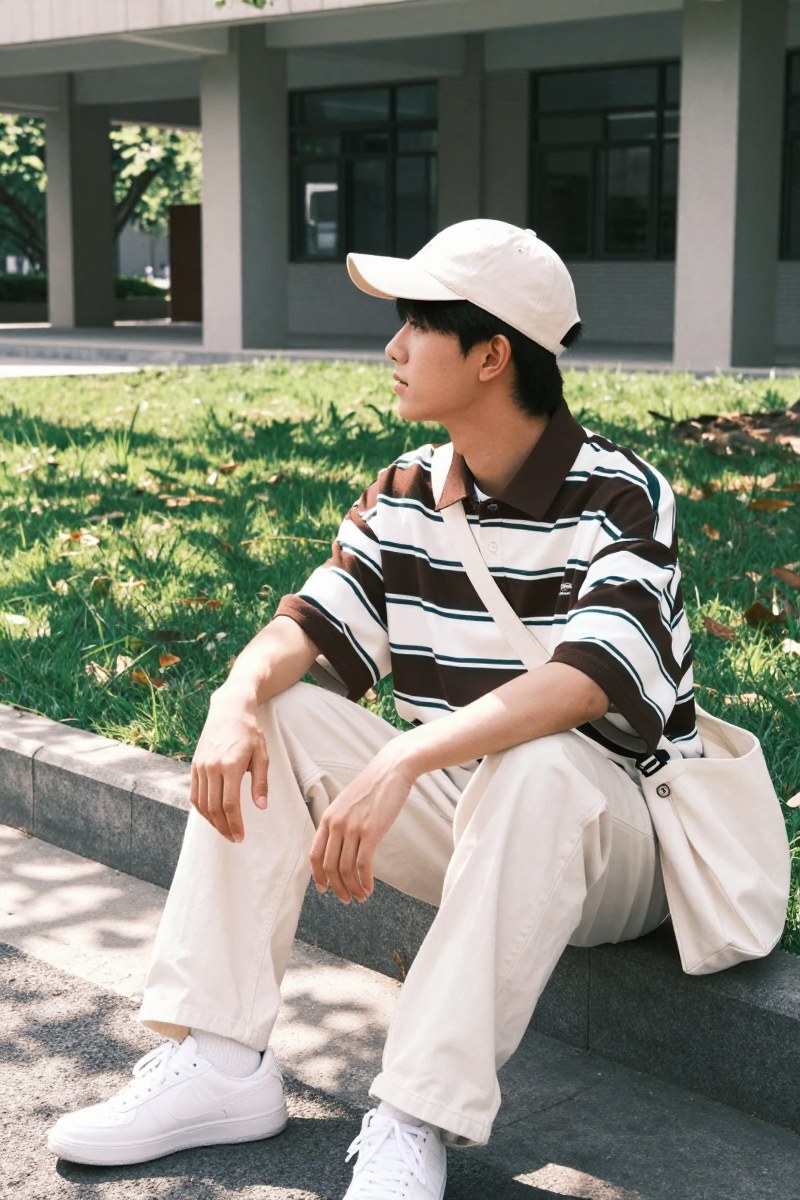

4. The three football-jersey routes most worth buying
1. Retro team-coded color with controlled graphics
This is the easiest and strongest entry for most readers. It keeps the best parts of the jersey category — color contrast, neckline shape, stripes, badge memory, and team-coded emotion — without collapsing into costume. Blue-white, red-white, green-white, black-gold, and oxblood-navy are especially useful because they work with light denim, black trousers, ivory trousers, and easy sport shorts.
2. Mesh or perforated texture with restrained patterning
This route is better for readers who want the top to feel airy, summery, and slightly sharper. Mesh and perforated fabric make the sports origin more visible and can give the upper body more breathing room. But quality control matters a lot. If the fabric looks like cheap tournament giveaway merchandise or overly shiny synthetic plastic, the entire top collapses. Good mesh jerseys should feel light, breathable, and active without becoming tacky.
3. Simplified jersey language translated into a daily short sleeve
Some of the smartest products will not even market themselves as football jerseys, yet they clearly borrow jersey language: V-necks, contrast trims, badge-like chest marks, angled color blocking, team stripes, and loose but controlled shoulders. For readers who do not want blokecore to feel too obvious, this route may be the most practical. Its strength is lower social friction; its weakness is that weak design quickly turns it into generic sportswear.
5. Ten checks before buying, so you do not slide from “fresh” into “merchandise costume”
Product-image checklist
The biggest danger is what we might call merchandise drag. Some jerseys look fun in isolation but end up making the wearer look like unpaid street promotion for a club. In the BoyStyle context, the more worthwhile buy is a jersey-coded top that still works even when nobody asks whether you are a football fan.
6. The six commerce search entries worth trying first
Search routes
For shops, I would prioritise three routes: stores already strong in youth sport mood and campus styling; stores that understand how to soften retro teamwear into daily wear; and mixed stores that can style jerseys convincingly with denim, shorts, caps, retro trainers, and practical bags. If a shop only knows how to sell noise through player photos, loud color, and oversized slogans, while never showing ordinary trousers and daily context, it usually is not worth trusting.
7. Five stable ways to wear football jerseys this year
- football jersey + light-wash jeans + retro trainers: the cleanest college-boy route, with some sport origin and some daily ease;
- football jersey + black straight trousers + cap: a good way to pull blokecore back into ordinary city wear without becoming loud;
- jersey-coded short sleeve + khaki shorts + white socks: useful for weekends, pitch-side social scenes, and easy citywalk dressing, as long as the sock length stays controlled;
- simplified jersey top + ivory trousers + tote bag: the best option for readers who want only a hint of football-coded structure;
- mesh jersey + nylon shorts + low-key sport shoes: works for a more direct summer sport-casual route, but only if the color and graphic language stay restrained.
These formulas all share one key principle: the football jersey returns to the territory of believable daily dressing. It can be styled louder, of course, but for a content site, the most valuable route is usually the one readers can actually imagine copying and buying.
8. Will it fade quickly? BoyStyle’s conclusion
If you treat football jerseys only as a social-media buzzword, they obviously have a heat cycle. But if you treat them as the re-entry of the jersey-coded top into summer youth menswear, the category is less fragile. What gets retained is never the label by itself. What survives is the practical problem it solves: how do you make the summer upper body feel less flat, less mature, and still a little more alive?
On that question, football jerseys have a serious advantage. They offer more structure than a graphic tee, more memorability than a generic athletic top, less pressure than a shirt, and a little less polish than a knit polo — while staying closer to real youth daily life than many harder streetwear pieces. As long as Chinese youth menswear keeps favouring this formula of light sport origin + daily wearability + image-friendly structure, the jersey-coded top will remain useful.
The real risk is not trend expiry. The real risk is buying the loudest, hardest-to-wear, most merchandise-like version. Choose well, and the category can add real freshness to a summer wardrobe. Choose badly, and it becomes the kind of socially viral piece that looks busy in screenshots and rarely gets worn again.
Read next: Why baseball shirts have returned as useful summer layering tops, Why socks now affect sport-coded and college-boy styling more than before, Why college-boy style has become a stable youth-menswear language again, and How washed baseball caps pull sport mood back into daily wear.
Chinese-internet source pattern: this piece mainly draws on publicly visible Chinese-platform content and product naming paths, including Bilibili search-result clustering around jersey styling, sporty summer dressing, campus sporty outfits, and simple menswear-upgrade formulas; common short-video / Weibo / Xiaohongshu-style phrasing around blokecore, football mood, retro football aesthetics, and pitch-adjacent college-boy dressing; and commerce naming across Taobao, Tmall, and Douyin around retro football jerseys, loose jerseys, mesh short sleeves, team-coded tops, and campus sport mood. It is also written in conversation with BoyStyle’s existing baseball-shirt, socks, campus-style, and cleanfit coverage.