Men’s shirts are no longer just one category: white shirts, stripes, short sleeves, and relaxed silhouettes are splitting apart again
For a long time, men’s shirts were often sorted into only two categories: formal and not formal. That split is now too crude. In youth menswear, shirts have been pulled back out of office logic and redistributed into college-boy style, cleanfit, Korean casual, summer campus dressing, light commute, and social-media image culture.
That means the real question is no longer simply whether to wear a shirt. It is which shirt, what silhouette, what fabric, what length, and inside what setting. White shirts, blue striped shirts, oxford shirts, short-sleeve shirts, and relaxed-fit shirts now act less like one category and more like separate youth-menswear languages.
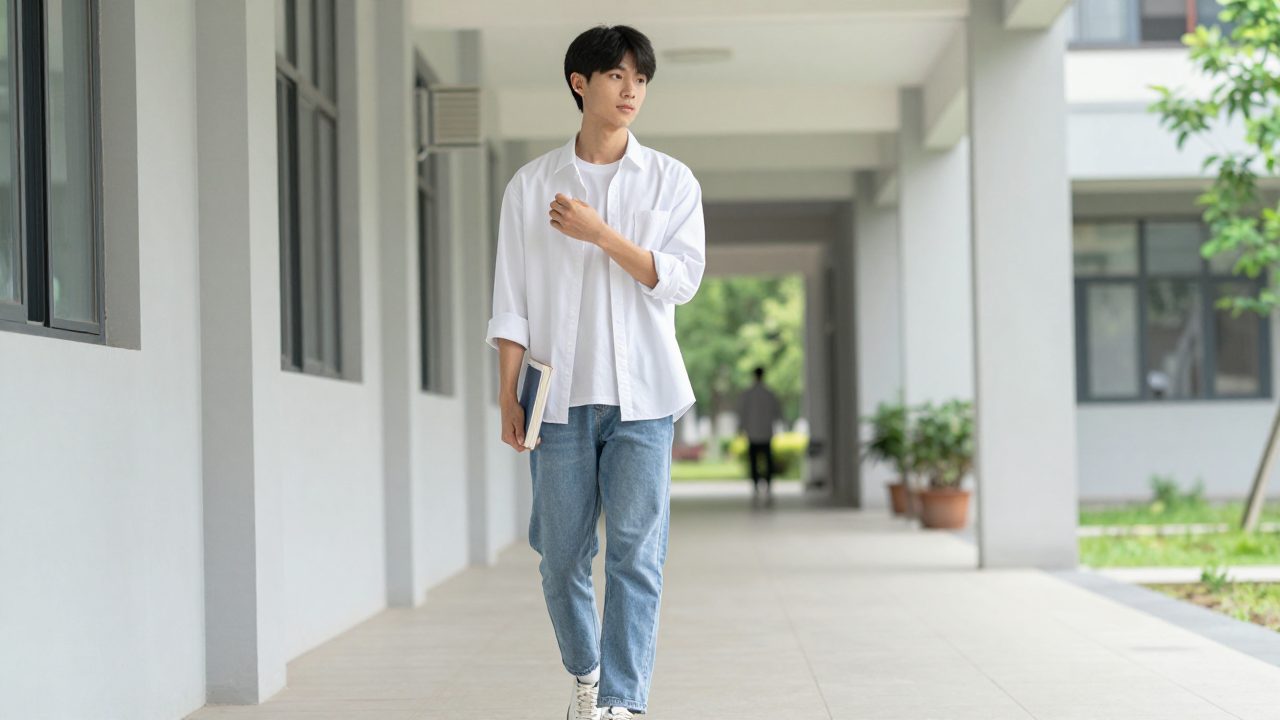
1. White shirts: still basic, but easy to get wrong
White shirts never left. What changed is that they no longer need to live only inside officewear. The stronger white shirts now are usually a little looser, easier in length, softer in shoulder, and far more willing to sit with jeans, knitwear, shorts, and trainers instead of only trousers and leather shoes.
That is how the white shirt became interesting again: not by becoming more formal, but by being released from formality.
2. Striped shirts: from office code to youth upper layer
Blue striped shirts are the clearest example. They used to read almost automatically as business shirts. Now, if the stripe is right, the fit is relaxed enough, and the fabric stays light, they can feel completely campus-coded, cleanfit-adjacent, and much younger.
They matter because they add visual rhythm without becoming loud. That makes them especially useful for readers who want shirts without office weight.
3. Oxford shirts remain one of the best daily shirt forms
Not every shirt needs to be airy and fluid. Oxford shirts and similar lightly structured daily shirts still work because they hold shape without looking stiff, and they fit very naturally inside college-boy and ordinary youth dressing.
They often work best precisely because they look slightly put together without becoming overly deliberate.
4. Short-sleeve shirts: risky, but very good in the right form
Short-sleeve shirts are often difficult because they can quickly slide into tourist, office-casual, or older-business-casual territory. But that does not mean they fail automatically. The versions that work now tend to be looser, cleaner, lighter, and less noisy in print and structure.
When done well, short-sleeve shirts are excellent for summer campus dressing, easy city dressing, convenience-store imagery, holidays, and that soft social-media youth rhythm that a T-shirt alone cannot always provide.
5. Relaxed shirts keep returning because the body reading changed
The recurring strength of relaxed shirts comes from a broader shift in body aesthetics. Youth menswear no longer wants the body wrapped too tightly. It prefers a little more air, movement, and fall through the shoulder, sleeve, hem, and trouser line. Relaxed shirts support that very naturally.
That is why they keep reappearing with jeans, straight trousers, shorts, white tees, tanks, and trainers. A lot of “college-boy shirt styling” is simply shirt dressing made lighter and younger.
6. Color is not the only thing that matters — collar, fabric, and hem matter more than people think
Many readers shop shirts mainly by color, but the real difference is often made by:
- collar shape
- fabric weight and drape
- hem length
- whether sleeves and cuffs can live naturally in movement
The best shirts are often not the most “designed,” but the ones where all these small decisions stay in balance.
7. The most common failure is that the shirt still belongs to an older business-fit logic
Shirts often look old not because shirts are old, but because the cut still belongs to an earlier era: too slim, too stiff, too long, too office-shaped, too eager to look “proper.” That whole system feels much less relevant for today’s youth wardrobes.
The better route is to return the shirt to life. Let it appear with white socks, sneakers, jeans, shorts, caps, crossbody bags, mirror selfies, hallways, and glass reflections. Once it looks like something a young person would actually wear now, it usually improves immediately.
8. The most dependable shirt formulas now
- white shirt + light-wash jeans + sneakers: one of the strongest college-boy formulas
- blue striped shirt + straight trousers: ideal for lighter cleanfit and campus commute dressing
- relaxed shirt + white tee + shorts: ideal for summer and lifestyle imagery
- short-sleeve shirt + nylon trousers or jeans: strongest for softer city or holiday dressing
All of these formulas show that shirts now work less as one fixed category and more as a system of diverging youth-menswear routes.
Continue with: why blue striped shirts are coming back into campus-boy and cleanfit dressing, why sweatshirts and hoodies remain such a stable youth top layer, and why jeans remain so hard to replace in youth menswear