Why mesh sleeveless base layers are entering the 2026 summer basics wardrobe: cooler than a regular tank, more wearable than training innerwear
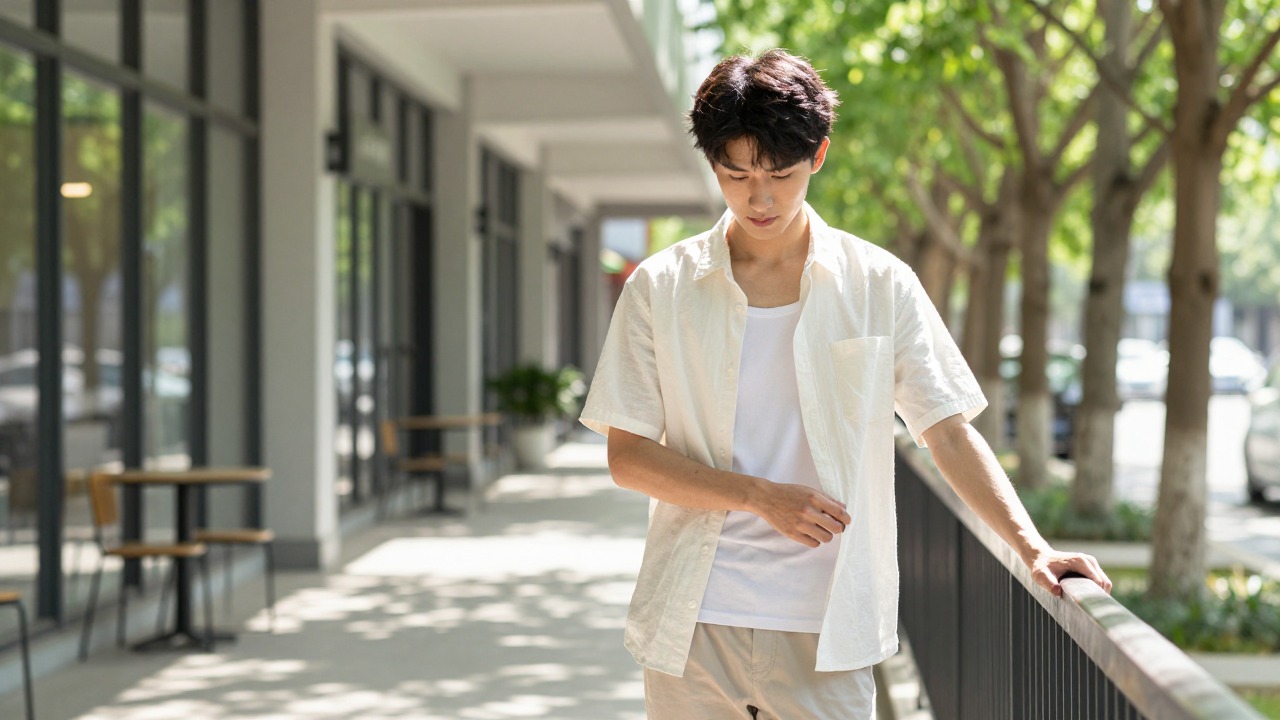
Recent Chinese-internet menswear discussion has been pushing up one very specific signal that still has not been written through clearly enough: mesh sleeveless base layers, perforated tanks, quick-dry sleeveless undershirts, and light technical inner layers are starting to move out of pure sports language and into the everyday wardrobe. They are not the loudest keywords of the season, and they are not as immediately visible as knit polos, open-collar shirts, or bermuda shorts. But if you line up Xiaohongshu-style discussion, short-video selling language, Taobao naming, Weibo questions, and Bilibili filtering talk, the same practical problem keeps returning: when the weather gets hotter but you still want to wear shirts and light outer layers, what can sit underneath without feeling stuffy, going sheer, reading like an old undershirt, or making you look like you just left the gym?
That is exactly why mesh sleeveless base layers are now worth writing about. The point is not whether sleeveless dressing is “bold.” The point is that they address summer upper-body comfort and visual order. A white tee is safe, but often too thick. A normal ribbed tank is classic, but in real urban heat — walking, commuting, backpack friction, indoor-outdoor switching — it can still feel heavier and slower to dry than ideal. At the same time, many training tanks and performance innerwear are breathable but visually too sporty to sit naturally inside cleanfit, college-boy, softboy, Korean casual, or Japanese casual dressing. The useful thing about mesh sleeveless layers is that they sit between those needs: cooler and lighter than a normal tank, yet easier to read as clothing than pure training innerwear.
This shift also has clear Chinese-language shopping signals behind it. Xiaohongshu- and short-video-style questions now often circle phrases like “what men should wear underneath in summer without feeling stuffy,” “how to make shirt layering cooler,” “what works under sun shirts,” “how sleeveless inner layers can avoid looking gym-coded,” and “how perforated tanks can look clean instead of tacky.” On Taobao and Tmall, product language increasingly combines “mesh,” “perforated,” “quick-dry,” “breathable,” “base layer,” “innerwear,” “shirt undershirt,” “lightweight,” “anti-stuffy,” “summer,” “wearable outdoors,” “cleanfit,” and “commuting.” On Bilibili, the tone is more about filtering and no-mistake buying: which sleeveless pieces look like underwear, which look like training wear, which go too sheer, and which can actually create a cleaner city-summer layer. That means this is no longer a niche curiosity. It is becoming a real basics question that many buyers are preparing to solve.
1. Why mesh sleeveless base layers are entering view right now
Start with weather and daily context. Much of the 2026 summer menswear discussion in Chinese is no longer about trend theater. It is about what people can actually live in. Chinese-platform youth menswear increasingly centers believable movement scenes: classes, commuting, backpacks, malls, subways, cafés, bikes, and repeated transitions between outdoor heat and strong air conditioning. That means people are not only looking for good-looking tops anymore. They are looking for upper-body systems that keep some layering while lowering the physical cost of wearing them.
That helps explain why the inside layer suddenly matters more. White tees are still foundational, but many dressers can feel the problem now: lightweight shirts, open-collar shirts, sun shirts, ice-oxygen-bar shirts, and light nylon outer layers all rely on feeling airy and mobile. Once you stuff a normal thick tee underneath, the whole top half can turn dull and congested. So the Chinese-internet question has changed from simply “what top should I wear?” to what kind of base layer best supports today’s lighter summer outer layers.
Mesh sleeveless layers are one upgraded answer to that question. They do not replace the logic of the tank-top base layer. They push it further: lighter, more breathable, quicker to dry, and better adapted to truly sticky urban summer heat. The easiest way to think about them is as a more air-focused, more comfort-driven, but still everyday-menswear-friendly base layer.
Chinese-internet signals behind the rise
2. What they actually solve: not just coolness, but three upper-body problems
First, they solve heat buildup. A lot of people are not against layering in summer. They are against the thermal burden of “another whole shirt inside.” This is especially true under open-collar shirts, sun shirts, ice-oxygen-bar shirts, and light nylon outer layers. A normal white tee often makes those airy pieces feel visually and physically denser than they want to be. Mesh sleeveless layers keep the order of an inside layer while reducing that heat load.
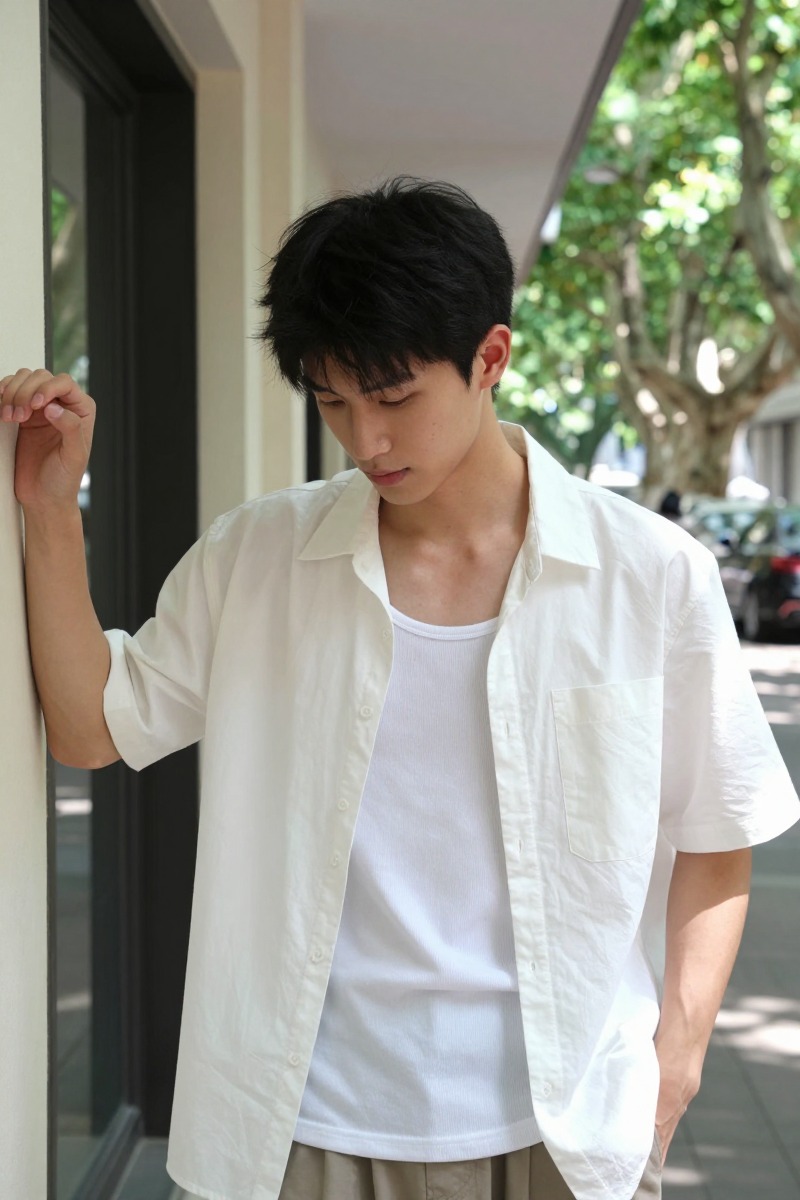
Second, they solve sheerness and awkward exposure. Many summer tops fail not because they look bad, but because they feel too empty inside, show body tone too directly, or let sweat and backpack friction read too clearly. Wearing nothing underneath may be the coolest option in theory, but a lot of people do not actually want that in real life. A mesh sleeveless base layer is lighter than a full tee yet more secure than bare skin, especially under white shirts, pale open-collar shirts, light sun layers, and other thin summer tops.
Third, they solve upper-body completion. This gets overlooked. A good mesh sleeveless layer should not make people say, “oh, he is wearing technical innerwear.” Ideally, it simply lets the outer layer, collar, placket, and chest area sit more cleanly. In other words, its best state is not being noticed loudly. Its best state is quietly making the whole upper body feel resolved.
3. Why they matter more than training tanks: the key is reading like clothing, not like equipment
When many people hear words like mesh, quick-dry, perforated, and sleeveless, they immediately think of basketball practice tops, running tanks, or compression innerwear. Those products can absolutely solve breathability. The problem is visual language. Reflective surfaces, oversized logos, sporty seam maps, compression fits, deep scooped necklines, narrow straps, and body-display logic all push the piece back toward training use. Once that enters cleanfit, softboy, college-boy, or light Korean casual dressing, the whole look can shift from “well dressed” to “just worked out.”
The versions worth buying do something else: they translate performance comfort into everyday clothing language. They should still read like very light sleeveless tops, with perhaps a little airiness or light technical background, but not like pure gear. The checks are clear: the neckline cannot be too deep, the straps cannot be too narrow, the surface cannot shine like cheap plastic, the fit cannot cling like compression wear, and the whole piece cannot make sense only with court shorts and running shoes.
That is also why this belongs in basics rather than sport. Its value is not athletic performance. Its value is making the summer base-layer system smarter.
4. The four directions worth checking first
1. Fine-mesh, low-shine, basic-color daily base layers
This is the best starting point for most people. White, off-white, pale grey, misty blue, and charcoal versions with a finer, denser mesh structure create airiness without instantly reading like basketball training gear. They are especially useful under white shirts, open-collar shirts, sun shirts, and lightweight overshirts.
2. Smooth-body versions with localized breathable mesh panels
If the phrase “full mesh” still makes you cautious, this compromise route is often safer: the main body still reads like a normal sleeveless base layer, while the back, side waist, or selected areas gain extra ventilation. It looks more like ordinary clothing, which makes it especially useful for first-time buyers and easier to keep inside cleanfit and campus dressing.
3. Slightly broader-shoulder airy sleeveless tops that can be worn outside
If you do not only want to hide it underneath, but also want the option to wear it alone, then shoulder width, neckline, and hem become more important. The worthwhile ones usually have slightly broader straps, a chest that does not cling, low shine, and a shape closer to a minimalist sleeveless top than to underwear or training wear.
4. Light technical city-movement versions with low logo pressure
If you walk a lot, commute hard, sweat easily, or spend long hours with a bag on your shoulder, slightly more function-leaning versions can also make sense. But the logos, reflective details, paneling, and overt sports language all need to stay controlled. The good city-movement version makes high heat easier without making you look like you just came from training.
The four mesh-sleeveless routes most worth checking first
5. Ten buying checks: when does a mesh sleeveless piece become smart basics instead of cheap training wear?
- The neckline cannot dip too low: once it does, the piece starts reading like underwear or gym styling.
- The straps cannot get too narrow: narrow straps almost always push it toward training-tank territory.
- The surface cannot shine too much: many cheap mesh garments fail because they reflect like plastic.
- The perforation scale cannot get too loud: oversized holes read more like jerseys or stagewear than daily base layers.
- The fit cannot cling too tightly: compression logic pushes it straight back into performancewear.
- The color cannot feel too “equipment-coded”: fluorescent and electric tones are much harder to integrate into an existing wardrobe.
- Product pages should show inner-layer relationships: stores that style it with shirts, denim, trousers, and clean sneakers are more trustworthy.
- Check reviews for sweat and backpack use: look for comments around not sticking, not trapping heat, and holding shape under friction.
- Know whether you want it for layering or solo wear: that decides whether you need a calmer or more visible version.
- Make sure it actually connects to your outer tops: if you do not own light shirts or thin outer layers, its value drops.
6. Six strong ways to wear it inside the BoyStyle summer wardrobe
- Fine-mesh sleeveless base layer + open-collar short-sleeve shirt + light-wash jeans: a strong college-boy and light Korean-casual route that feels cooler and safer than bare-skin shirt styling.
- Off-grey mesh sleeveless layer + sun shirt + nylon shorts: especially useful for commuting, city movement, and heavy walking days.
- White mesh sleeveless layer + ice-oxygen-bar shirt + straight trousers: ideal for readers who want to keep cleanfit layering alive in real heat.
- A calmer airy sleeveless top + bermuda shorts + understated running shoes: good for weekends and travel, as long as the whole outfit stays low-noise.
- Localized-ventilation sleeveless layer + light nylon outerwear + cap: useful for light athletic casual routes, but avoid stacking too many gear-coded accessories.
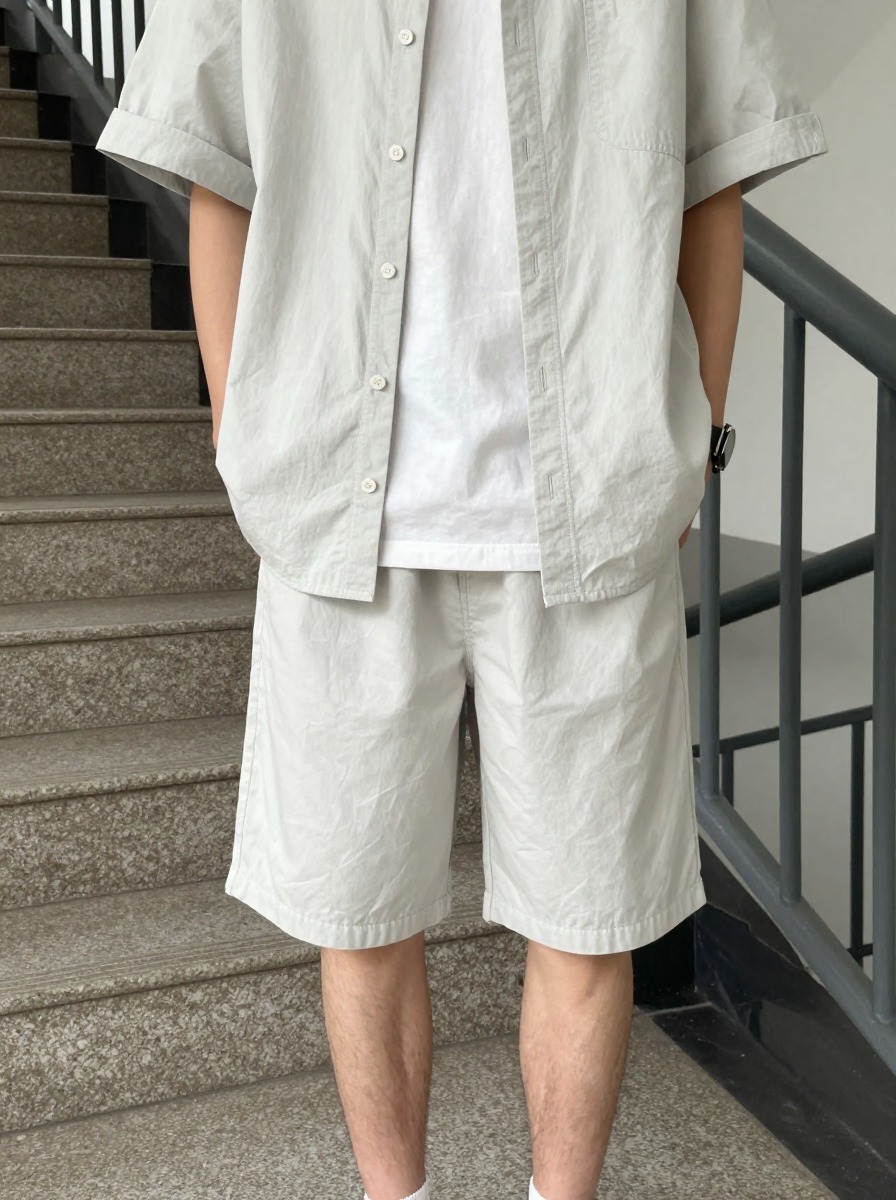
- Pale-grey mesh sleeveless layer + striped short-sleeve shirt worn open + white socks and sneakers: lighter than a normal white tee and especially useful for campus-to-mall summer movement.
The common logic in all of these outfits is simple: the mesh sleeveless layer is not the hero. It is a lower structural piece that recalibrates the upper body. The less it tries to scream, the more useful it becomes.
7. Better Chinese shopping entry points: do not just search “sport tank”
This category is highly keyword-sensitive. If you search only for “men’s sport tank,” results get flooded with basketball, training, compression, gym, and court products. If you search only for “men’s tank,” you fall back into household undershirts and normal ribbed tanks. A better method is to combine function terms, use-case terms, and everyday-menswear language.
Shopping searches that fit this trend better
On content platforms, it helps to search by use case too: “what men should wear underneath in summer without feeling stuffy,” “shirt inner layer sleeveless men,” “college-boy sleeveless summer base layer,” and “what to wear under sun shirts.” This category lives or dies by on-body relationship, not by flat product shots.
8. What kind of store is actually more useful?
If a store builds every image around extremely lean gym bodies, low-angle lighting, training shorts, and running shoes, it is not especially useful for most readers. More valuable stores are the ones willing to place sleeveless mesh layers inside ordinary city-life outfits: shirt-open layering, backpack-on-body shots, commuting trousers, seated and standing views, natural light, and clear notes about neckline depth, shoulder width, fabric hand, and mesh density.
Those stores are not really selling “athletic intensity.” They are selling wearing order in hot weather. That is much closer to what the BoyStyle reader actually needs.
9. BoyStyle’s read on this rise
I do not think mesh sleeveless base layers will become one of those giant headline trend items that everybody talks about loudly. But I do think they are likely to stay inside the 2026 summer youth-menswear base-layer system. That is because they solve a real dressing problem rather than a surface-level trend problem: the weather is getting hotter, people still want the layering logic of shirts, light outerwear, cleanfit, and college-boy dressing, so the inside layer has to keep getting lighter, cooler, and smarter.
If your wardrobe already includes open-collar short-sleeve shirts, sun shirts, ice-oxygen-bar shirts, light nylon tops, shorts, and clean sneakers, then a mesh sleeveless base layer may be more useful than it first sounds. The key is not buying the version that looks most like training wear. The key is finding the one with low shine, a controlled neckline, stable strap width, and enough clothing presence to exist as part of a real outfit. Buy the right version and it will not steal attention — it will simply make the whole summer easier.
Read next: Why tank-top base layers matter again in 2026 summer dressing, Why non-sheer base-layer tees are becoming more worth buying, Why sun shirts are taking over light summer outerwear, Why ice-oxygen-bar shirts have become a smart high-heat top.
Reference pattern: this article is based on publicly visible Chinese-internet trend signals and title / product-language patterns, including Xiaohongshu-, Douyin-, Weibo-, and Bilibili-style discussion around what men should wear under shirts in summer, how sleeveless inner layers can avoid looking tacky or gym-coded, what works inside sun shirts, and how terms like mesh, perforated, quick-dry, breathable, base layer, shirt undershirt, summer menswear, cleanfit, and commuting are now being bundled together in Chinese e-commerce language.