How to Choose Men’s Beach Shorts Without Looking Like an Old Tourist or Cheap Resortwear
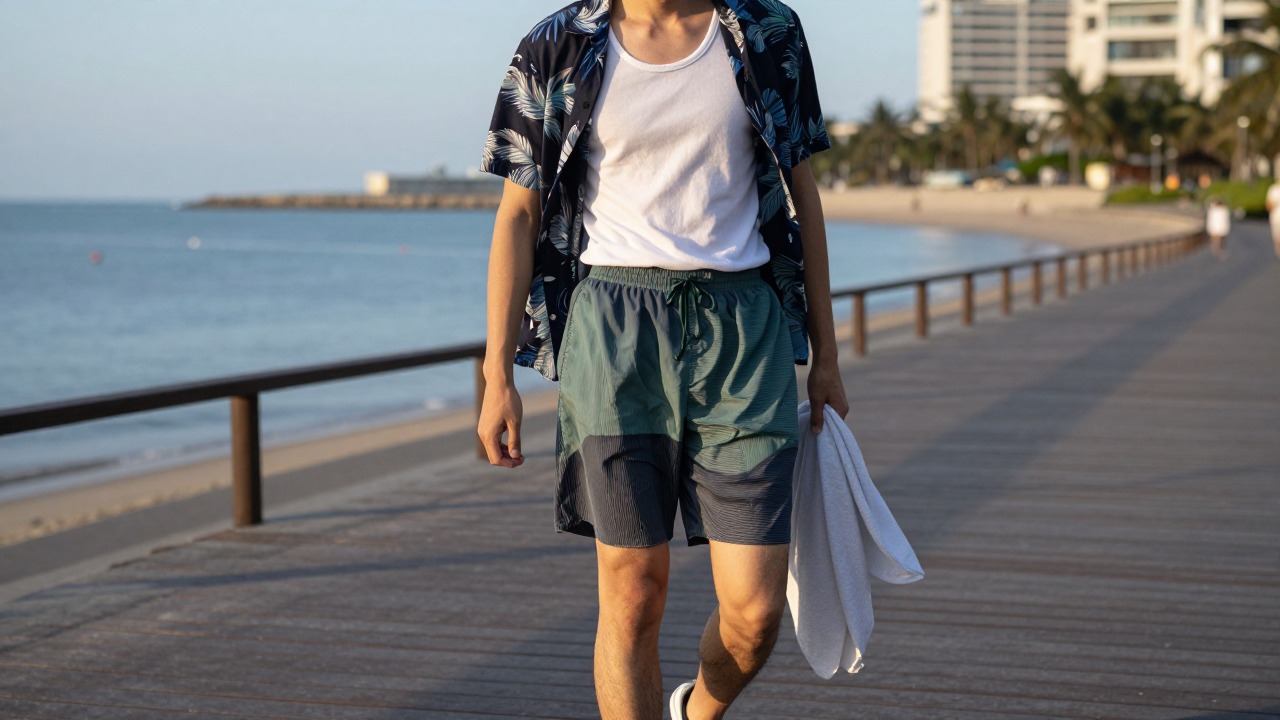
Once summer arrives, a lot of men run into the same problem: they want one pair of shorts that can work at the beach, by the pool, around a hotel, and in light vacation settings. But the moment they start browsing, most so-called beach shorts fall into familiar traps. They are either too long, too loud, too tourist-coded, or too cheap, too livestream-store, too obviously mass-market. It becomes surprisingly hard to find the version that still feels young, visually clean, and able to work with real body proportion and summer atmosphere.
That is why “how to choose men’s beach shorts” is worth its own article. Beach shorts are not just ordinary shorts, and they are not simply a backup for swim trunks. They sit between swimwear, vacation shorts, light functional summer bottoms, and the broader summer image language of social media. Choose well, and they immediately make your whole look feel lighter, breezier, and more believable in a real beach or pool environment. Choose badly, and they push you straight into old-tourist territory, hot-spring-shop territory, cheap tropical-print territory, or the kind of “I only bought these in a resort store because I forgot to pack” look.
1. What makes beach shorts different from gym shorts or swim trunks
The real value of beach shorts is not just that they can get wet. Visually, they need to solve three things at once:
- They need to feel like summer: light, airy, and clearly vacation-coded.
- They need to feel like something a young man would actually wear: not too mature, not too old, not too touristy, but also not cheap or tacky.
- They need to work as real bottoms with proportion: not just a random piece of water-resistant fabric tied around the waist.
Compared with training shorts, beach shorts usually lean more into vacation mood, color, and surface character. Compared with tight swim trunks or pure training swimwear, they rely more on outer shape, hem position, and how they look once you are out of the water. Compared with regular casual shorts, they tend to use lighter materials, quicker-drying fabrics, and stronger beach or pool identity, sometimes with built-in lining and a more obviously vacation-ready waistband structure.
2. The most important thing is not print, but length
The easiest way to ruin beach shorts is to get the length wrong. Too long, and the whole look becomes heavy, dull, old, and immediately tourist-coded. Too short, if the cut and fabric are weak, and they start looking like a cheap social-media prop. The real goal is not “shorter equals sexier.” The goal is a length that lets leg proportion, hip position, and summer lightness work together.
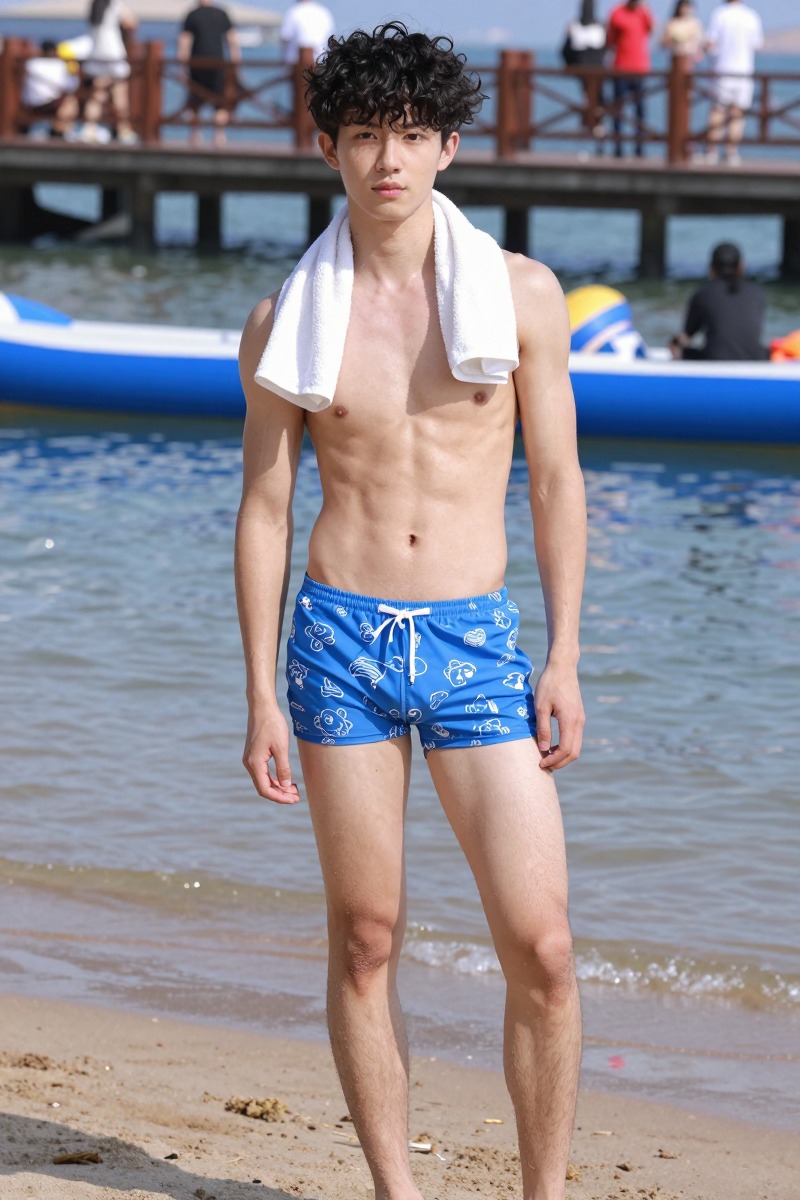
The most reliable direction now is usually above-the-knee, slightly shorter, but not aggressively tight. In other words, the hem should sit a bit above the knee so the thigh and upper-knee area can show just enough. That makes the body proportion feel younger and much more in line with the kind of youth-oriented male image language now performing well in Chinese internet fashion culture. Long beach shorts that drop over the knee rarely look good unless you are doing a very specific old-school surf reference. For most East Asian young men, that length only makes the body look shorter, duller, and more tourist-like.
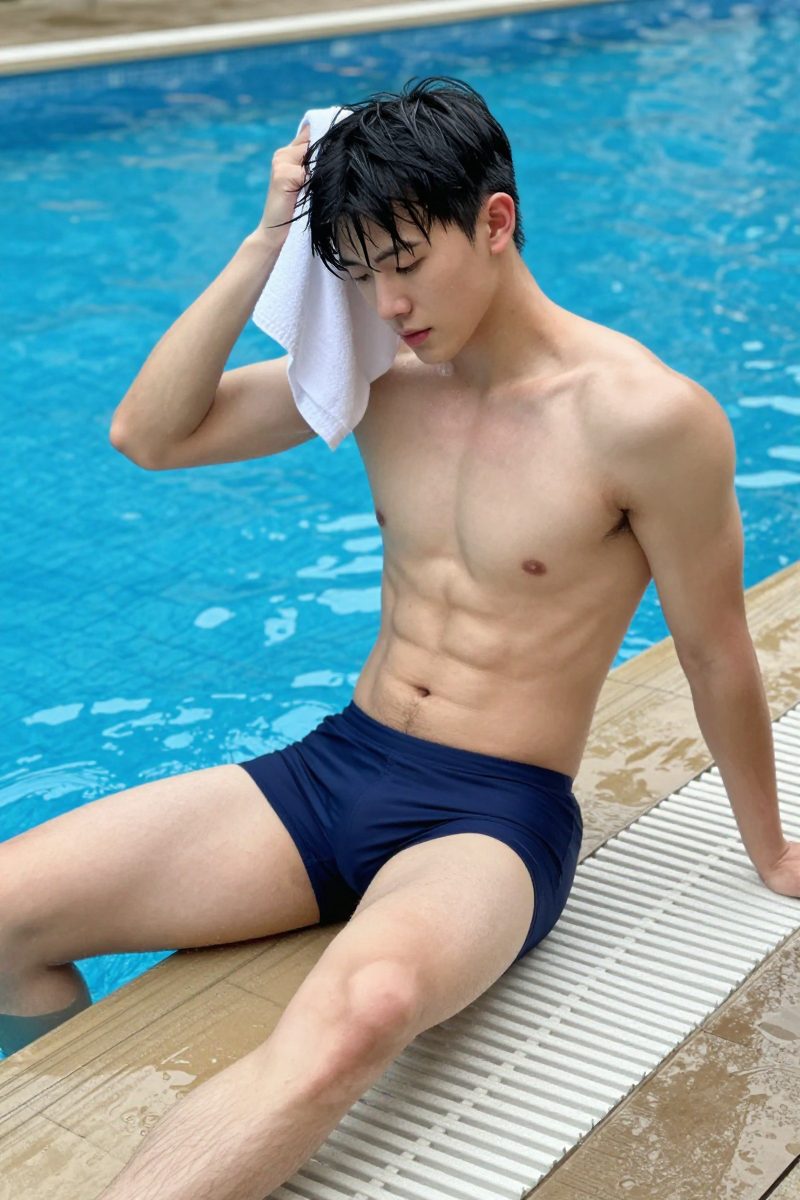
3. Fabric decides whether they feel like refined summer or a cheap plastic bag
Beach shorts are extremely fabric-dependent. Product pages love to promise “quick-dry,” “water-resistant,” and “lightweight,” but what really matters in practice is whether the fabric feels light without collapsing, thin without looking flimsy, and quick-drying without shining like cheap plastic.
The best version usually has a bit of structure. It should sit slightly away from the leg instead of clinging to the thigh the second it gets wet. At the same time, it still needs enough lightness to move with walking and hold some real summer air. Many weak beach shorts fail because the fabric is too thin, too shiny, too flimsy, and too lifeless. Dry, they look like umbrella cloth; wet, they look like plastic wrap.
If you only remember one fabric rule, make it this: avoid beach shorts that shine like a cheap nylon bag. The versions that work better in a BoyStyle context usually have softer light reflection, cleaner color, and a more natural fall.
4 Fabric Questions to Ask Before Buying Beach Shorts
4. How to choose color and print: youthful does not mean chaotic
A lot of people hear “beach shorts” and immediately imagine tropical flowers, oversized leaves, bright orange-green-blue clashes, and heavy island prints. In reality, most of those ideas push the wearer closer to souvenir-shop tourist energy than to a young man with actual taste judgment.
The safer routes usually fall into two categories:
- Solid or low-contrast colors: black, navy, smoke gray, olive, dusty blue, pale salt-white, and grayish coastal tones work best for most people.
- Low-contrast prints: narrow stripes, softened water-like patterns, small retro surf references, or lightly muted tropical motifs usually work better than loud floral explosions.
If you want beach shorts that can survive both the poolside and a white tank top or a short-sleeve shirt thrown over the top, it is even more important to keep the palette controlled. Real vacation style almost never comes from screaming “I am on holiday.” It comes from color, material, body state, and environment quietly working together.
5. Lining, mesh, and waistband details decide whether they are worth buying
Do not judge beach shorts only from the outside. A lot of pairs feel acceptable in a quick try-on, then fail the moment you actually wear them to the beach or pool. The problems usually show up inside: scratchy mesh lining, cheap drawcords, a collapsed waistband, or fabric that hangs badly once wet. None of these are minor details. They directly decide whether you will ever wear the shorts again.
A good checklist looks like this:
- The lining should not feel rough: cheap mesh lining can ruin the whole wearing experience.
- The waistband should feel stable: if the waistband looks cheap, the whole pair reads as temporary-use gear.
- The drawcord should stay restrained: thick, extra-long, high-contrast cords often just increase the cheapness.
- The front should not be too flat or too messy: good beach shorts hold a bit of shape instead of wrinkling into a random lump.
Each point looks small on its own, but beach shorts are a low-information garment. That means even one cheap detail gets magnified very quickly.
6. Beach shorts work best in real settings, not stiff posing
Beach shorts become empty very quickly when they are detached from context. That is why the best environment for them is almost never a stiff pose designed just to show off the shorts. They work much better in scenes like:
- shoreline boardwalks, coastal paths, and pauses near rocks or steps by the water
- hotel poolsides, loungers, and post-swim towel moments
- light vacation layering such as a white tank, an open short-sleeve shirt, or a thin outer layer thrown over the shoulders
- the actual movement path from room to pool, from pool to café, or from beach back toward the shower area
In other words, beach shorts are most convincing when the image is not saying “look at these shorts,” but “I am genuinely in a summer water-side environment right now.” Once the scene is right, the outfit does not even need much complexity to work.
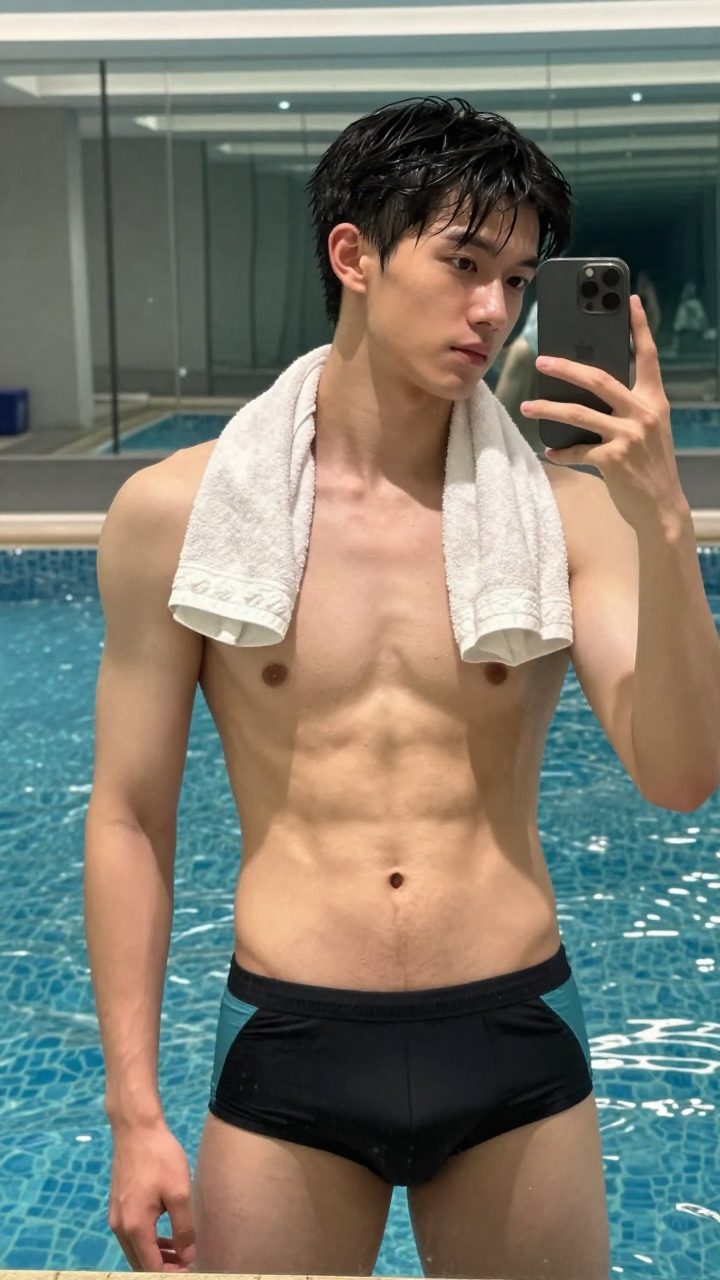
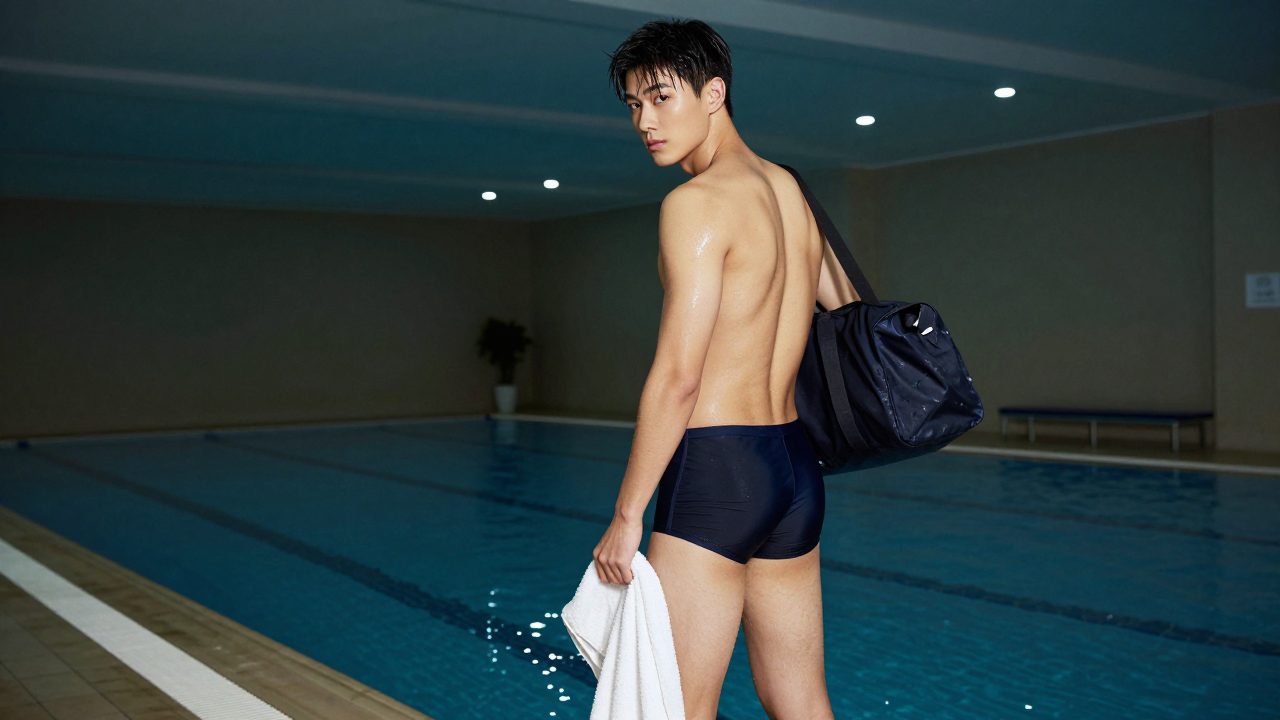
7. The most reliable outfit formulas
- Solid beach shorts + white tank + slides or simple sandals: the most direct option, and often the strongest one if color and body state stay clean.
- Low-saturation beach shorts + open short-sleeve shirt: ideal for hotels, beach walks, and light resort settings, because it adds layering without looking too dressed.
- Dark beach shorts + thin zip layer or lightweight knit: good for moving between poolside heat and over-air-conditioned interiors.
- Beach shorts + towel + canvas bag or nylon bag: not for forced fashion, but for making the scene feel believable.
The key point here is simple: beach shorts are not a garment that wins by aggressive styling. They win through setting, proportion, and lightness. The simpler you keep them, the easier they are to make believable.
8. The most common mistake is not budget—it is choosing the wrong character
The biggest beach-shorts mistakes usually fall into four categories:
- trying to buy youthfulness and ending up with cheap livestream tropical prints;
- trying to play it safe and ending up with over-the-knee tourist shorts;
- trying to buy function and ending up with umbrella-cloth shine;
- trying to make them a little sexier and losing all control of proportion and cut.
The better choice is often the quieter one: cleaner color, shorter but not excessive length, lighter fabric without plastic glare, and less print without becoming boring. With beach shorts, the moment you ask them to say too much, they usually turn vulgar very fast.
9. If I only bought one pair, this is what I would choose
If I had to recommend one beach-shorts direction for most men right now, I would choose an above-the-knee, slightly short, low-saturation solid pair, in quick-dry fabric without plastic shine, with a clean waistband, restrained drawcord, and enough versatility to move from poolside to a shirt-thrown-over resort setting.
It may not be the loudest pair in the category, but it will likely be the one you wear most. Because truly good beach shorts are never just “the thing you bought to take one beach photo.” They are the pair that still lets you look natural, young, and visually balanced among wind, water, towels, sun-warmed skin, and actual summer movement.
Read next: Why men’s swimwear is moving back into youth menswear again, Why compression training shorts are becoming so common among sporty young men, Why short-sleeve shirts are taking over late spring and early summer, Why college-boy style has become a stable youth menswear language again
Source model: Chinese-internet topic patterns around beach outfits, men’s beach shorts, resort swim shorts, hotel-pool dressing, and summer youth menswear imagery; plus Taobao product language and listing logic around searches like men’s beach shorts, short beach shorts for men, resort swim shorts for men, and above-the-knee beach shorts for men.