German trainer shop radar 2026: why low-profile retro trainers and thin-soled GAT-style sneakers are taking over cleanfit and campus-boy summer dressing
If you break down the latest round of Chinese-platform menswear discussion, one shift becomes very clear. People are still talking about white tees, knit polos, short-sleeve shirts, bermuda shorts, pleated training trousers, straight-leg denim, silver accessories, and caps. But the thing that keeps getting used to explain why a whole outfit suddenly looks right is often the shoe—and not chunky dad sneakers or aggressive performance runners. The rising lane is much quieter and much closer to real youth-menswear life: German trainers, German-trainer-style sneakers, retro training shoes, thin-soled low-tops, low-profile vintage sports shoes, and the whole family of footwear that Chinese platforms keep discussing through Samba, Gazelle, and Mexico 66 comparisons and alternative-shopping language.
This deserves a full shop radar because it is no longer just about which sneaker looks good. It has become a highly recognizable Chinese-platform buying signal. Xiaohongshu-style titles keep repeating phrases like “German trainer recommendation,” “summer shoes for men,” “cleanfit sneakers,” “campus-boy sneaker recommendation,” “Samba alternative,” “thin-soled shoes that lengthen the leg,” “retro trainer outfit,” and “what sneakers work with straight denim.” Taobao and Tmall naming patterns keep circling “German trainer,” “retro training,” “thin sole,” “low-top,” “versatile,” “Korean,” “Japanese,” “commuter,” “unisex,” “low-saturation,” “suede panel,” and “rubber sole.” Bilibili and short-video content do not always lecture about shoes directly, but whenever people explain why a cleanfit outfit stopped looking heavy, why campus-boy dressing suddenly feels sharper, or why wide trousers no longer work with thick footwear, the shoe is increasingly treated as the answer. In other words, German trainers are now selling not just a sneaker shape, but a quieter and cleaner language for the lower half of youth menswear.
That makes them especially suitable for BoyStyle. In cleanfit, campus-boy, softboy, Korean and Japanese light-casual dressing, the real difference often comes not from buying another expensive top but from fixing the zone where outfits most easily lose control: the relationship between trouser hem and shoe. Many readers already own a good knit polo, base tee, or textured short-sleeve shirt, and they may already have light-wash denim, straight trousers, or tailored shorts. The outfit still feels one step short. Often the problem is the shoe: too thick, too swollen, too sporty, too loud in color, or trying to do too many things at once. German trainers return because they do the opposite. They reduce weight: lower line, steadier visual center, thinner sole, cleaner colors, calmer leather, and a more natural relationship with both trousers and shorts.
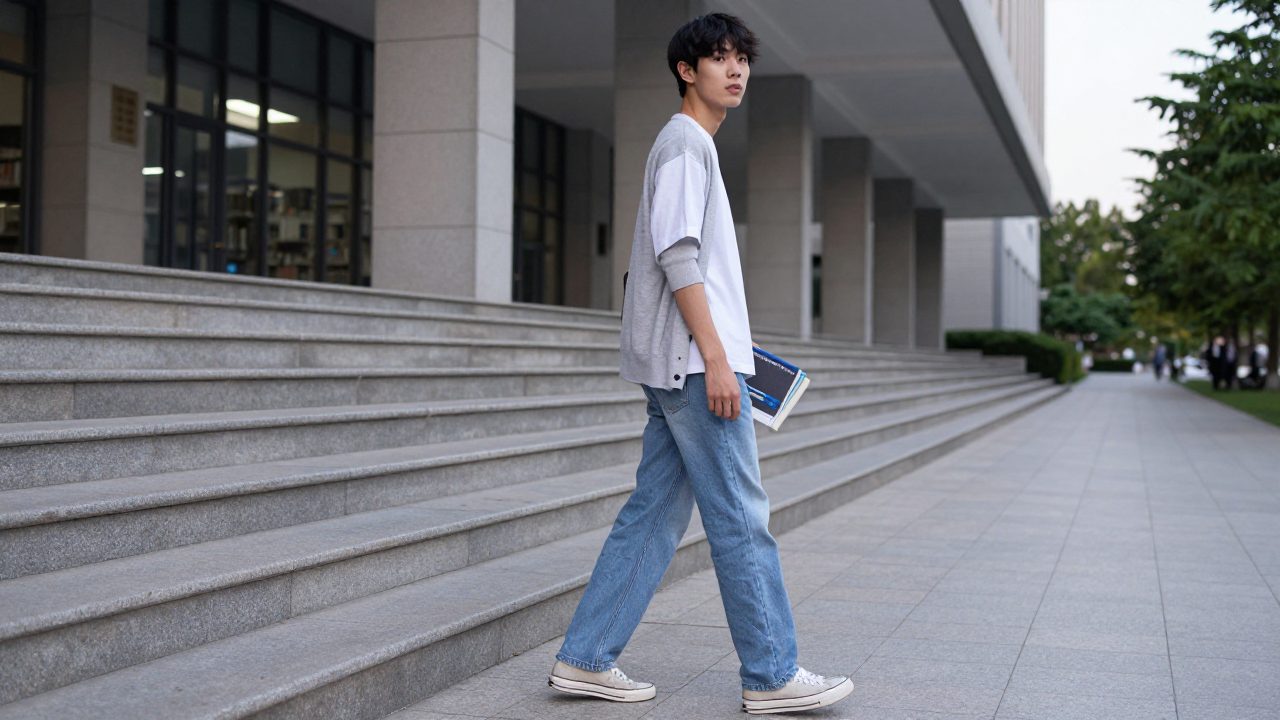
1. Why German trainers remain stable in 2026 Chinese-platform menswear
When recent Chinese-platform signals are placed together, at least five forces become obvious.
- First, youth menswear has leaned back toward lighter, thinner, lower-profile finishing at the feet. Once the upper half is full of white tees, polos, shirts, and linen-like pieces, and the lower half is built from straight trousers, bermuda shorts, and softer training pants, the shoe naturally needs to get quieter too.
- Second, Chinese platforms are heavily discussing Samba alternatives, German-trainer alternatives, and thin-soled substitutes. That means demand is moving away from single-brand worship and toward active searching for a specific shoe language.
- Third, the wide-trouser plus thick-shoe formula is starting to feel too full in many youth-menswear contexts. In cleanfit, campus-boy, and light commuter dressing, thick soles can over-weight the lower half. German trainers are a way of rebalancing that equation.
- Fourth, commerce naming already shows where taste is concentrating. German trainer, retro training, thin sole, low-top, off-white grey, suede panel, commuter versatility, Korean retro, and campus daily are not runway words. They are buying words.
- Fifth, German trainers can connect cleanfit, campus-boy, softboy, and light commuter dressing at once. That flexibility matters. Many shoes only work for one style lane. German trainers can bridge several.
So the core of this trend is not simply that one famous silhouette is hot again. It is that Chinese-platform youth menswear has pulled footwear back toward a quieter, more realistic, and more campus- and commuter-friendly position. These are not theatrical streetwear shoes and not high-performance athletic shoes. They are the kind of shoes that really get worn into classrooms, libraries, malls, offices, coffee shops, and subway rides.
Chinese-internet signal patterns behind this topic
2. The four kinds of stores worth browsing first
As with many menswear categories, the most useful way to shop German trainers is not to memorize store names first. It is to understand which kind of store actually fits your wardrobe. Different shops are not selling the same kind of “German trainer.” Some are really selling a low-profile cleanfit finish. Some are selling campus-boy daily footwear. Some are selling softer retro training shoes for Japanese light-casual wardrobes. Others are selling true commuter pairs that can handle walking and real life without turning you into a sneaker obsessive.
1. Clean German-trainer stores: best for cleanfit, white tees, straight trousers, and light commuting
If I had to recommend the safest direction for most readers, it would be the clean German-trainer store. These stores usually revolve around off-white, grey-white, grey-brown, cream, fog grey, and low-contrast uppers. The shape stays modest, the sole stays thin, the toe box stays tidy, and the side profile looks fairly streamlined.
The most important question is not whether the product is labeled a German trainer. It is whether the details are actually handled properly:
- the sole must be genuinely thin rather than cosmetically disguised;
- the toe should not feel puffy;
- the palette should stay controlled;
- the leather and suede panels should create depth without looking cheap.
This category is extremely valuable for BoyStyle readers. If you regularly wear white tees, knit polos, straight trousers, and light-wash denim, the right pair of German trainers often does more for overall completion than another generic top. It fixes the lower half so the trouser hem does not stack awkwardly, the feet do not look heavy, and the whole body line stops breaking apart.
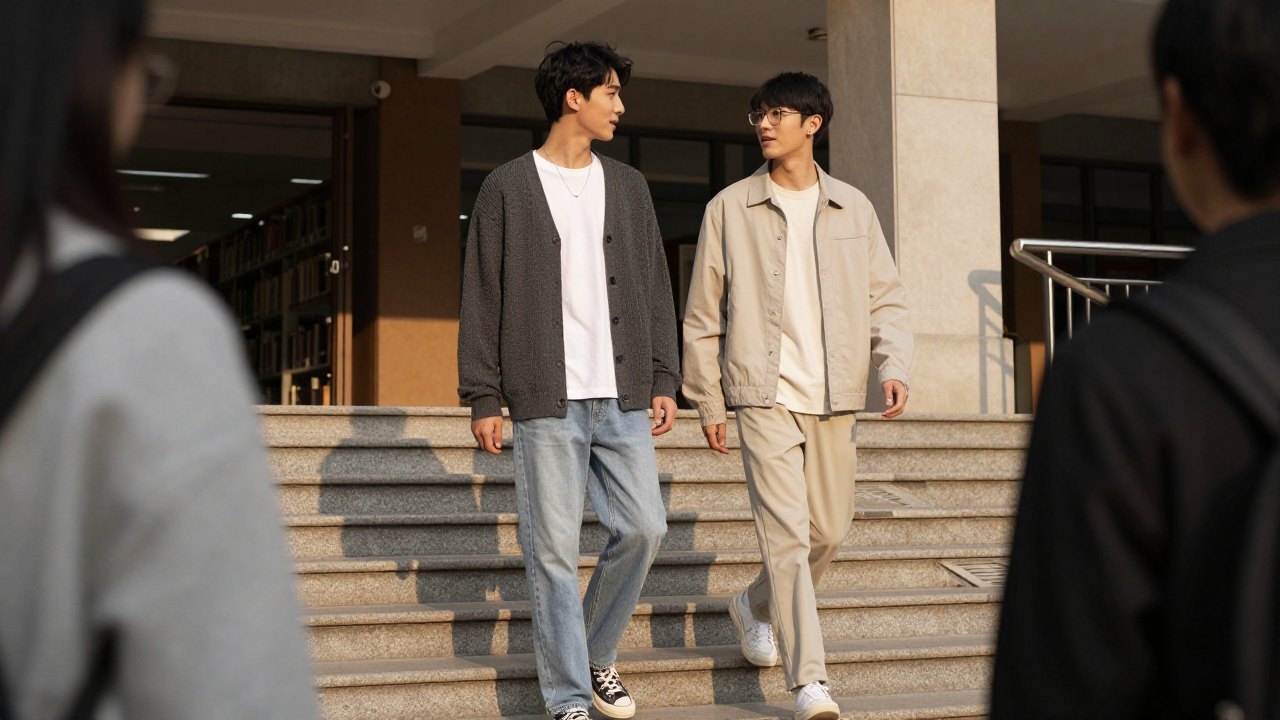
2. Campus-boy German-trainer stores: best for denim, hoodies, backpacks, and academic youth styling
The second category worth tracking is the campus-boy German-trainer store. These stores may not be the most minimal, but they understand a very Chinese-platform kind of student mood: white socks, denim, straight-leg sports trousers, hoodies, varsity layers, zip hoodies, white tees, backpacks, and a low-profile retro training shoe that feels young rather than dressed-up.
What these stores really sell is not “luxury atmosphere” but “a shoe that could actually exist in university life.” They often share several signals:
- the shape can be a touch rounder while still staying thin-soled;
- they carry a little bit of retro PE-class or old-campus sports energy;
- small accents in grey-blue, cream, pale brown, or burgundy appear more often.
If your daily wardrobe sits closer to campus-boy dressing, white socks, backpacks, straight denim, hoodies, and basic tops, this category will often fit better than ultra-minimal commuter sneaker shops. It will not force you into businesswear, but it also will not make your footwear feel childish or overly sporty.
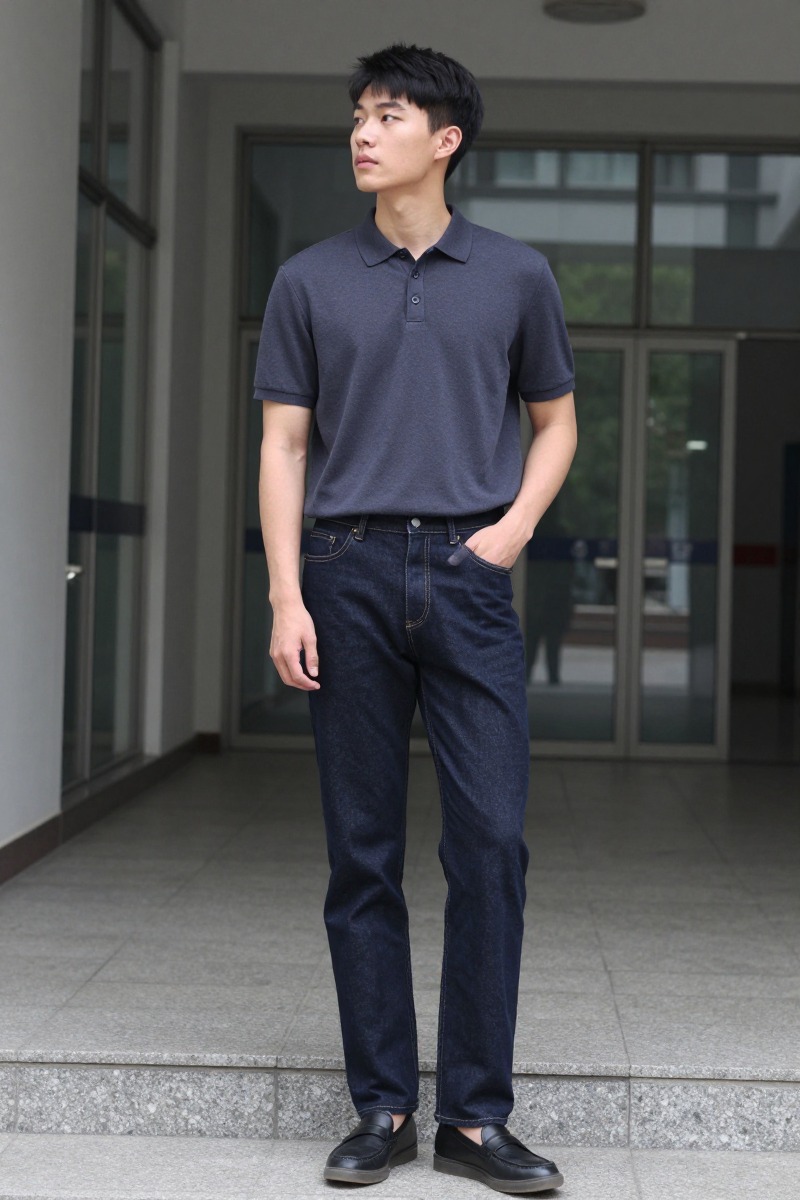
3. Japanese light-casual retro trainer stores: best for softboy wardrobes, cardigans, and lighter trousers
Not every German-trainer-adjacent shoe needs to follow strict cleanfit. Chinese platforms also maintain a stable lane of Japanese light-casual, softboy, and quietly literary retro trainers. These stores do not always put “German trainer” in the first line, but they sell shoes with the same core language: low-top, thin sole, soft colors, small suede areas, tidy toe shape, and a calm everyday presence.
This category works especially well with cardigans, striped shirts, tote bags, pale khakis, off-white trousers, denim, and lighter shorts. Its value is not that it looks hyped. Its value is that it can catch softer wardrobes without making the feet suddenly feel too hard, too athletic, or too street-oriented.
Three common mistakes matter here:
- do not choose candy-like colors;
- do not choose shoes that become too fashion-show thin and theatrical;
- do not choose overly distressed pairs.
If your wardrobe already contains many light trousers, totes, cardigans, and gentle shirts, these stores often offer better long-term value than generic white sneaker shops.
4. Light commuter mixed-shoe stores: best for readers who want walkability, versatility, and no cringe
The final category worth watching is the light commuter mixed-shoe store. These stores do not sell only German trainers. They often also carry loafers, canvas shoes, simple runners, and light casual shoes. But within that mix, they usually hold a few German-trainer-style pairs that are genuinely wearable, easy to style, and not embarrassing in real life.
Their value is high because they do not think in just one style lane. They think in terms of living: office, commuting, walking, subway, weekend errands, and casual dates. The key question is not the copywriting but whether:
- the shoes are photographed inside full outfits;
- the same pair can work with different trouser shapes;
- the store has found a balance between comfort and visual restraint.
These stores are not always the hottest, but if what you want is a shoe that will actually enter your life, they can be more valuable than pure trend stores.
3. The six German-trainer directions most worth adding to cart
Product directions and shopping routes
4. The 10 judgment points that prevent bad German-trainer purchases
1. The sole looks thin in photos but is thick in reality
This is the most common trap. Many product pages shoot from above so the sole appears slimmer than it really is. The whole power of the German-trainer route lies in a lower visual center.
2. The toe box is too puffy
Once the toe gets too round and swollen, trouser hems start looking clumsy and the lower half gets heavy.
3. The leather is too shiny
Glossy synthetic-looking leather quickly turns the shoe into cheap business-casual footwear. German trainers need a softer, quieter surface.
4. The suede is too dirty or too hairy
Suede should create depth, not dustiness. Rough and messy suede kills the whole shoe.
5. There are too many colors
If one pair uses off-white, bright blue, red, yellow, black, and grey all at once, it has probably already lost the core advantage of this category.
6. The distressing is too heavy
Light retro is not the same thing as an intentionally dirty shoe. Heavy distressing drains clean youthfulness fast.
7. You only look at flat product shots, not how the shoe works with trouser hems
German trainers sit too close to the hem to judge from product-only shots. On-foot and side-view images matter.
8. You chase trend words without checking your actual trouser shapes
The same shoe behaves differently with straight denim, pleated training trousers, tailored shorts, and linen pants. Always judge in context.
9. You choose an overly sharp fashion version just to lengthen the leg
Too-sharp versions may lengthen the line, but they often lose youthfulness and start feeling forced.
10. You think the more it resembles a famous model, the more valuable it is
What matters is not the logo imitation but the shoe language: thin sole, low-top profile, clean palette, tidy toe, soft upper, and a believable campus or commuter context.
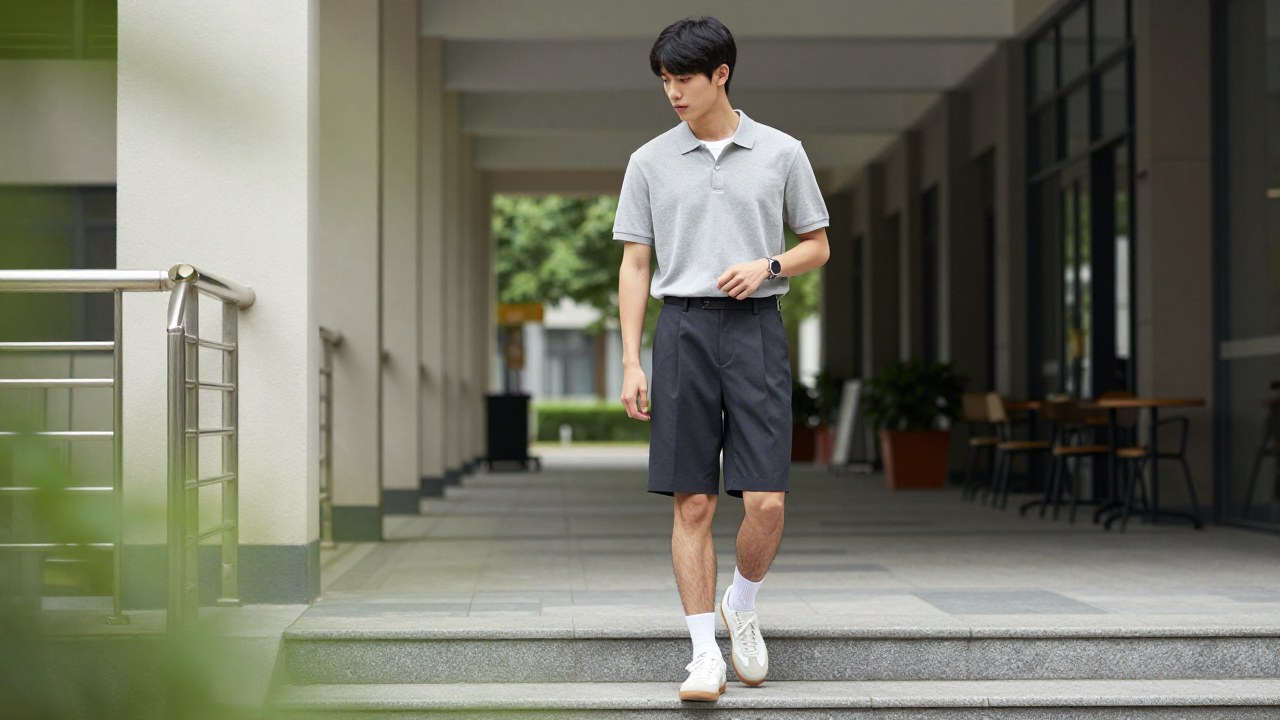
5. How each style route should choose German trainers
- Campus-boy route: white tees, hoodies, denim, backpacks, and white socks work best with campus-friendly German-trainer-style sneakers that stay youthful and thin-soled.
- Cleanfit route: knit polos, short-sleeve shirts, straight trousers, light slacks, and grey/black bottoms work best with off-white grey or low-contrast brown-accent pairs.
- Softboy route: cardigans, totes, light trousers, and softer stripes work best with brown suede, pale grey, and muted panel trainers.
- Light commuter route: oxford shirts, knitwear, drapey trousers, and clean bags work best with low-top thin-soled pairs that stay comfortable without turning bulky.
These routes look different on the surface, but the shared logic is simple: German trainers are not there to create protagonist energy. They are there to correct the hem, steady the lower half, and bring the whole outfit back into daily life.
6. The shop signals most worth following
If you work backward from Chinese-platform commerce and style content, the most valuable German-trainer stores usually share several traits:
- they show the shoe with multiple trouser shapes rather than only isolated product views;
- they provide on-foot, side-view, and walking imagery;
- they keep returning to off-white, grey, brown, and low-contrast accent palettes rather than high-saturation seasonal color games;
- their product naming emphasizes German trainer, retro training, thin sole, low-top, commuter use, campus use, Korean and Japanese casual logic;
- their overall visual language connects the shoe to socks, trousers, bags, and tops, which means they understand the outfit rather than just the product.
These shops are not always the largest or most famous, but they are more likely to offer shoes that survive in real wardrobes. For BoyStyle readers, the real long-term value is never just the hottest pair of the month. It is a pair that works this summer, still works in autumn, still makes sense next spring, and keeps cooperating with the wardrobe you already own.
7. BoyStyle’s conclusion on this German-trainer buying signal
The 2026 Chinese-platform discussion around German trainers looks like a simple versatile-shoe conversation on the surface, but underneath it is answering a more mature youth-menswear question: once the upper and lower garments are already decent, what shoe can quietly lock proportion, mood, and real-life ease into place with the least effort? That is why thin-soled retro trainers and low-profile German-trainer-style sneakers remain central. They matter not because they are dramatic, but because they have returned to the most useful place inside daily youth dressing.
If you only want to add one pair of shoes this summer that feels hard to waste but immediately changes the whole look, I would seriously place German trainers near the top of the list. Not just any pair, but the kind with a genuinely thin sole, tidy toe, controlled color palette, non-cheap upper, and the ability to connect naturally with straight trousers, shorts, denim, white socks, and basic tops. It will not hit as loudly as a heavy sneaker, but it may be the first thing that makes the whole outfit feel complete.
Read next: Why campus-boy dressing has returned as a stable youth-menswear language, Why light-wash wide-leg jeans are back at the center of campus style, Why tailored shorts help pull cleanfit back into daily life, and Why knit polos are becoming a smarter summer top buy
Chinese-internet source-pattern basis: this article mainly draws on publicly visible Chinese-platform searches, topic framing, and product naming patterns around German trainers and retro training shoes, including recurring phrases such as “German trainer recommendation,” “Samba alternative,” “summer versatile shoes for men,” “campus-boy sneaker recommendation,” “cleanfit sneakers,” and “thin-soled shoes that lengthen the leg,” together with Bilibili- and short-video-style discussion around lower-half proportion, trouser hems, thin-soled footwear with wide trousers, summer cleanfit sneakers, and campus daily shoes, plus Taobao / Tmall naming clusters built around German trainer, retro training, thin sole, low-top construction, off-white grey palettes, suede panels, commuter versatility, Korean / Japanese casual language, and campus use.