KENZO Paris is back in younger fashion vision: from Kenzo Takada’s legacy to Nigo-era graphics and street-inflected energy
For many Chinese-internet readers, KENZO Paris is both familiar and oddly flattened. Some remember the tiger sweatshirt era. Some file it away as just another logo-driven luxury label. Others have seen it in discount channels, buy-sell platforms, or old fashion imagery without being able to explain what the brand actually stands for. That confusion is exactly why it deserves a clearer reading: KENZO was never only a graphic-hit brand. Its real importance lies in how it has always stood at the intersection of Paris fashion, Japanese design feeling, graphic language, street energy, and youthfulness.
If KENZO is worth revisiting today, it should not be treated merely as “a luxury brand that once had a moment.” It makes more sense as a constantly reassembled hybrid. Kenzo Takada gave it a foundation of freedom, color, florals, cultural openness, and looseness. Later global fashion media turned it into an instantly legible visual brand. And the Nigo era helped push it back toward younger audiences, with stronger street instinct and renewed cultural temperature.
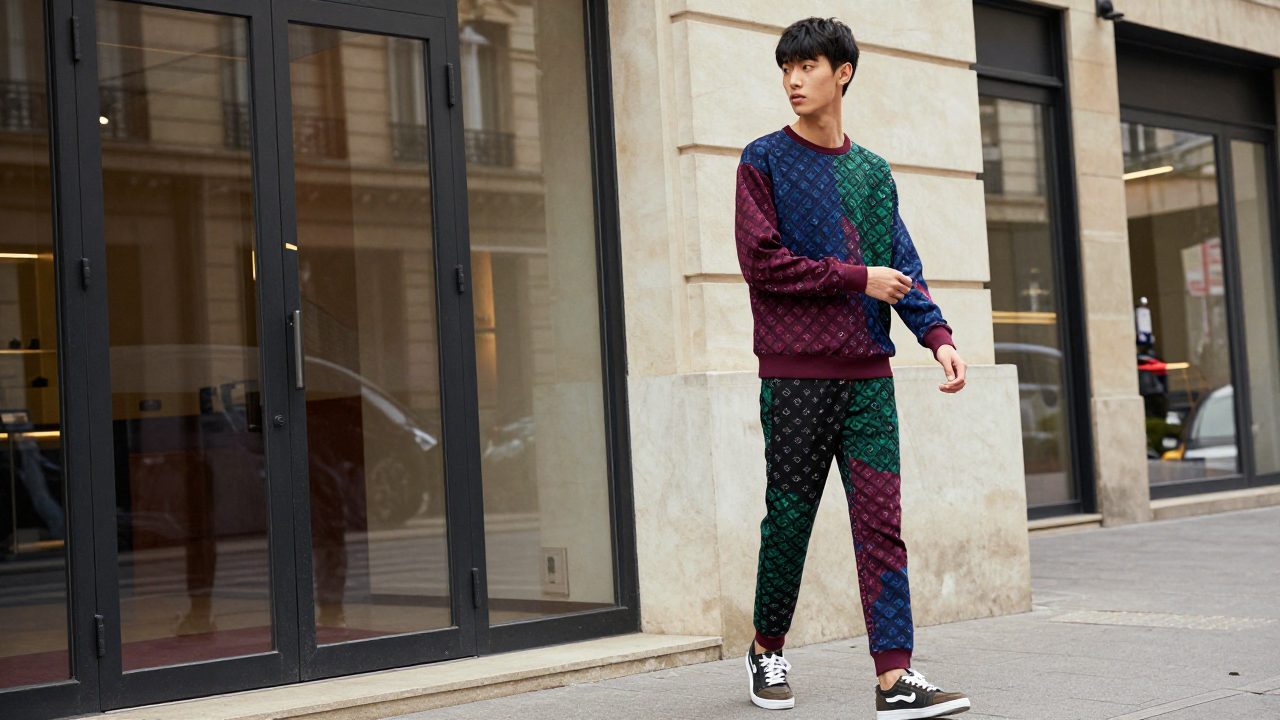
1. Start with Kenzo Takada: the foundation was never “street,” but freedom
Kenzo Takada remains a special figure in fashion history. A Japanese designer building a label in Paris already implies cultural crossing, but what mattered more was what he brought into that system: not stiff European luxury codes, but more movement, more looseness, more life, more color, more graphic confidence, and more openness to multiple visual worlds.
That is why KENZO always had a feeling of “worldness.” It was not just French elegance with Japanese decoration added on top. It was an actual hybrid system in which florals, volume, motif, and mixed references made luxury feel less rigid and more alive.
2. In China, KENZO was often remembered first through graphic hits
If the Takada era built a broad brand universe, many Chinese consumers first truly recognized KENZO through later, highly legible products: tiger graphics, logo sweatshirts, embroidery, and strong motif-based knitwear. These pieces travelled very well in the social-media era because they could be recognized instantly.
That visibility helped the brand and also narrowed it. It expanded awareness quickly, but it also led many people to treat KENZO as if its entire value lay in “that famous graphic.” That is too small a reading. Graphics matter, but KENZO’s depth has never been limited to a single animal head or logo treatment.
3. The Nigo era made KENZO younger again, but not by flattening it into a pure street label
Nigo’s arrival mattered because he brought another complete cultural system with him: BAPE, Japanese streetwear history, pop references, Americana, image-led branding, and a very clear sense of youth communication. But what he did best at KENZO was not simply to make it “more street.” He reassembled it.
That reassembly matters. The freer, more graphic, more open spirit inherited from Kenzo Takada could be reconnected to sharper street grammar, varsity signals, workwear references, sportswear energy, and stronger image systems. The result is that KENZO can now feel younger again without becoming a simple hype brand copy.
4. The real point is not just the tiger, but how graphics work with the body
Many brands use graphics as flat statements. KENZO at its best does something more interesting: the image is not only a logo on top of clothing. It becomes part of the silhouette, the mood, the tension, and the body reading. Florals, animal references, collegiate motifs, lettering, and symbolic graphic placement all matter because they are trying to create a brand atmosphere, not just a stamp.
This is why KENZO can look very good or very awkward depending on how it is worn. At its best, the graphic becomes youthful energy. At its worst, it turns into “I am wearing a visible luxury brand.”
5. Where KENZO fits in youth menswear now
It obviously does not belong to ultra-minimal cleanfit. But it also does not sit outside current youth menswear discussions. It works best for readers who:
- want graphics without falling into cheap streetwear
- like Franco-Japanese hybridity, visual culture, and design history
- are willing to let the brand act as a visible part of the outfit
- want one clear visual center rather than a fully silent wardrobe
In that sense, KENZO is not for the reader who wants everything muted. It is for the reader who wants memory and image in the outfit without sliding into low-grade logo flexing.
6. The product directions most worth looking at now
- sweatshirts and hoodies: the clearest place to read younger graphic and Nigo-era energy
- knitwear and cardigans: often more refined than the most obvious logo pieces, and better for reading brand balance
- light outerwear, coach jackets, and workwear-leaning tops: useful for seeing how KENZO handles graphics inside younger silhouettes
- T-shirts: lower-entry but easier to buy badly if you choose only by logo
- bags, caps, and smaller accessories: useful if you want only a touch of the brand’s energy
7. The common mistake is turning KENZO into a luxury-logo proof exercise
Many people wear designer brands as if the main point is to prove that they are wearing the brand. KENZO is especially vulnerable to that because it is already highly legible. The moment the whole outfit becomes only “look, this is KENZO,” the actual style value collapses.
The stronger route is usually to let KENZO handle one visual center while the rest of the outfit becomes cleaner. A graphic sweatshirt with calm jeans, straightforward sneakers, and a quieter bag usually works better than trying to make every item equally loud.
8. So where does the brand sit now?
In current youth menswear, KENZO does not belong to the most basic zone and it does not belong to the most extreme designer zone either. It sits in a more interesting middle: for people who no longer want only basics, but also do not want to disappear into a fully hard-edged designer wardrobe. It has history, imagery, cultural memory, and still enough youth-facing energy to remain relevant.
That is why the more useful question is not whether KENZO is “hot again,” but whether it still preserves the cross-cultural, graphic, youthful quality that made it matter in the first place. From that angle, it remains a brand worth introducing.
Continue with: Sweatshirts and hoodies still own the youth-menswear middle layer, why the campus-boy look has become one of the most stable style languages in Chinese youth menswear, and why knit polos are becoming one of the smartest 2026 buys for campus-boy and cleanfit menswear