Why Men’s Military Style Keeps Bringing Uniform Attraction, Discipline, Strength, and Transformation Narratives Back into Youth Menswear
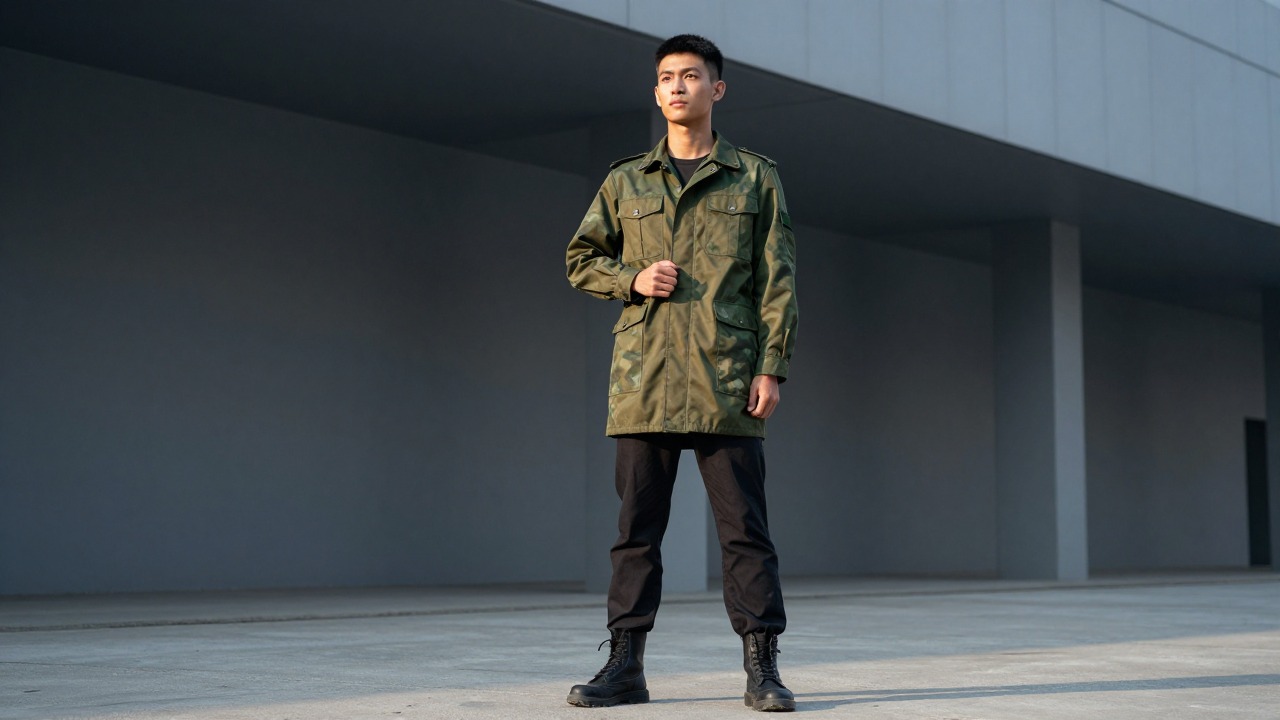
Military style has always occupied a special place inside menswear. It does not work like easy casualwear, and it does not rely on the image noise and trend-signaling logic of pure streetwear. What makes it gripping is that it always brings back several very strong ideas at once: the attraction of uniforms, the environmental logic of camouflage, the force of a trained body, the abstinent mood created by discipline, and the story of a once-soft or uncertain person being hardened through pressure and transformation. Once those elements are compressed into clothing, military style stops being just “a certain jacket and a certain trouser.” It becomes a full male cultural symbol.
That is also why military style keeps returning in youth menswear. It can look practical, but also sharply fashionable. It can signal strength, but also restraint. It can read as strongly masculine, yet at the same time generate a subtle abstinent tension through control, discipline, and suppression. Add the identity logic that uniforms naturally bring, and military style easily moves from functional dress into cultural symbolism, aesthetic fantasy, and even a dramatic transformation narrative.
1. Why uniforms are always attractive
The deepest attraction of a uniform is not just that it creates visual sameness. It is that it makes a person’s role immediately legible. Ordinary clothing emphasizes individual difference. Uniforms place the body inside a larger structure: duty, hierarchy, training, collectivity, rule, position, action. Because they are not fully designed around private individuality, they often generate a much stronger sense of external force.
That matters a lot in menswear. Many cultural fantasies around male attraction are already tied to ideas like being shaped by rules, having an organized body, and carrying a visible sense of discipline in motion. Uniforms do not simply make a person look neat. They suggest that he belongs to a system, a task, a trained state. That identity clarity is itself attractive.
2. Why camouflage moved from military utility into fashion language
Camouflage obviously begins as environmental logic: concealment, blending, terrain adaptation. But once it leaves pure tactical function and enters fashion, it stops being only a practical pattern. It begins to carry additional meanings: nature, field action, danger, anti-order energy, and a more complicated emotional residue shaped by war and historical violence.
That is why camouflage is never just “another print.” What separates it from stripes, checks, or decorative motifs is that it always drags behind it a stronger narrative system: forest, training, action, discipline, intensity, male collectivity, even the simultaneous imitation and parody of authority. When fashion uses camouflage, it is rarely trying to create literal soldier imitation. It is often borrowing the cultural tension behind the pattern—something that feels both obedient and disruptive at the same time.
3. Why military style amplifies strength, discipline, and masculine symbolism
Military style often reads as “more masculine,” but not only because of hard fabrics or heavy boots. It systematically intensifies certain traditional male body signals: clearer shoulders, cleaner waist control, more visible pocket and garment structure, a firmer stance, and movement that looks closer to readiness than to rest. The body appears less like it is relaxing and more like it could stand up and act at any moment.
That makes it very different from ordinary relaxed menswear. Casualwear usually lets the body go. Military style gathers the body in, lifts it, and disciplines it. Because of that collected quality, it naturally links to discipline. Once discipline becomes visible, it transforms into a very specific kind of attraction: strength, control, economy of gesture, trained presence, and the impression of being shaped by endurance. Youth menswear culture has always responded strongly to that image.
The Core Visual Signals of Military Style
4. Why military style carries an “abstinent” tension
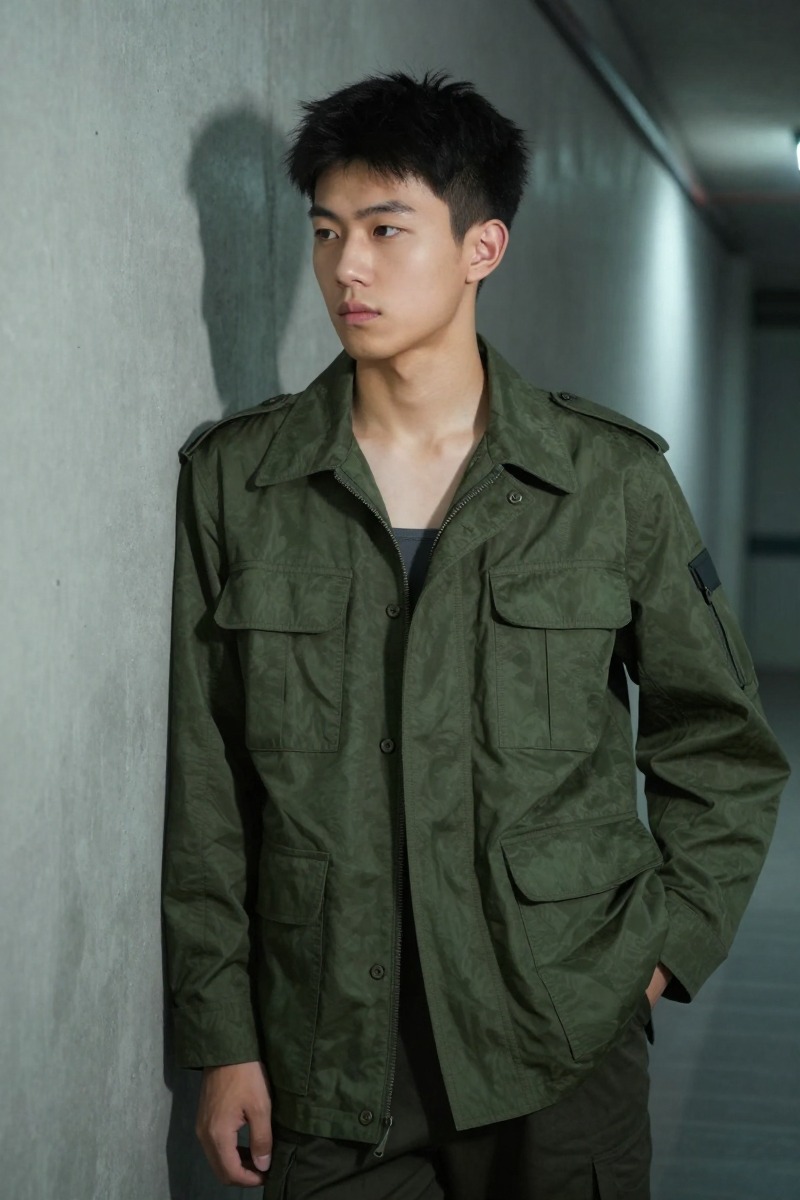
One of the most compelling hidden dimensions of military style is its abstinent quality. Not a religious abstinence, but a sense of control produced by rule, environment, discipline, and task. The clothing is rarely soft or indulgent. Emotion is not worn as looseness. The body appears to remain under a larger demand—stand straight, pull in, execute, stay composed, keep function first. That pressure creates a special kind of tension.
It differs from conventional sexiness. Conventional sexiness is often more open and immediate. Military style creates attraction through restrained force. It does not simply display desire. It places desire inside order and control, and lets people sense something deeper through discipline, suppression, and body management. That is why it often feels more dramatic than it first appears.
5. Why military style naturally supports stories of growth, transformation, and identity
Military style is not only a style for finished adult masculinity. It is also highly effective at telling stories about someone still being shaped. A once-younger, softer, more uncertain person is pushed by training, rule, and environment into a new body posture and a new sense of identity. That transformation is dramatic even when it is only suggested rather than literally lived.
In other words, the real charm of military style is not only the final state, but the process of becoming: from boyishness to young manhood, from softness to hardness, from looseness to self-control, from lack of place to a visible role. Clothing works here as a transitional medium. It makes a person look like he is entering a more serious, more disciplined, more weighted phase of life. That growth narrative carries enormous dramatic attraction.
6. Why military style can feel both classic and highly fashion-forward
One of the most interesting things about military style is that it can move in two directions at once. One direction is classic: the M-65, the flight jacket, military shirts, field trousers, combat boots, camouflage outerwear—all of these have long become stable parts of menswear vocabulary. The other direction is disruptive: designers distort pocket scale, enlarge camouflage, rebuild silhouettes, soften military patterns with unexpected materials, or mix military references with more theatrical, more gender-fluid, or more overtly fashion-driven elements.
That is why military style never truly becomes obsolete. On one side, it has deep historical roots and strong functional logic. On the other, it is endlessly rewriteable. It can serve narratives of male strength and discipline, but it can also support irony, reversal, identity play, and gender tension. The trend value comes exactly from that point: the more familiar and authoritative the symbol is, the easier it becomes for fashion to break it apart and reorganize it.
7. The most common garment archetypes
If you strip military style down to its most repeated garment types, it usually lands on a stable group:
- military jackets / M-65 field jackets: the fastest route to visible structure and operational energy;
- flight jackets: combining military origin with stronger youth-culture circulation;
- camouflage jackets and trousers: the most direct way to wear the symbol system;
- utility shirts and tactical-pocket tops: pushing the upper body closer to visible function;
- combat or tactical boots: anchoring the outfit and adding grounded body weight;
- olive, khaki, gray-green, and black base layers: letting the style rely more on mood than on decoration.
But those garments do not create military style by themselves. The real work still happens in how structure, body, color, narrative, and restraint are handled together.
8. Why military style easily collapses into costume
The biggest danger of military style is that it can be mistaken for symbol-stacking. Camouflage, boots, patches, belts, pockets, dark glasses, gloves, hats—once all of it appears together, the result often stops looking like style and starts looking like role-play. The stronger version of military-inspired dressing is never “look as military as possible.” It is “borrow the discipline and body logic without literal overload.”
Especially in contemporary youth menswear, overly literal military styling often feels stiff. A better route usually means keeping one or two strong signals—structured outerwear, controlled color, heavier footwear, a small amount of camouflage or tactical detail—while letting the rest stay modern, clean, and wearable. That makes the style feel like a fashion-absorbed cultural language rather than a costume prop.
9. The real attraction is often not “looking like a soldier,” but “looking like someone being shaped”
A lot of people assume the charm of military style comes from resemblance to soldiers. More precisely, what often attracts people is the feeling of someone being reshaped by intensity, discipline, environment, and training. The attraction is not only the final identity. It is the process of becoming. A once-young and uncertain person begins to look steadier, firmer, more controlled, more place-aware. That transition is culturally powerful.
This is also why military style carries built-in drama. It always seems to tell a story: a young person enters structure, an old identity is stripped back, a new one starts forming, and the body itself becomes more legible. That shift from unstable to stable, from vague to defined, is exactly the kind of narrative fashion is very good at borrowing.
10. If I kept only one stable formula for military style
If I had to leave BoyStyle with one core formula for military-inspired dressing, it would be this: do not begin by asking how to look like a uniform. Begin by asking how to look like a body and identity shaped by discipline. Once that layer is right, the garments know where to go: clearer structure, more restrained color, tighter body control, steadier footwear, fewer but more precise details.
Because the deepest attraction of military style has never been about how many military symbols it can borrow. It comes from the way it pulls together uniform attraction, the cultural memory of camouflage, strength, discipline, masculine symbolism, abstinent tension, and the story of growth and transformation. It makes clothing feel not only like a style, but like a person entering a harder, clearer, heavier stage of life.
Read next: Why music and clothing always reconnect, Why outdoor sportswear now looks increasingly like youth lifestyle content, Why cycling fashion is becoming one of the most body-driven style lines, Why light jackets remain structurally central in transitional youth menswear
Source model: Chinese-internet topic patterns around military dressing, uniform-coded menswear, camouflage culture, flight jackets, field trousers, male discipline, and transformation narratives; plus common fashion and product-language patterns around military-inspired menswear, flight jackets, M-65s, camo trousers, and tactical aesthetics.