How Men Should Dress for Tropical Resort Style Without Looking Like Cheap Touristwear
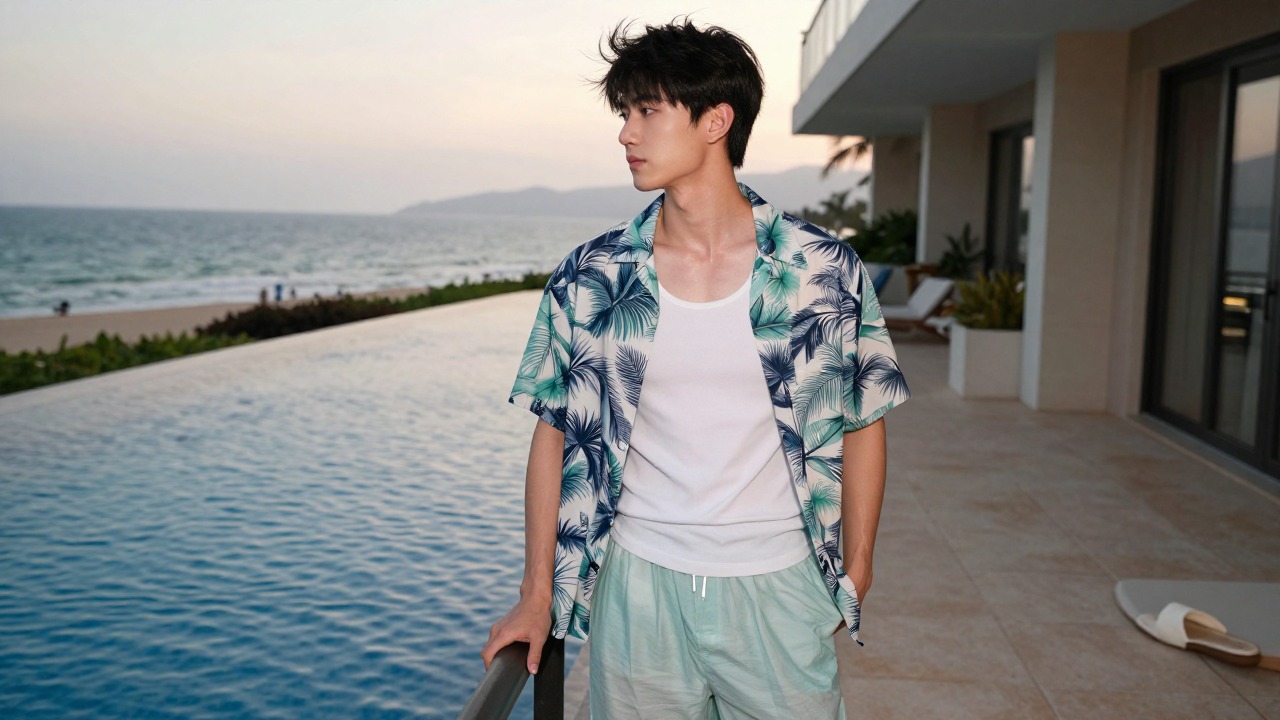
Tropical resort style is one of the easiest menswear directions to get wrong. On the surface it looks simple: a printed shirt, shorts, sandals, sunglasses, a beach or pool, and you are done. In reality, the opposite is true. The more a style looks effortless, the easier it is to ruin with the wrong print, the wrong color balance, the wrong short length, the wrong shoes, the wrong fabric, or the wrong relationship between clothing and body state. Instead of looking relaxed and summer-ready, the result quickly turns into cheap touristwear, outdated package-holiday dressing, or something that feels more like livestream performance than actual vacation style.
What makes tropical resort style genuinely good is not the accumulation of tropical elements. It is the feeling that the wearer actually belongs in that environment: beach air, humid heat, hotel pools, palms, damp skin, evening sun, the walk from room to pool, or from shoreline back to the terrace. The look should feel loose, light, and in motion. It can have some body presence, but not in a low-grade way; some color, but not noise. That is exactly why this style is worth rewriting inside a BoyStyle youth-menswear framework.
1. What tropical resort style is—and what it is not
First, it is worth being precise. Tropical resort style does not simply mean “dress a little louder,” and it definitely does not mean “buy one shirt with leaves on it.” To work properly, it usually needs at least three things at once:
- Environmental logic: the outfit should clearly belong to a hot, humid, breezy, water-adjacent setting.
- Lightness: the fabric, layering, and silhouette all need to feel light rather than dense or heavy.
- Youthfulness: it cannot become too mature, too old-school, too business-travel coded, but it also cannot become tacky, overplayed, or cheap.
So it should not turn into:
- the bigger the print, the better;
- the more colors, the more “vacation” it feels;
- an outfit where tropical shirt, straw hat, flip-flops, and loud sunglasses all appear at once;
- a belief that simply being near a beach or hotel automatically makes the outfit work.
The stronger version of tropical resort style is usually more restrained than people expect. It can even contain almost no obvious “tropical” symbols and still look exactly like what a young man would naturally wear in a hot, humid, relaxed summer holiday setting.
2. The real key is not the floral shirt, but the overall airiness
A lot of people reduce tropical resort style to the open-collar printed shirt. Printed shirts matter, but they are never the whole story. What really decides whether the style works is airiness. The clothes need to let you feel that wind can move through them, that fabric has motion, that the body is not buried under stiff layers, and that the colors are not packed together too heavily.
That is why the style works especially well with pieces like:
- open-collar short-sleeve shirts
- light tanks or clean white inner layers
- shorter or above-the-knee shorts
- light linen or linen-blend trousers
- sandals, slides, woven shoes, or lightweight canvas shoes that let the foot stay visually open
In other words, the real point is not whether the clothes are “tropical enough.” It is whether the whole outfit places the wearer inside an environment of hot air, light fabric, moving lines, and breathable space. If that airiness fails, tropical elements only look worse.
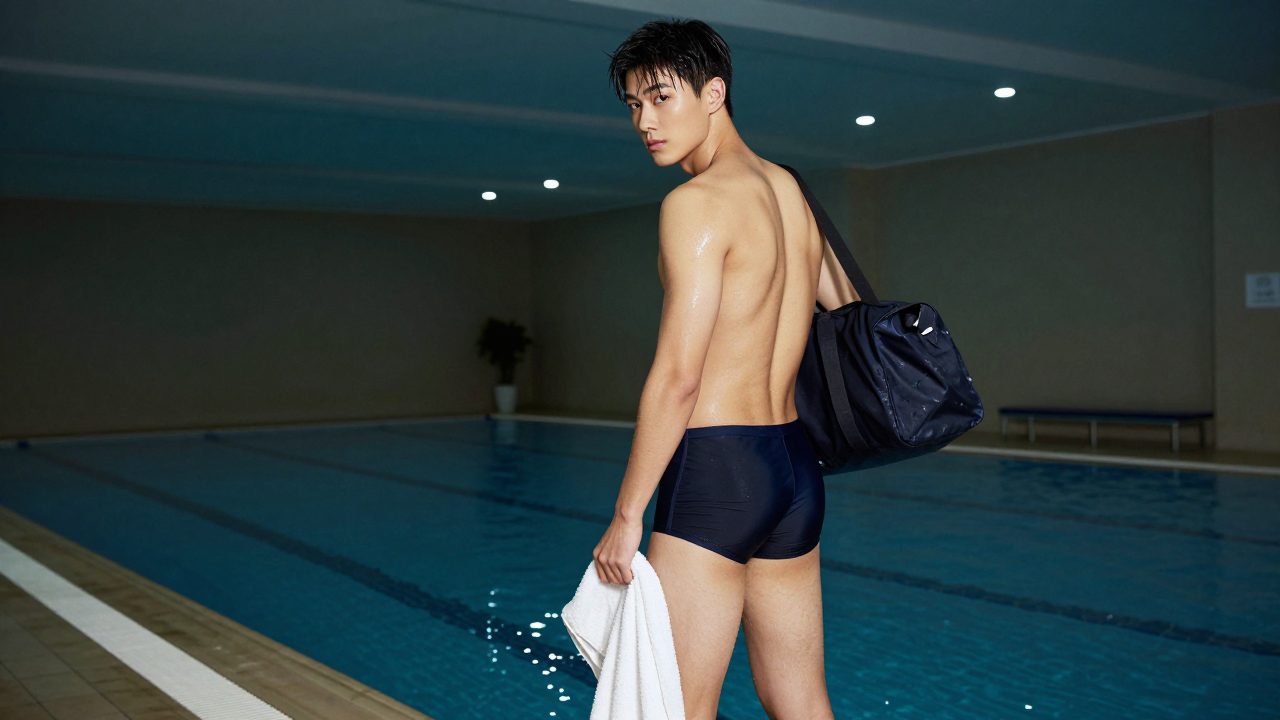
3. Printed shirts can work, but not just any printed shirt
Printed shirts are dangerous because they carry too much visual information. The moment the print becomes too large, the contrast too sharp, the colors too many, the ground color too muddy, or the fabric too shiny, the whole look falls out of “young vacation style” and into “older tourist taste.” That is why so many men try to dress a little freer for summer and end up looking like a souvenir-shop mannequin.
If you do want a tropical print shirt, it is safer to prioritize:
- low-contrast prints: pattern is fine, but not every leaf should fight for attention;
- slightly faded or misted colors: these usually look more expensive than hyper-saturated resort colors;
- open collars and easier silhouettes: not too fitted, not too businesslike;
- fabric without high glare: shine amplifies cheapness very quickly.
If you are not sure you can really wear tropical prints well, the strongest move is often not to force a dramatic floral shirt. Start instead with a light-colored, low-saturation, open-collar shirt with subtle texture or only minimal pattern. It keeps the vacation feeling without turning the outfit into costume.
4. A more reliable formula: white tank, open shirt, and light bottoms
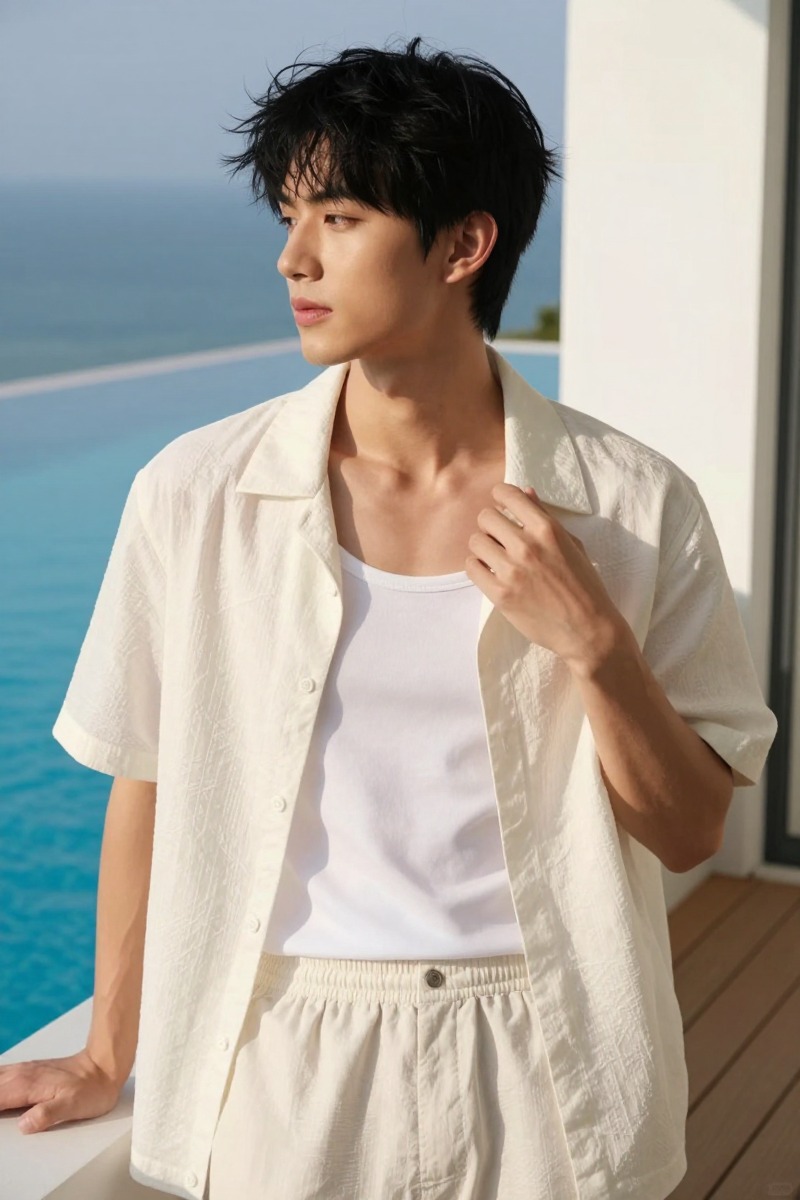
If I had to choose the most BoyStyle-friendly tropical resortwear formula, I would not start with the loudest print. I would start with a white tank or clean white tee, an open lightweight camp-collar shirt, and either shorts or linen trousers. This formula works because it brings the lightness and layering tropical resort style needs while also leaving room for real youthfulness, body proportion, and summer skin-state appeal.
It also fits real situations: walking downstairs from the room to the pool, sitting on a terrace with a drink, moving along a beach path at sunset, returning from the sand to the hotel, sitting by the water half-drying, or throwing a shirt loosely over the shoulders. This is not “performing resortwear.” It is clothing that feels naturally grown out of the environment.
5. Bottoms decide whether you look young and tropical or just cheap and touristy
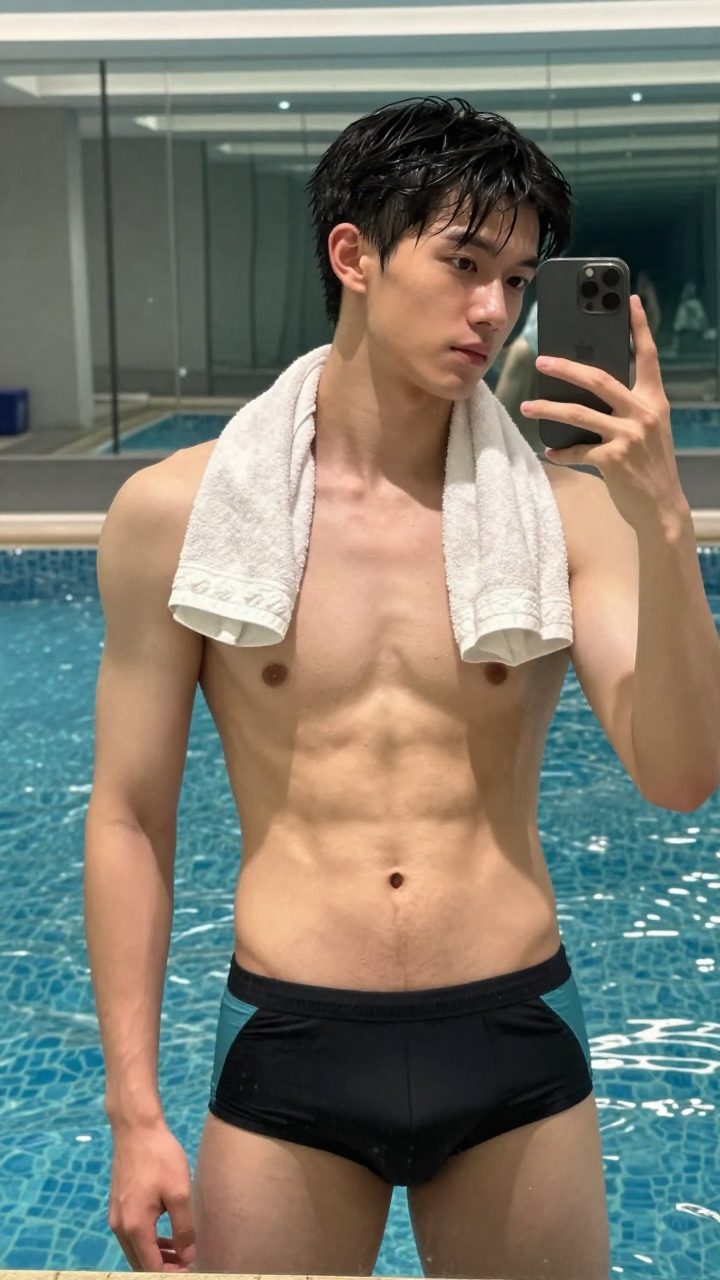
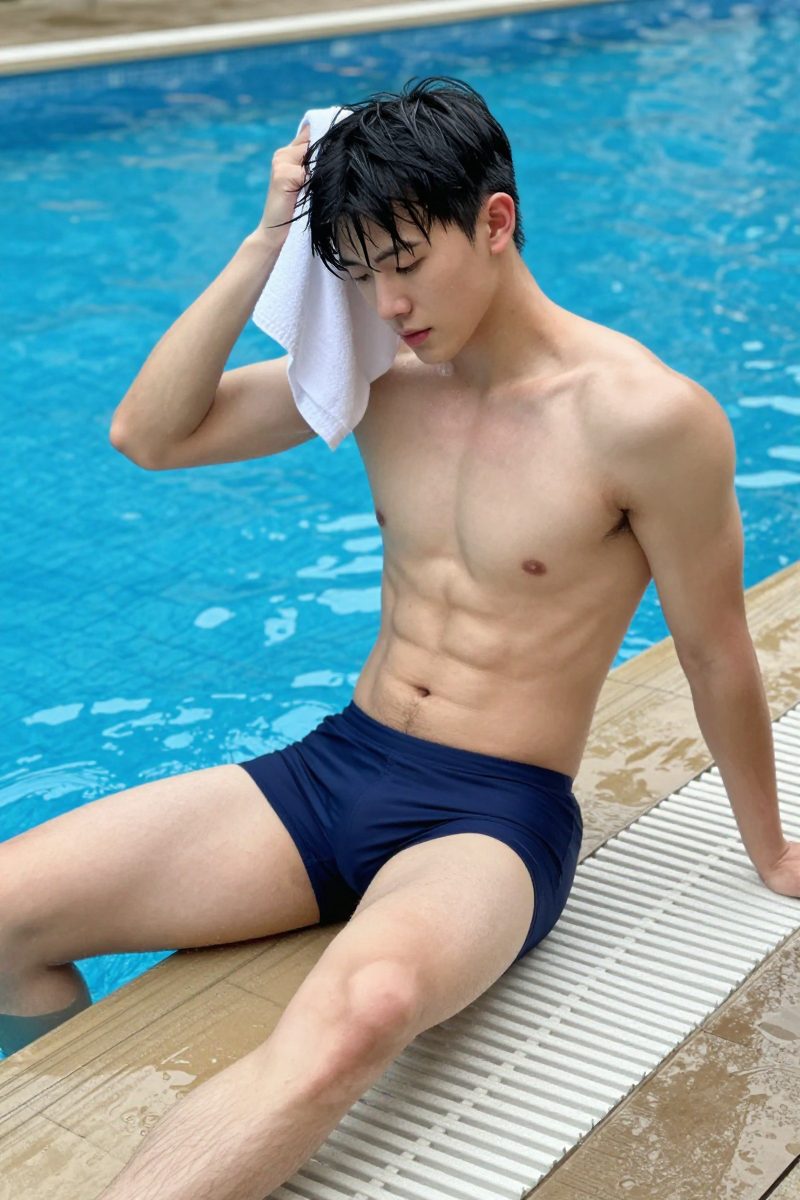
Tropical resort style depends heavily on the right lower half. If the shorts or trousers are wrong, the rest of the look usually cannot recover. The easiest failure is the overlong, oversized, shiny, loudly printed beach short. That kind of piece pushes the whole outfit straight into tourist territory.
The better directions for young men are usually:
- above-the-knee shorts: lighter, younger, and much better for leg proportion;
- solid or low-pattern bottoms: if the shirt already carries print, the bottoms should calm things down;
- quick-dry fabric without cheap shine: especially if the outfit moves between pool and non-pool settings;
- some structure without stiffness: the garment should feel relaxed, but not collapsed.
If you do not want shorts, linen or light cotton-linen trousers can also work beautifully in tropical resort style. They make the look quieter and slightly more mature, but only if the length and footwear stay coordinated. Otherwise the outfit becomes sluggish and overly heavy.
Tropical Resortwear Bottoms Checklist
6. Shoes matter more than people think
One of the most common failures in tropical resort style is getting the upper half almost right, then destroying the entire mood with the wrong shoes. Heavy dad sneakers, overly businesslike leather shoes, or highly athletic running shoes all break the airiness immediately.
More suitable directions usually include:
- simple slides
- clean leather or webbing sandals
- woven loafers or slip-ons that do not skew old-fashioned
- light canvas shoes or low-presence white sneakers
The point is not how fashionable the shoe is on its own. The point is whether it keeps supporting the light, warm, humid, movable state of the overall outfit.
7. How to handle color: tropical does not mean every color at once
The best tropical resort style is usually more controlled in color than people expect. You can absolutely wear greens, blues, sunset orange, salt white, sand tones, and coconut browns—but they do not all need to appear at the same time. A better method is usually to choose one lead color and let the rest serve the setting.
The most reliable color formulas include:
- white + navy + sand: always clean, always safe;
- misty green + off-white + brown: a quiet tropical-plant reference without trying too hard;
- faded blue + white + gray: better for pools, hotels, and coastal architecture settings;
- black + white + a small tropical accent: ideal for people who do not want to wear resort style too literally.
The real danger is combining high-saturation green, yellow, blue, red, tropical florals, and shiny fabric all in one outfit. That almost never looks sophisticated. It just starts to resemble a cheap theme party.
8. Tropical resort style looks best in real movement and real environment
This is a style that depends heavily on movement and setting. The most convincing version is not a stiff pose meant to show every styling decision. It is a set of believable actions:
- reaching for a towel by the pool;
- walking with an open shirt along a coastal boardwalk;
- sitting on a terrace or by the water after time in the sun;
- moving from the room to the pool or from the pool toward a drink stand;
- slightly wet hair, slightly salty skin, and a body that looks relaxed rather than over-directed.
Put differently, tropical resort style is not at its best when the clothing becomes the whole message. It looks best when the clothing helps the wearer become believable inside a real summer role.
9. The biggest mistake: thinking more tropical elements automatically means better styling
The main reason tropical resort style fails is the assumption that more obvious resort signals automatically make the look stronger: louder floral shirts, louder sunglasses, straw hats, bright shorts, flip-flops, jewelry, a drink in hand, and every “vacation” sign all at once. That kind of styling often produces a forced sense of holiday performance.
The stronger approach is subtraction. Tropical resortwear is not really an additive style. It is much more of an editing style. What you want to keep is environmental logic, lightness, and a limited amount of color suggestion—not every possible holiday prop. Especially for young men, body state, shoulder line, leg proportion, skin quality, and relaxed movement already provide plenty of visual information. You do not need accessories and loud prints to shout over them.
10. If I kept only one tropical resortwear formula
If I had to keep only one BoyStyle-friendly tropical resortwear formula, it would be:
- a white tank or clean white tee
- a lightweight camp-collar shirt worn slightly open
- either above-the-knee solid shorts or light linen trousers
- simple sandals, slides, or low-presence canvas shoes
- a palette limited to two or three core colors
It may not be the most theatrical version of tropical resort style, but it is the most believable, the youngest, the most repeatable, and the most camera-friendly. Because the best tropical resortwear never says “I am dressed as a tropical theme.” It says “I look completely natural in this place.”
Read next: How to choose men’s beach shorts, Why men’s swimwear is moving back into youth menswear, Why short-sleeve shirts are taking over late spring and early summer, Why college-boy style has become a stable youth menswear language again
Source model: Chinese-internet topic patterns around beach outfits, tropical resort style, hotel-pool dressing, men’s floral shirts, resort shorts, and summer resortwear; plus Taobao visual and product-language patterns around searches such as tropical resort style for men, men’s camp-collar floral shirts, men’s linen resort trousers, and men’s beach dressing.