Cooling henley tanks are filling a key summer-basics gap in 2026: more wearable than ordinary tanks, lighter than cool-touch tees
If you line up the latest public Chinese-internet discussion, product naming, and styling talk around men’s summer upper-body dressing, one shift becomes clear. People are still talking about white-shirt base layers, low-contrast innerwear, cool-touch tees, ice-oxygen-bar shirts, lightweight open shirts, and sun-layer overshirts. But stronger buying signals are now also appearing around a more specific lane: sleeveless henleys, placket tanks, cooling rib tanks, ice-silk henley tanks, lightweight summer inner layers, and tank tops that can be worn visibly rather than hidden like underwear.
This is not the loudest trend word of the season, but it may be one of the smartest small-category additions in the current youth-menswear cycle. For summer 2026, the question is no longer just whether a man should own a tank top. The question is whether the tank reads like underwear, gymwear, or an actual part of a cleanfit, college-boy, light Korean casual, and mall-friendly daily wardrobe. A standard rib tank still has a place, but its limits are also clearer now: worn alone it can drift into homewear territory, and worn underneath it can sometimes feel too plain. A cool-touch tee solves completeness, but in truly hot weather it can still feel visually and physically too full. A cooling henley tank lands in a very useful middle position: it gives you more completion than a basic tank, and less thermal burden than a short-sleeve tee.
This topic also fits the BoyStyle editorial lane unusually well because it is not built on abstract trend language. It is built on product judgment. Which sleeveless henleys are actually wearable? Which ones are just old undershirts renamed? Which cool-touch materials are worth buying, and which ones only look “technical” in livestream lighting while landing as cheap shiny function underwear? Which product pages prove the piece can sit inside white shirts, ice-oxygen-bar shirts, open short sleeves, and lightweight outer-layer systems — and which ones are only trying to sell a vague cooling fantasy? In youth menswear, quiet categories like this often matter more than louder hero items because they improve how the whole upper body works.
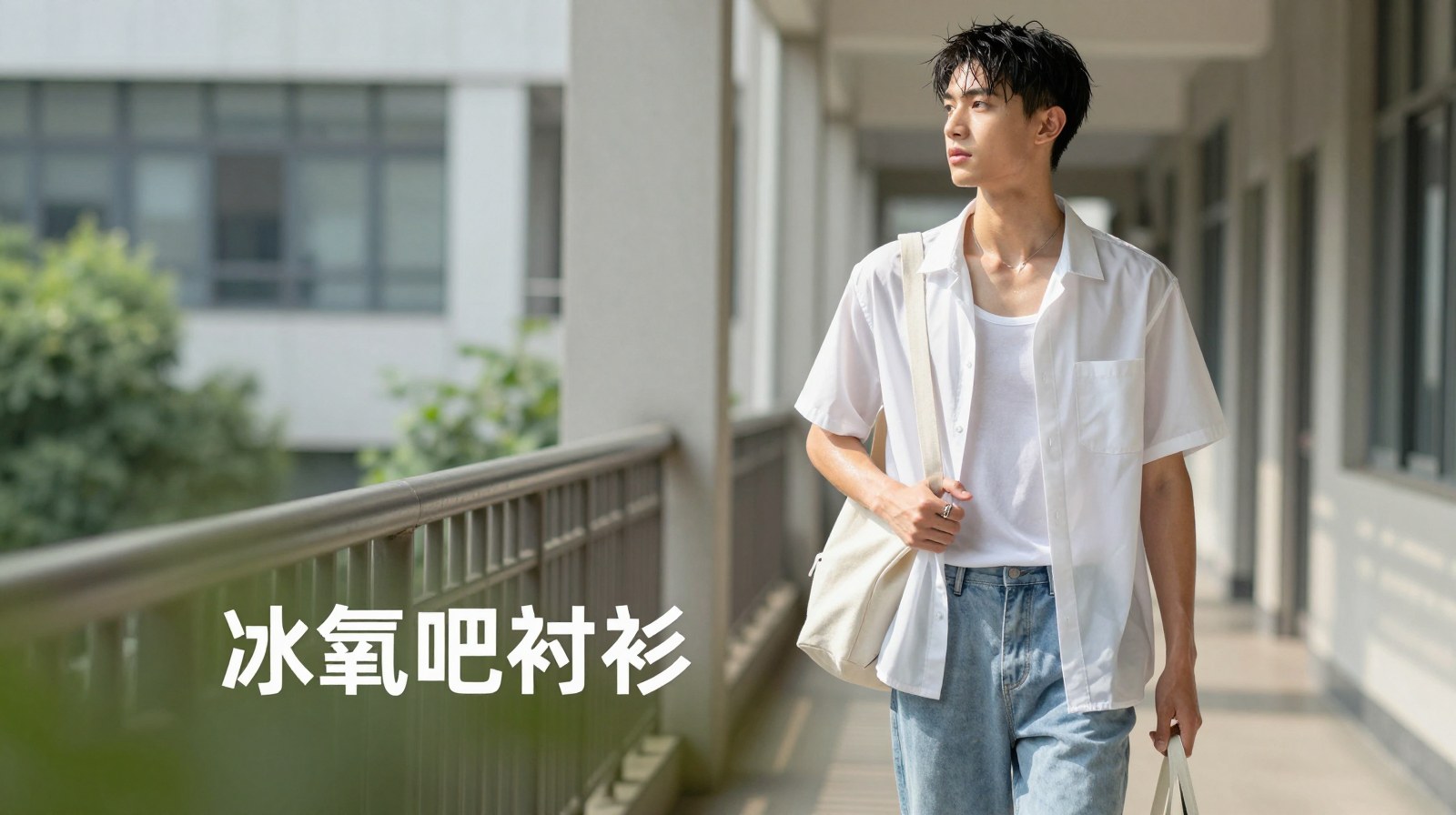
1. Why cooling henley tanks are becoming worth buying right now
Start with the current Chinese-internet questions. Summer menswear discussion is no longer satisfied with “just buy another white tee” or “just wear a regular tank.” The more common question now is: what should sit under a white shirt without looking like an undershirt, what works inside an open short-sleeve shirt without making the upper body feel too full, whether ice-oxygen-bar shirts should be layered with a tank or a tee, and what a man should wear if he wants sleeveless lightness without looking like a gym mirror selfie. Put together, these questions all point toward the same need: people want a base layer that solves heat and layering while staying inside an everyday youth-menswear language rather than sliding into homewear or trainingwear.
A cooling henley tank fits that exact gap. Its value is not simply that it has a few buttons. The bigger difference is that it adds a little neckline structure and a visual center point. That changes how it behaves inside an outfit. A basic tank reads as pure underlayer. A henley tank reads more like a stripped-down summer top: clean enough to be seen, light enough to sit underneath, and structured enough to help the chest and neckline area feel organized when layered under a shirt.
On the product side, Chinese e-commerce naming has also become more direct. Listings built around cooling, ice-silk, ice-oxygen-bar texture, lightweight placket tanks, sleeveless henleys for men, and wearable-outside cooling tanks are not just selling “undershirts.” They are selling a summer upper-body system. Platforms understand that buyers are looking for something that can live inside white shirts, pale short sleeves, light outerwear, and believable city-wear situations.
Chinese-internet signals behind this topic
2. What they really solve: not just coolness, but whether a tank reads like clothing
A lot of men do not resist tanks because they dislike sleeveless dressing. They resist tanks because too many of them lead to only two outcomes: they either look like home undershirts or like training wear. That is why tanks have often struggled to enter a wider daily wardrobe. They can be comfortable without being wearable. They can be light without really helping a shirt, outer layer, and clean trouser system become a full outfit.
Cooling henley tanks become useful because they push the tank back from pure function toward the territory of clothing. The placket gives the chest area a defined starting point. Fine ribbing or subtle texture makes the tank read more like a minimalist top and less like underwear. Cooling or ice-silk blends keep the physical load low enough for real summer heat. In other words, they do not make the tank complicated. They make it easier for the tank to behave like part of an outfit.
That matters especially for cleanfit and college-boy dressing. Both styles look easy on the surface, but both rely on a very careful boundary between emptiness and clutter. Too little structure can make the upper body feel unfinished. Too much can make it heavy and stuffy. A cooling henley tank handles that boundary intelligently: lighter than a white tee, more complete than a standard tank, and more clothing-like than seamless function innerwear.
3. Why they can work better than regular tanks and cool-touch tees in some summer situations
Compared with a standard rib tank: the biggest advantage is that a henley tank still looks intentional when visible. Inside a white shirt, open shirt, ice-oxygen-bar shirt, or lightweight overshirt, it gives the neckline and chest area more order than a plain tank edge does. Worn alone, it is also less likely to read like old home undershirt territory, especially when the color and cut stay clean.
Compared with a cool-touch tee: a cooling tee is safe, but in truly hot or humid weather it still brings full sleeves and broader chest coverage. Many people want to keep an inner layer without wearing another whole shirt. A cooling henley tank lowers that burden while preserving enough completion to keep the outfit feeling dressed.
Compared with hidden seamless innerwear: seamless base layers are useful when the goal is total invisibility. A cooling henley tank does something different. It is still capable of solving heat, transparency, and layering order, but it can also be seen without making the whole outfit feel like functional underwear worn outside.
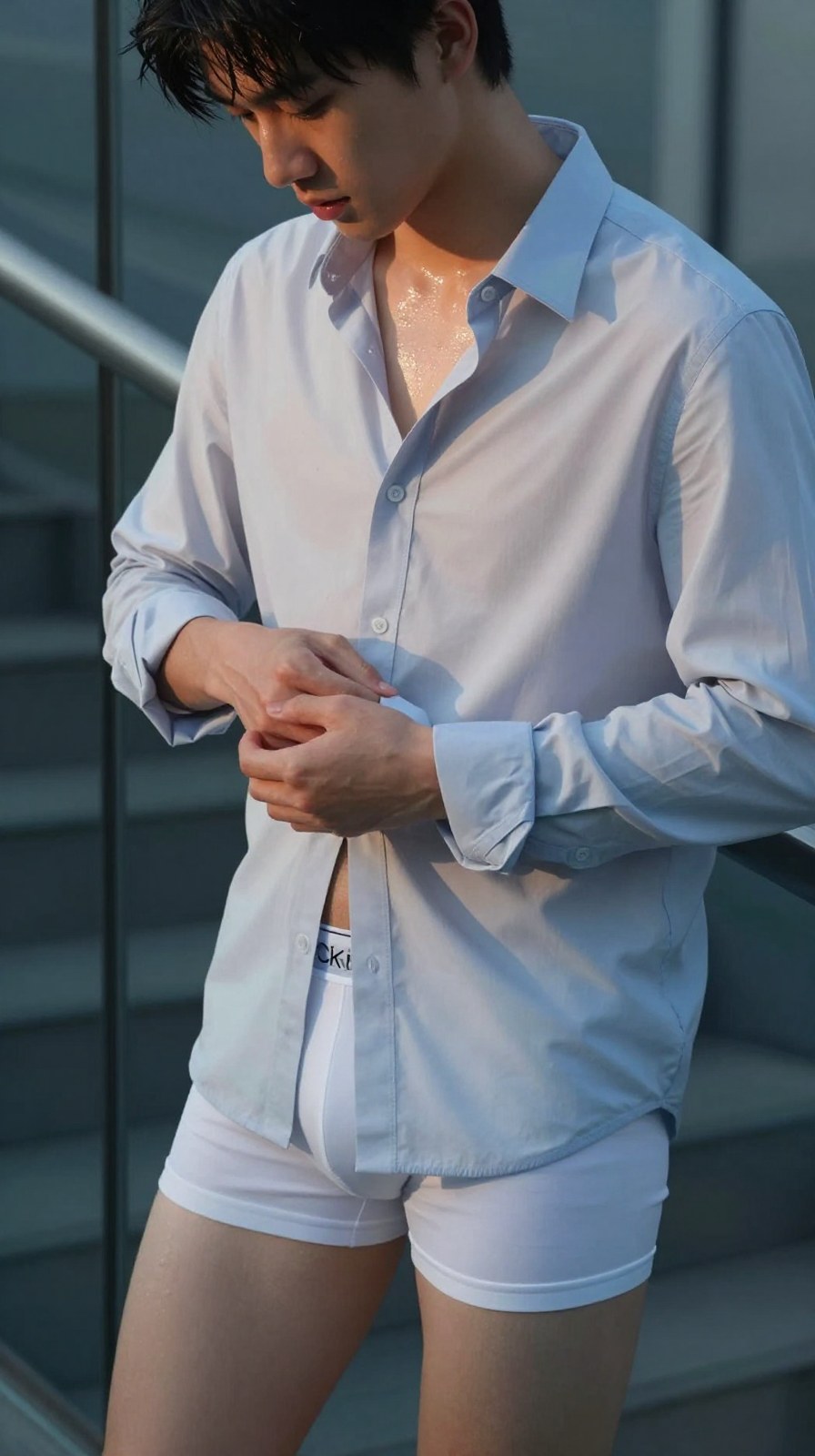
4. The four product directions most worth checking first
1. Fine-rib cooling henley tanks
This is the strongest starting point. Fine rib texture helps the tank read like clothing, cooling blends lower the summer burden, and the placket gives the chest area order. As long as the color stays muted and the placket stays restrained, this is one of the best-balanced versions in the category.
2. Ice-silk or ice-oxygen-bar-feel placket tanks
If your main problem is heat, stickiness, sweating, commuting, and bag friction, then a more function-leaning cooling route can make sense. But the right versions need low shine, low logo pressure, and low plastic feeling. The BoyStyle-friendly version is not the livestream-techno fantasy piece. It is the one that can actually enter a daily wardrobe.
3. Off-white, mist-grey, and pale oatmeal henley tanks
If you want one that can layer and also occasionally be worn alone, color matters almost more than fabric wording. Off-white, mist-grey, pale oatmeal, and grey-blue are the most useful shades. They connect naturally to white shirts, pale denim, khaki trousers, straight wool-blend pants, and clean sneakers without sliding into old undershirt or sports-tank territory.
4. Slightly broader-shoulder minimal placket tanks
If you are already comfortable with sleeveless single-piece wear, a slightly broader-shoulder, cleaner-hem, more controlled-placket version is especially worth checking. It behaves more like a lightened summer top than a traditional undershirt. Best for weekends, malls, cafés, and travel — as long as the fit is not clingy and the placket is not cut too deep.
Chinese shopping-entry wording worth trying first
5. The 10 checks to make before buying: smart base layer or renamed old undershirt?
- The placket should not be too deep: too much opening quickly turns quiet completion into showy styling.
- Button count should stay restrained: two or three is usually enough; too many can feel dated or overdesigned.
- The fabric must stay low-shine: cooling does not mean glossy. Shine is the fastest way back to cheap function-underwear territory.
- Ribbing should be fine rather than heavy: finer rib texture feels more current, while chunky rib can drift old-fashioned very quickly.
- Strap width determines whether it reads like clothing or underwear: slightly broader usually works better for daily wear.
- The chest should not cling too tightly: over-defined torso lines push it toward gym-mirror use instead of youth-menswear basics.
- The placket area has to lie flat: if the listing already shows buckling or curling there, it is unlikely to wear cleanly in real life.
- The product page should ideally show shirt-layering examples: pages built only on body-display photos are much less useful.
- Prioritize muted colors: off-white, mist-grey, oatmeal, and grey-blue are safer than hard black, neon shades, or loud contrast.
- It still has to connect to your actual wardrobe: if you never wear white shirts, open shirts, light outerwear, or clean trousers, the category becomes less useful.
6. The six most reliable styling formulas
- Cooling henley tank + open white shirt + pale blue jeans: one of the easiest college-boy formulas, more complete than a plain tank and lighter than a tee.
- Off-white placket tank + ice-oxygen-bar shirt + nylon trousers: ideal for commuting, malls, subways, and long hot movement-heavy days.
- Mist-grey henley tank + open short-sleeve shirt + khaki straight trousers: a very clean route for cleanfit and light Korean casual dressing.
- Pale oatmeal placket tank + light overshirt + white trousers: quieter and more low-noise, good for café, library, and soft commuter scenes.
- Minimal henley tank worn alone + bermuda shorts + clean sneakers: best for weekends and travel, but only if the tank really reads like clothing.
- Grey-blue placket tank + lightweight zip knit or short outer layer + straight trousers: useful for evening temperature drops and air-conditioned interiors.
The shared logic across all of these looks is simple: this is not a tank as a show-off piece. It is a middle layer that helps the summer upper body escape the usual trap of either feeling too empty or too stuffed.
7. The store routes worth checking first
Based on current Chinese-platform shopping language, three store directions are especially worth prioritizing:
- Light Korean / college-boy basics stores: these often understand the line between “reads like clothing” and “gets too heavy” better than generic innerwear shops.
- Cleanfit / light commuter basics stores: these are more likely to show the item inside white shirts, pale tops, and light outer-layer systems with useful styling references.
- Cooling-fabric-focused stores: useful for high-heat comfort needs, but they require stricter filtering to avoid overly shiny and over-functional pieces.
The smartest way to buy is not to look for the most dramatic technical language. It is to ask whether the store actually places the tank inside the outfit system you wear in real life: white shirts, open shirts, lightweight overshirts, pale denim, straight trousers, and clean sneakers. Without that context, even polished marketing copy does not mean much.
If you have already read BoyStyle’s pieces on why tank-top base layers are moving back into the summer wardrobe, why low-contrast inner tanks are taking over the upper body, the logic of non-sheer base-layer tees, and why ice-oxygen-bar shirts are becoming a core high-heat top, then this article is the next step in the same system. Once you already understand that summer needs a smarter inside layer, the next thing to add may not be another full tee or another generic rib tank. It may be a cooling henley tank that adds just enough structure without adding much burden.
8. BoyStyle’s take on the rise of cooling henley tanks
I do not think this category will become the kind of huge loud hero trend everyone keeps naming. But it looks exactly like the kind of high-efficiency, underwritten, increasingly worth-buying basics category that matters in Chinese-internet youth menswear right now. It solves a very real problem: many men no longer feel satisfied with a plain tank, but also do not want to wear a full tee in the hottest weather. They need something light, cool, quiet, clothing-like, and easy to place inside white shirts and pale summer upper-body systems.
If you already own ordinary tanks and one or two cooling tees this summer, the next basics addition I would seriously consider is a cooling henley tank with muted color, restrained placket, low-shine fabric, and a strap width that does not drift toward underwear. The condition is simple: it has to behave like a real youth-menswear base layer, not a renamed old undershirt and not a cheap function-innerwear piece hiding behind “ice-silk technology” wording.
Chinese-internet signal pattern behind this topic: this article is primarily built from public Chinese-language discussion and product-naming cues around cooling tanks, ice-silk tanks, ice-oxygen-bar inner layers, sleeveless henleys, placket tanks for men, wearable-outside tanks, upgraded white-shirt inner layers, and college-boy cleanfit summer basics, along with Chinese e-commerce search-entry wording such as “男 亨利领 背心 凉感,” “冰丝 门襟 背心 男,” “无袖 henley 男 夏季,” and “白衬衫 内搭 门襟背心 男.”