Why Formalwear and Uniforms Remain So Compelling: From Suits and Industry Dress to Pilots, Cabin Crew, and Service Staff
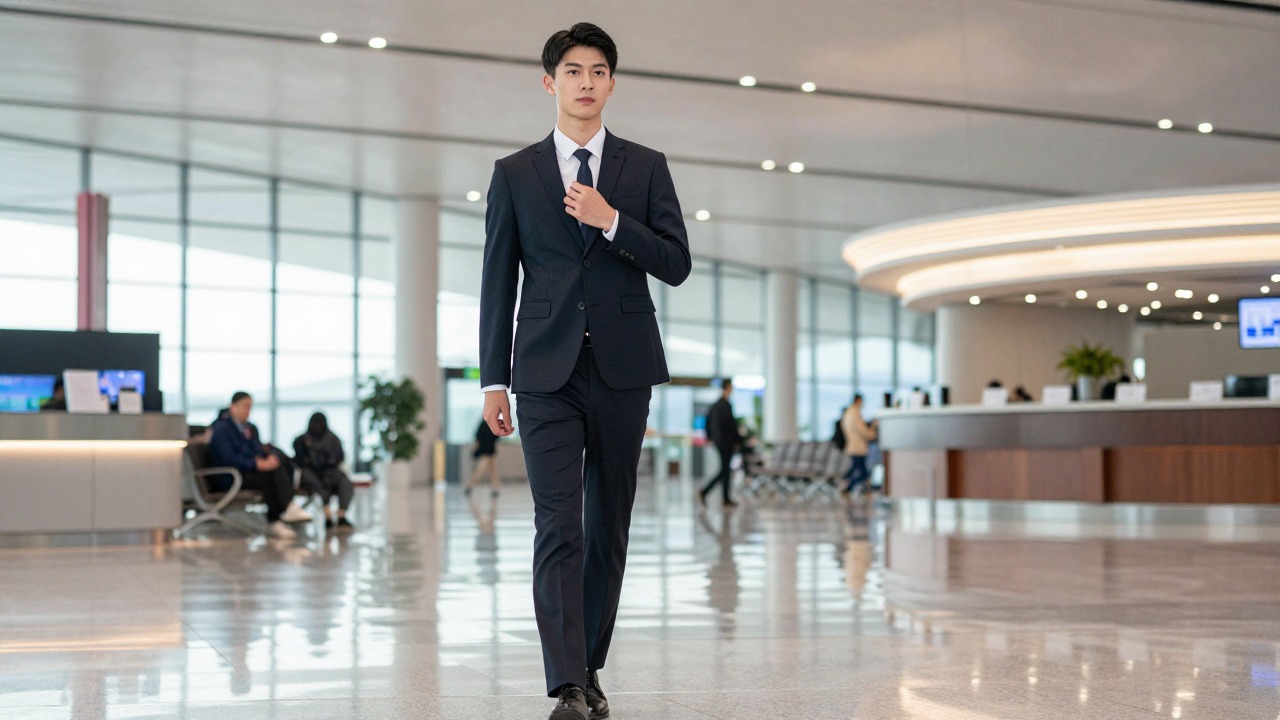
Formalwear and uniforms have always carried a remarkably stable kind of attraction in menswear. They do not work like streetwear, which often lives through mood, speed, and youth slang. They do not work like sportswear, which often depends on body, movement, and direct physical intensity. Their appeal is closer to a sense of dignity shaped by order: the clothing clarifies who a person is, what system he belongs to, how he should appear in a space, and how his body relates to the institution, profession, or service structure around him. That is true of the suit, but also of the pilot, the cabin crew member, and the waiter.
That is why formalwear and uniforms are never just “work clothes.” They are also a visual language, a social role, a professional fantasy, and a long-term cultural source of attraction. They suggest professionalism, discipline, ritual, restraint, service awareness, composure, distance, and sometimes even a trained elegance. In a time when everyday clothing is increasingly loose, casual, and structurally weak, the clarity and bodily order of formalwear and uniforms can feel especially striking.
1. Why the suit remains the core of formalwear
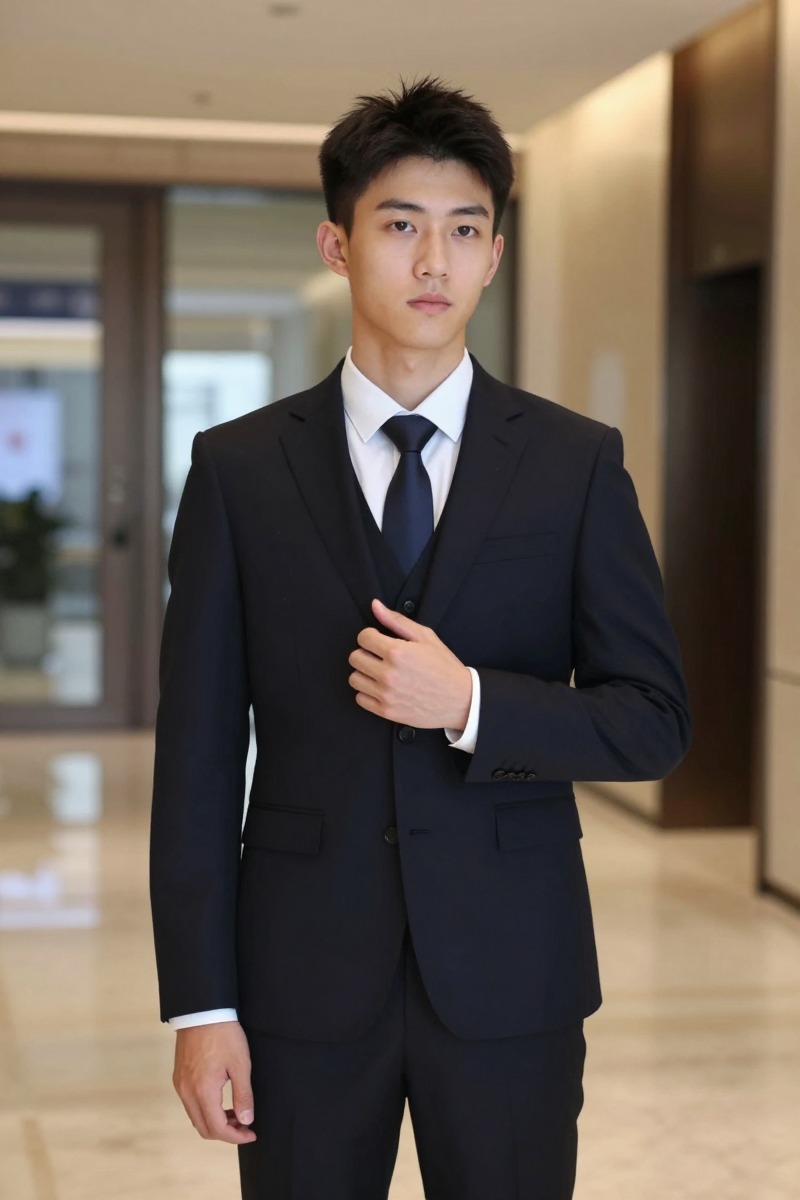
The suit is the most typical formalwear prototype because it makes the ordered body legible with unusual clarity. The shoulder line is defined, the chest is supported by structure, the waist is controlled, the trouser line is organized, and the whole body stops reading as loose and natural. It becomes a body reshaped by tailoring, occasion, and etiquette. That reshaping is why the suit naturally produces the feeling that the wearer has a role.
Its appeal is not only that it flatters or formalizes. It makes the body more readable: steadier shoulders, straighter back, longer legs, a posture that looks ready for entrance into a public scene. A suit does not just make someone attractive. It says that the wearer now exists in a state that requires measure, control, and a demand to be treated formally by others. That clarity of role is something very few other menswear systems can replace.
2. Why industry dress can feel even more compelling than ordinary suiting
A standard suit can already create dignity, but industry dress goes further. It does not simply say “formal.” It says what you do, what system you belong to, and what kind of logic your work obeys. A lawyer, hotel manager, banker, luxury salesperson, front-desk host, restaurant lead, concierge, and flight staff member may all draw on tailoring, but the attraction is not identical in each case.
That is because industry dress visualizes the service relationship, the spatial order, and the hierarchy attached to the profession. A man in a suit is one thing. A man in a suit that clearly belongs to a particular professional setting—through tie, badge, shoe, grooming, stance, and gesture—creates a much more specific role-based attraction. It is not only dignity. It is professional identity made visible.
3. Why the pilot image remains a high point in uniform aesthetics
The pilot occupies a very special place in uniform culture because the role concentrates so many classical forms of professional attraction at once: technical mastery, calmness, responsibility, training, hierarchy, risk control, spatial imagination, and instantly recognizable uniform symbolism. Pilot uniform is not necessarily the most decorative, but it is one of the quickest ways to evoke authority, control, and high professionalism.
Especially important are the clear visual signals—epaulettes, tie, insignia, white shirt, structured outer layer, clean trouser lines, polished shoes. Together they elevate the wearer beyond ordinary “formal dressing” into a much more exact type of public image: formalwear connected to technological authority and occupational precision. Its attraction does not depend on exaggeration. It depends on certainty. The person appears to know what he is doing, and how he is supposed to appear.
4. Why cabin crew images combine service, etiquette, and elegance so powerfully
The attraction of cabin-crew uniform is different from that of the pilot. Pilots lean more toward technical command and control. Cabin crew uniforms foreground service, etiquette, warmth, presentation discipline, and highly managed interpersonal presence. That is why they often create such a complete image of “elegance inside service.” Posture, smile, grooming, color, accessories, and structural clarity all support an extremely readable professional role.
What makes this especially interesting is that it is not the uniform of authority in the blunt sense. It is the uniform of maintaining order, composure, and care inside a service relationship. It suggests restraint, steadiness, training, precision, and the ability to hold together a moving enclosed environment. That combination of softness and regulation is exactly what gives it such lasting appeal.
What Makes Professional Uniforms So Attractive
5. Why waiter styling also holds strong aesthetic tension
Waiter uniforms are easy to underestimate, as if they were just basic service-industry workwear. In reality, they often carry a very particular kind of tension. They exist inside a service relationship, but must still maintain posture. They belong to a clearly divided labor system, yet require constant human contact. They look understated, yet must remain highly legible inside a managed space. That complexity gives waiter styling a surprising amount of visual drama.
Black-and-white color logic, aprons, waistcoats, shirts, bow ties, sharp trouser lines, and waist structure can quickly produce the feeling that a person belongs to a carefully organized environment. This is especially visible in cafés, restaurants, bars, hotels, and hospitality systems. The clothing is not only for recognition. It becomes part of the spatial aesthetic itself.
6. Why formalwear and uniforms depend so heavily on dignity
Dignity is one of the key words inside both formalwear and uniforms. It is not exactly the same thing as expense, beauty, or luxury. Dignity is closer to the ability to appear properly in public space: clothes not disordered, body not scattered, movement not loose, boundaries clear, the person visibly shaped by a higher social demand.
That is one reason people stay drawn to these garments. They provide something increasingly rare in everyday life: measure. In them you can see politeness, control, self-management, service logic, professional ethics, and even a form of quiet dignity that does not depend on loud individuality. That dignity is one of the deepest reasons formalwear and uniforms continue to matter.
7. Why formalwear and uniforms also create distance and fantasy
Formalwear and uniforms do not only create dignity. They also create distance. And distance itself is part of attraction. Once a person’s clothing and body are managed by role, ritual, and etiquette, he no longer appears as fully open and casual as he would in ordinary everyday dress. What you see is a regulated image, not an unfiltered private self. That sense of not being fully available often strengthens the professional aesthetic and the fantasy around it.
This is true of pilots, cabin crew, hotel concierges, and waiters alike. The more clearly the clothing is tied to public duty and professional image, the more it generates that subtle attraction produced between openness and restraint: you can see the person, but you also know he does not belong fully to a private zone. That boundary matters.
8. The common mistake: treating formalwear and uniforms as only “visually nice”
Formalwear and uniforms can obviously be beautiful, but their deeper cultural force does not come only from flattering cut or proper color. Their real power lies in how they place social structure onto the body. Professional identity, etiquette, service relationship, spatial rule, and behavioral boundary all become visible through the clothing. In other words, they do not merely beautify the body. They turn the body into role.
That is also why contemporary fashion keeps borrowing uniform elements. What is being borrowed is not only a trouser crease or an epaulette. It is the role-based body, the temperament organized by rule, and the way a person is meant to be seen in public space. That broader social logic is what gives uniforms their force.
9. Why these professional images keep influencing fashion
Fashion is always searching for legible roles, and professional images are among the strongest available. Pilots, cabin crew, waiters, hotel concierges, drivers, doormen, stewards, office professionals—once these figures appear, clothing stops being purely personal taste and enters a larger cultural stage. When fashion borrows them, it borrows ways of being seen that have already been repeatedly trained and socially encoded.
That is why formalwear and uniforms keep being rewritten. Sometimes more conservative, sometimes more fashionable, sometimes more gender-neutral, sometimes more sensual, sometimes colder and sharper. But whatever the variation, they rarely disappear, because they continue to hold some of the strongest keywords in menswear culture: identity, order, service, dignity, boundary, and professionalism.
10. If I kept only one stable formula for formalwear and uniforms
If I had to leave BoyStyle with one stable principle for this theme, it would be this: do not judge only whether the clothes are formal—judge whether they truly build role clarity on the body. Once role clarity exists, the suit is no longer just a suit, and the uniform is no longer just a uniform. They make a person look as if he belongs in a more clearly defined social position, with visible duty, movement, and boundary.
That is the deeper reason formalwear and uniforms stay attractive. They organize the body into identity, identity into image, and image into a professional charisma that others can read with stability. Whether through suiting, industry dress, pilots, cabin crew, or service staff, they ultimately do the same thing: they make a person look not only well dressed, but connected to a world held together by order, training, and role.
Read next: Why military style keeps returning to youth menswear, Why music and clothing always reconnect, Why college-boy style has become stable again, Why light jackets remain structurally central in transitional youth menswear
Source model: Chinese-internet topic and image patterns around suiting, professional uniforms, pilots, cabin crew, waiter styling, hospitality image systems, and industry etiquette; plus fashion discussion around suiting, uniform dressing, hospitality tailoring, airline aesthetics, and professional menswear.